
Cities
POMA now operates and maintains the cable car in Ajaccio
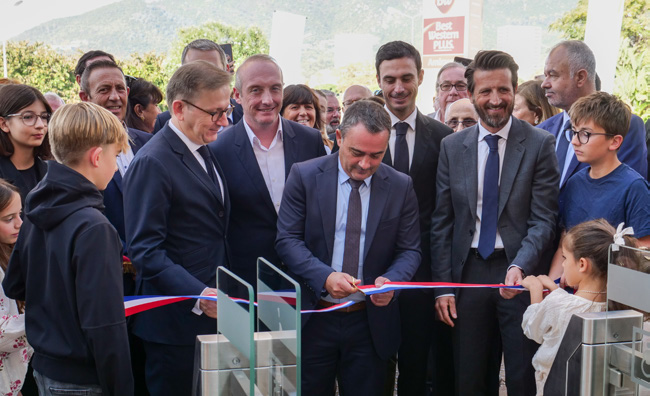
Since autumn 2025, the three-kilometer-long “Angelo” cable car has been serving four multimodal stations in Ajaccio. The 12-passenger gondola lift connects the new hospital, schools, sports facilities, and the Mezzavia shopping center.
The cable car is part of a comprehensive development plan by the city of Ajaccio aimed at improving mobility and reconnecting evolving neighborhoods such as Mezzavia, Stiletto, Finosello, Saint-Joseph, and La Citadelle.
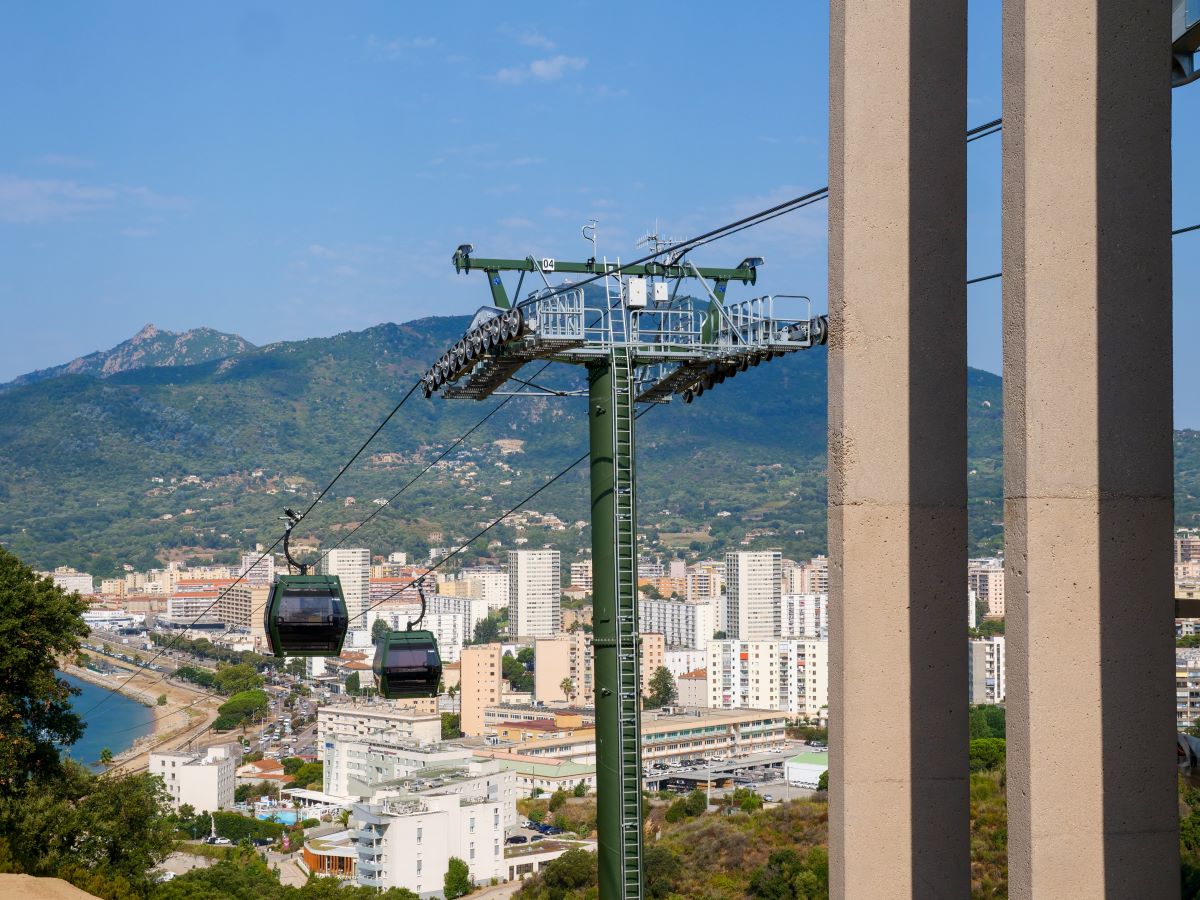
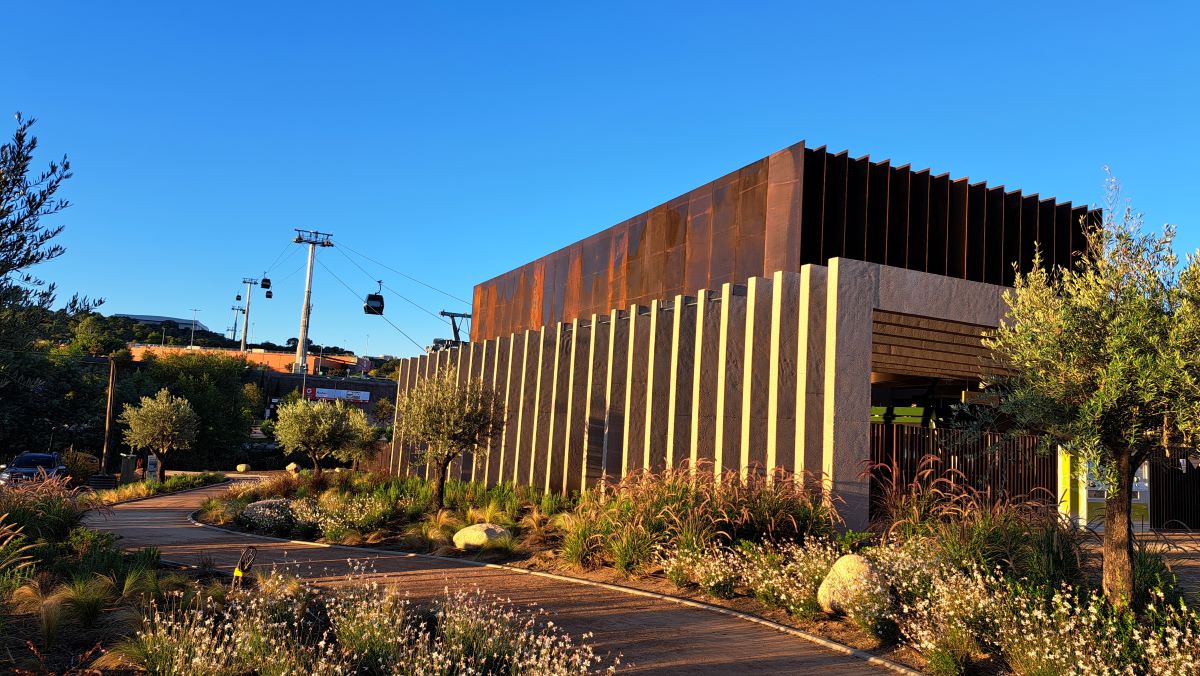
With over 45,000 vehicles passing through the eastern city entrance daily, the area suffers from significant congestion. In this context, the cable car offers a genuine alternative to private cars, connecting Mezzavia, the Saint-Joseph district, and the waterfront in just twelve minutes.
With a capacity of 1,500 passengers per hour per direction, it complements the existing public transport network and promotes intermodality through connections to buses, shuttles, and park-and-ride facilities. Furthermore, the cable car reduces noise pollution and CO2 emissions, improves the quality of life for residents, and provides a boost to tourism.
Intermodal
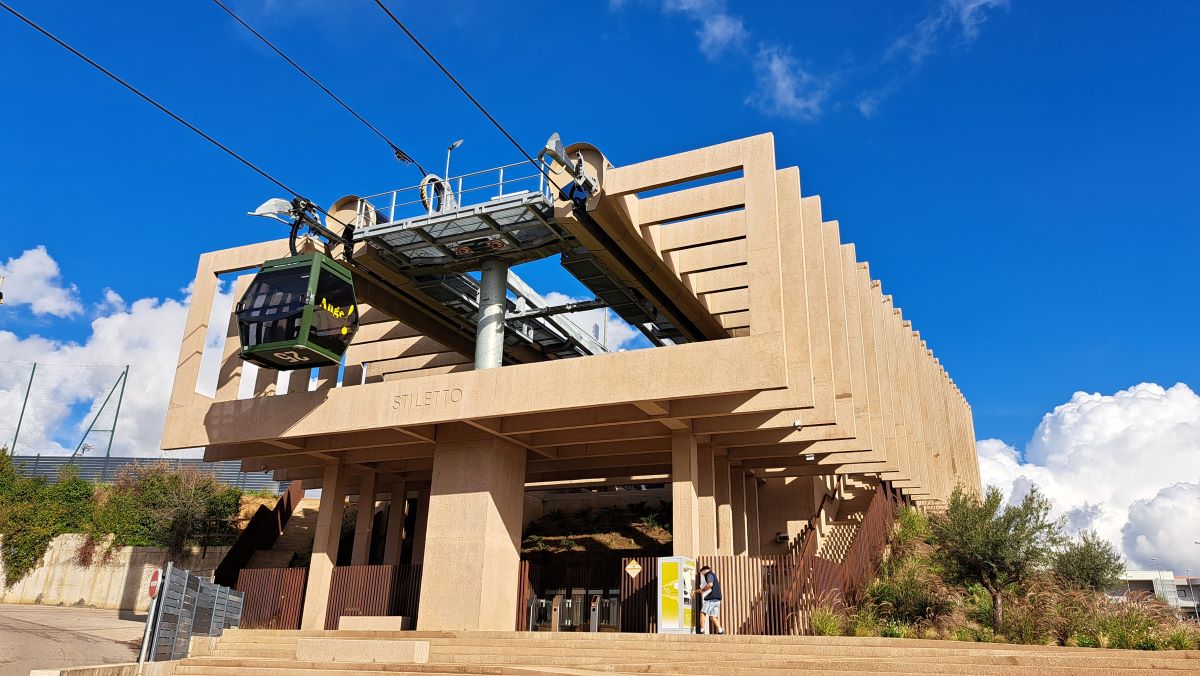
The stations are designed as multimodal hubs that interconnect various modes of transport.
A mandate beyond completion
The Angelo project officially began in March 2022 with the signing of the CREM contract (Design, Build, Operate, Maintain) between the CAPA community association and the manufacturer POMA.
Following a two-year phase of studies and administrative preparations, construction began in March 2024. The project was implemented by a local and regional consortium – including POMA, Egis Rail, Raffalli, Groupe Rocca, and CAPO Architectes.
A key feature: the contract was strategically designed for the long term and includes operation and maintenance for ten years, with an option for extension. Consequently, the Angelo gondola was designed under POMA’s LIFE R’way initiative to follow sustainable and innovative principles beyond the construction phase.
LIFE R’way stands for Low Impact For Environment Ropeway: the goal is a low environmental footprint throughout the entire lifecycle, from planning to operation. Through optimized airflow and a minimal footprint, the natural environment and residential areas are preserved.
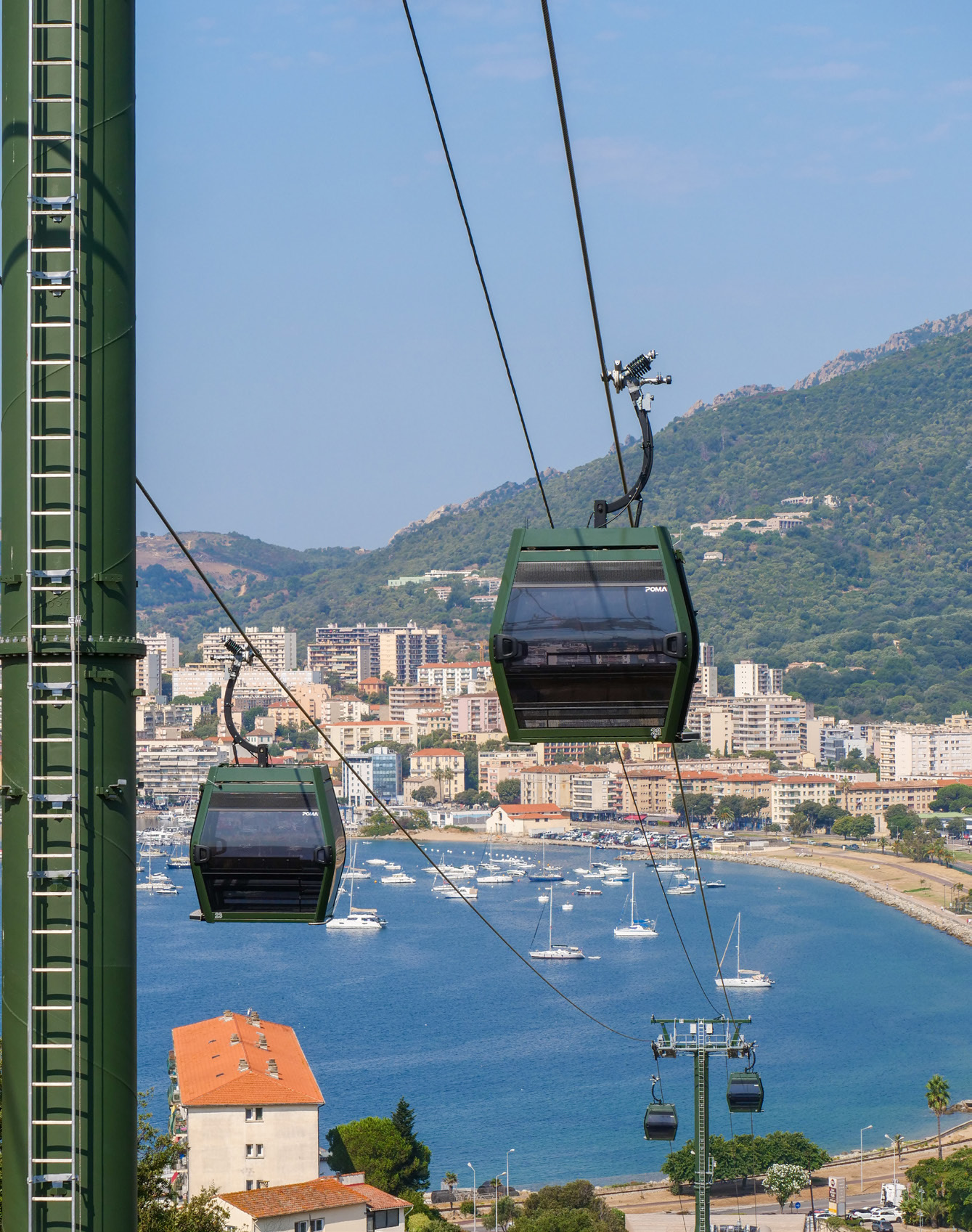
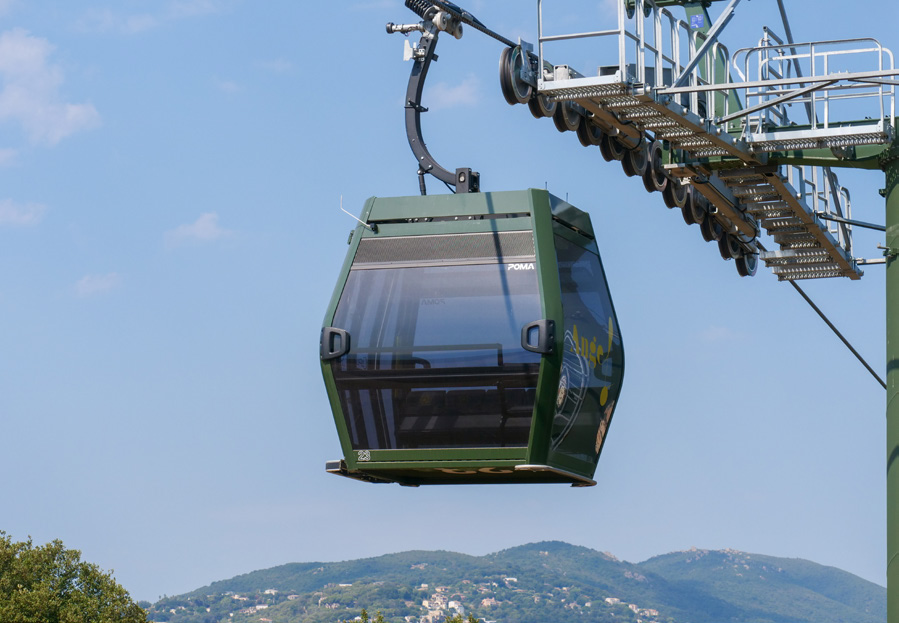
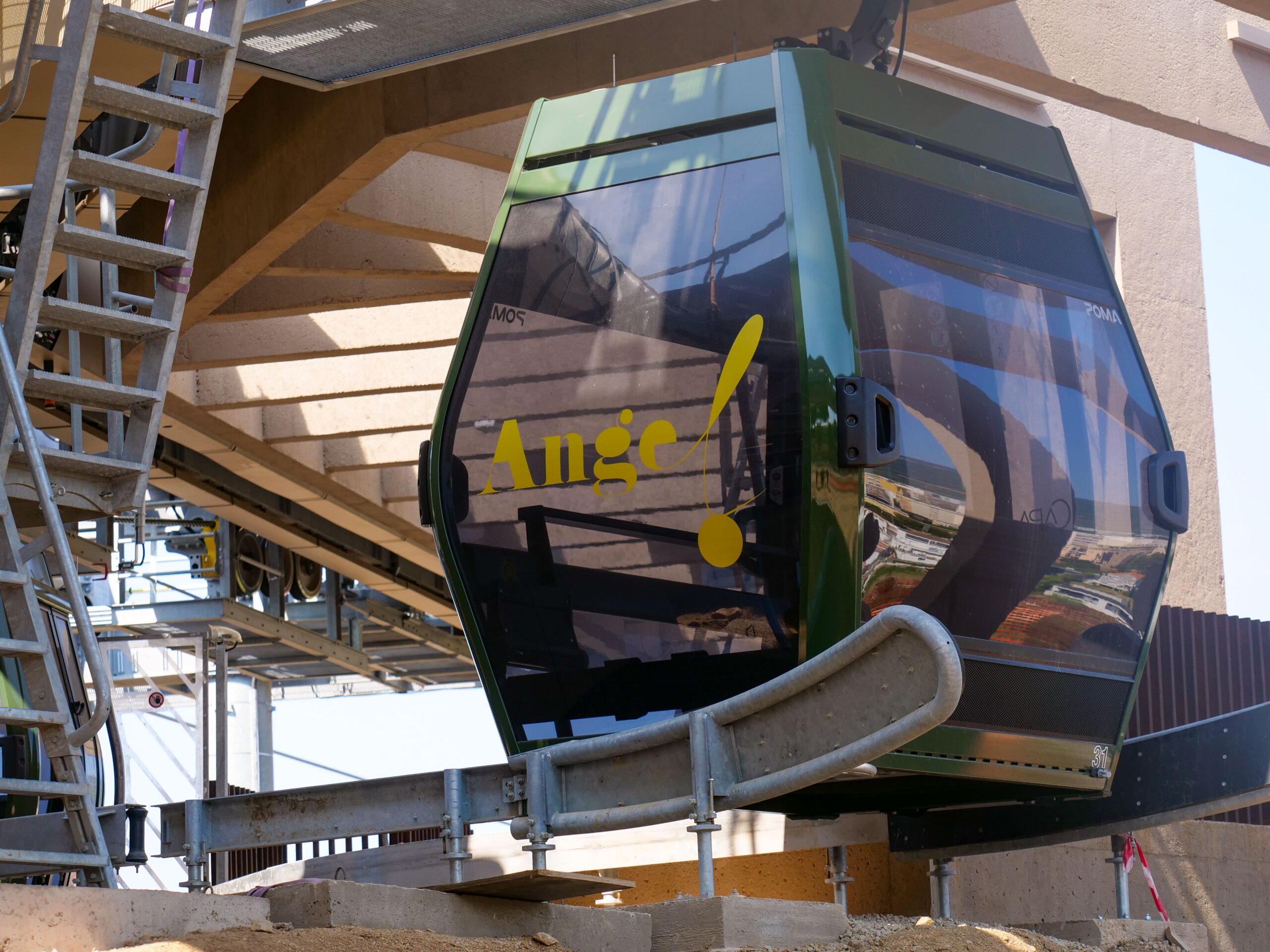
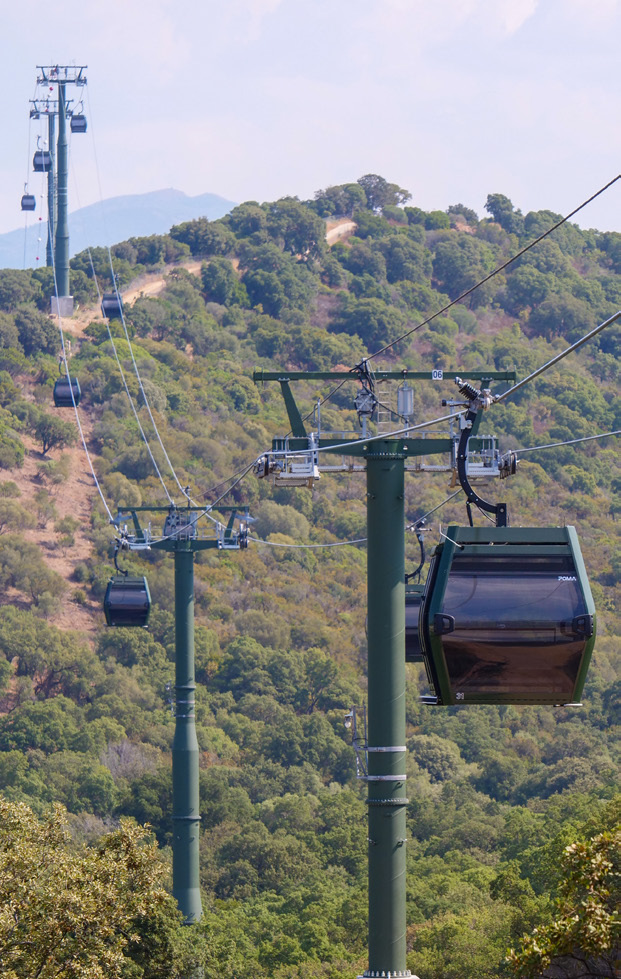
The construction phases were also planned to minimize environmental impact. Every architectural decision served landscape integration – from green-painted towers to cabins decorated with “imperial bees“ and lighting that respects the site’s topography.
Accessible
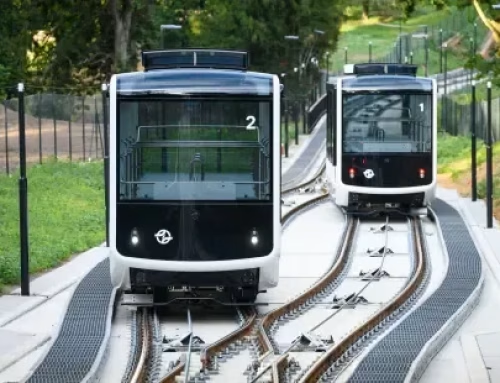
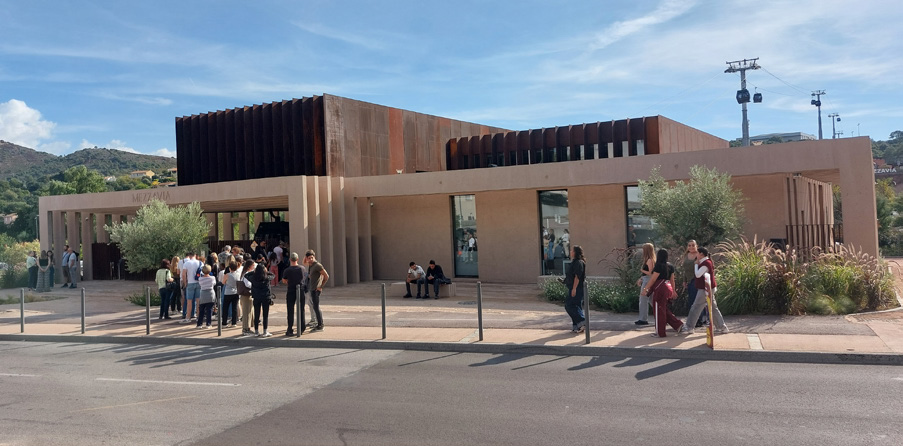
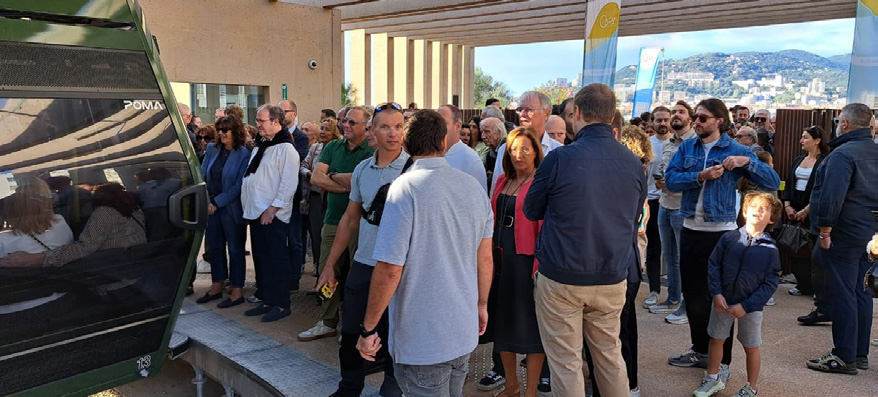
Boarding at the stations has been made easier and safer through adjusted speeds.
POMA provides reliability
The sustainable LIFE R’way approach is also reflected in reliable, safe operation with short maintenance windows, guaranteed by predictive, high-quality servicing. For this reason, POMA will operate and maintain the system through its subsidiary SECA in partnership with local companies for a ten-year period.
This creates 28 direct jobs, with six employees constantly on duty during operating hours. SECA has continuous access to the expertise of the French ropeway manufacturer.
Environmental awareness
Green-painted towers carefully integrate the cable car into the surroundings.
POMA guarantees top-trained personnel
The greatest challenge is ensuring optimal quality and continuity of service for users. To achieve this, POMA partnered with AFPA Corse and France Travail to recruit and train qualified technicians according to a specific schedule. This approach simultaneously contributes to the development of the local labor market by strengthening the skills and presence of specialists in the region.
“In education and training, we rely heavily on our digital training program, UPILOT,“ reports Michael Fauche, Strategy and New Market Director at POMA.
The system tracks employee training units and provides highquality content; POMA also utilizes a simulator. “Furthermore, many POMA experts come on-site to provide training on specific components like the grips. We also work with Domaine Skiable de France Formation (DSFF), who provide us with professional trainers for operations,“ Fauche continues.
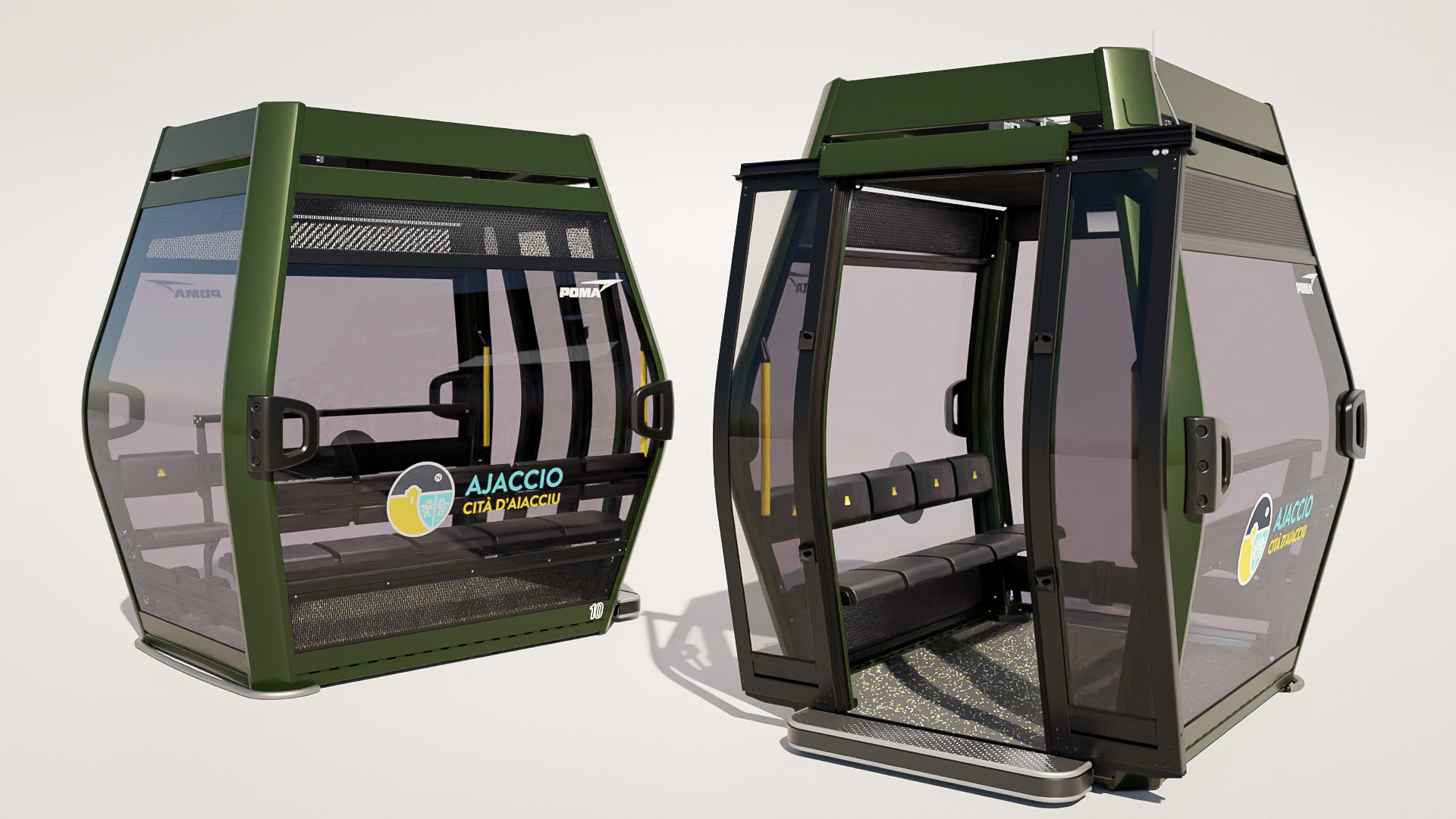
The accessible cabins
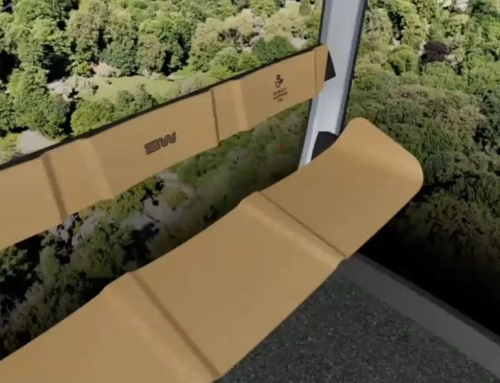
offer panoramic views of the city and coast through their large windows. The integration of bike racks also promotes combined use.
All-Inclusive package, digital tools
From rope inspections and operational monitoring to the maintenance of ticket machines, the contract covers all tasks required to operate and maintain the cable car professionally – the client can rely completely on SECA.
SECA utilizes the entire digital software suite of the HTI Group (which includes POMA): this starts with Skadii for monitoring and operations logs and extends to POMA-exclusive solutions like COPILOT, UPILOT and the CALEM maintenance system.
Technical data
Angelo Cable Car Ajaccio
| Length | 3,012 m |
| Initial capcity | 1.000 P/h/d |
| Final capacity | 1.500 P/h/d |
| Vertical rise | 54 m |
| Initial number of cabins | 34 |
| Final number of cabins | 50 |
| Number of stations | 2+2 |
| Speed | 5,5 m/s |
| Number of passangers per cabin | 12 P |
Conclusion: strategy put into practice
Whether planning, construction, or operation: the example of the Angelo cable car demonstrates how POMA‘s sustainable-innovative vision is consistently applied through all lifecycles of a ropeway.
“The LIFE R’way strategy translates our corporate social responsibility into products, services, and strategies in a practical way. By managing operation and maintenance according to our standards, providing fair service, training local personnel, and creating development opportunities for employees, we bring LIFE R’way to life,“ concludes Fauche.