
Cities
Renewable energy for cable cars: Bolivia focuses on self-generation
The Mi Teleférico cable car in the Bolivian capital, La Paz, is currently negotiating with international organizations to develop a model for self-generation of renewable energy. The goal is to reduce dependence on electricity from the public grid, according to Mi Teleférico’s CEO, Christian Eduardo.
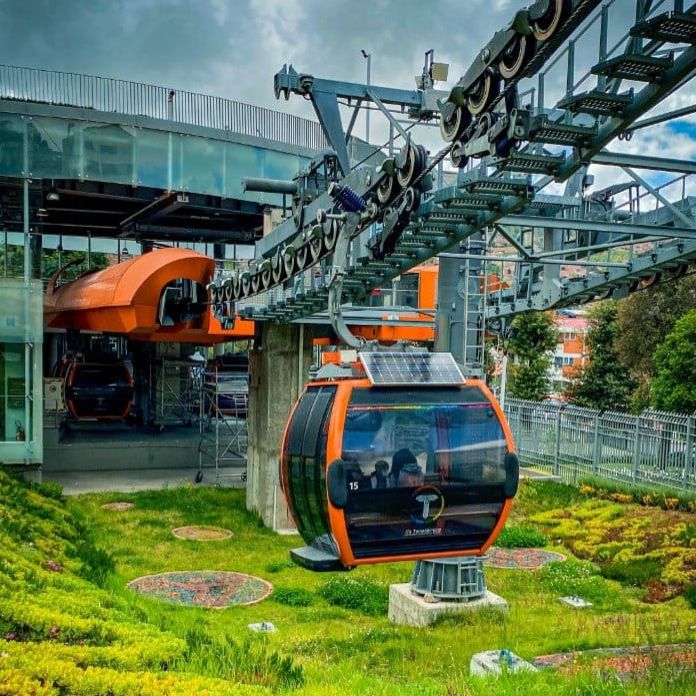
The cabins of Mi Teleférico are already equipped with solar panels, which, according to the operator, generate enough energy to power the lighting, intercom systems, and security cameras.
“Riding Mi Teleférico today means not only moving quickly and comfortably through the city, but doing so in an environmentally conscious way,” said the CEO of Mi Teleférico.
In addition, the installation of photovoltaic panels on the roofs of various stations of the cable car system is planned as part of the implementation of the new “Café” line.
Mi Teleférico is the world’s largest urban cable car network.
The world’s largest urban cable car
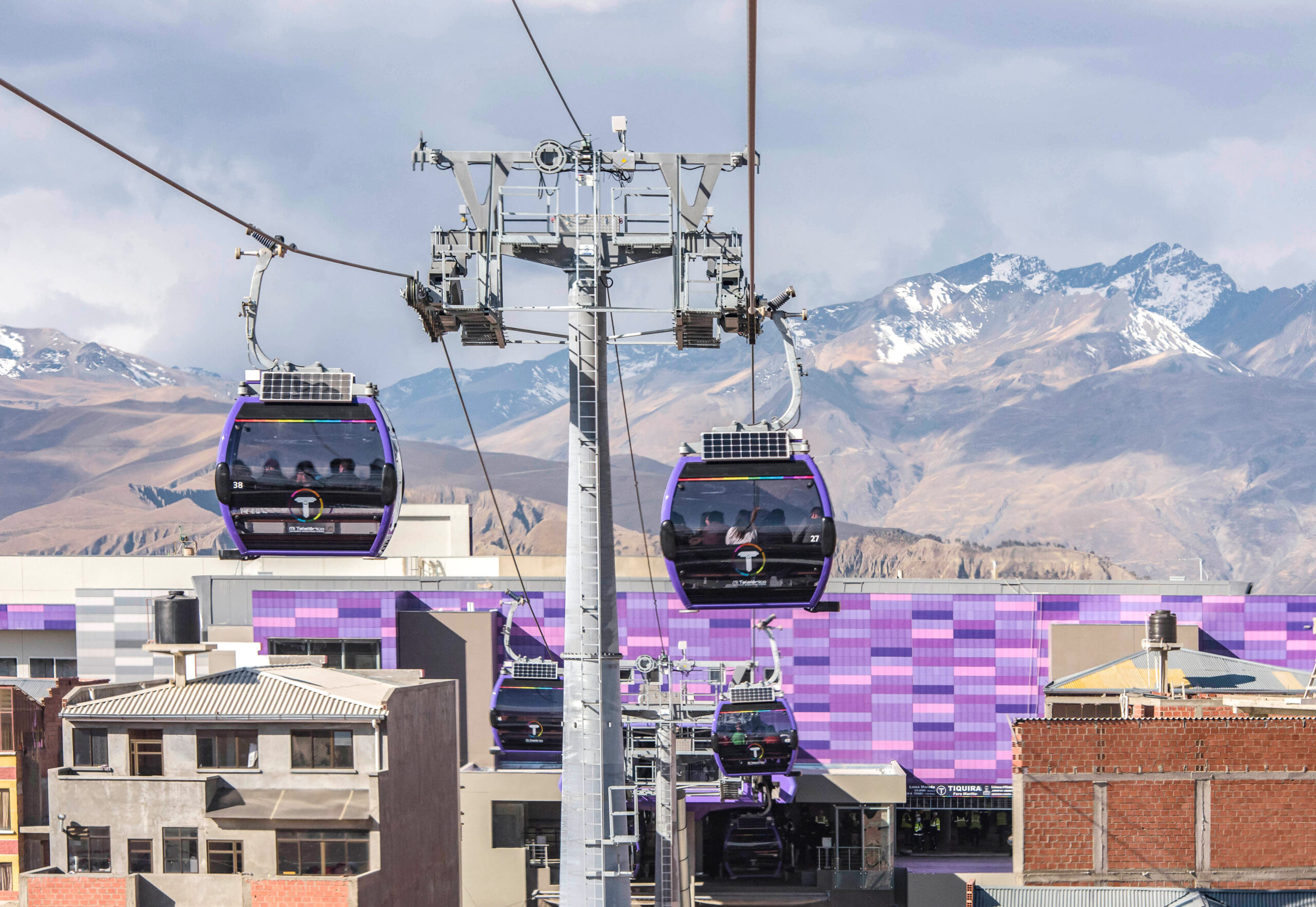
Mi Teleférico is considered the world’s largest urban cable car network. A total of ten lines with an overall length of over 30 kilometers connect the cities of La Paz and El Alto, carrying around 300,000 people daily. The system began operating in 2014 and was continuously expanded until 2019.
The cable car network consists of detachable 10-passenger gondola lifts – a total of 1,396 cabins glide over the city.
Solar energy in Colombia as well
In Colombia, cable cars also operate with solar panels on the cabins.
With two solar panels on each cabin, TransMiCable transports around 20,000 residents of the southern neighborhood of Ciudad Bolívar up and down the mountain in under 15 minutes each day.
The cabins of the TransMiCable cable car in Colombia are also equipped with solar panels.
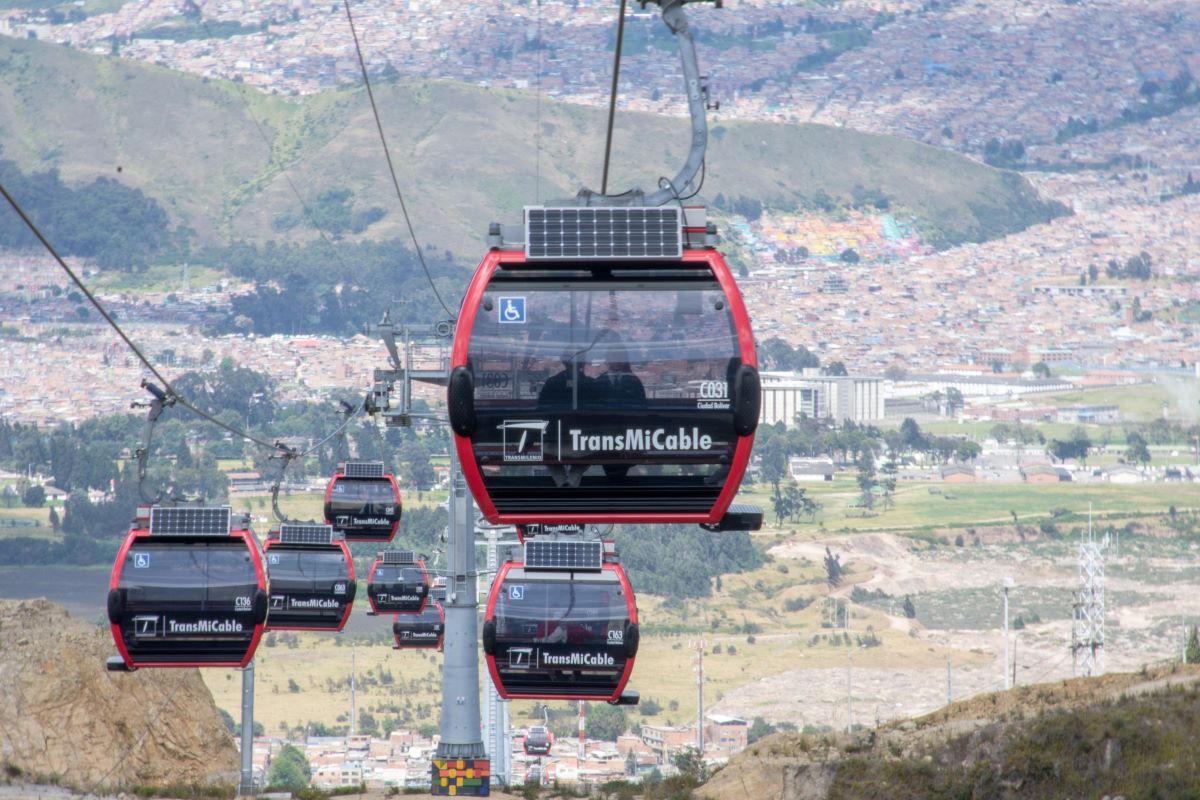
The Instituto de Desarrollo Urbano (IDU), which oversaw the construction of TransMiCable, reports that the energy generated by the solar panels on each cabin allows the cable car to operate five to six hours a day without using any additional power source.
Combined with conventional electricity – about 70 percent of which in Colombia comes from hydropower – the cable cars, according to the IDU, help prevent emissions from fossil fuels used in transportation.