Cities, Tourism
Karlsruhe plans to modernize the Turmberg Funicular
The Government Presidium in the German city of Karlsruhe sent the funding approval for the barrier-free expansion and extension of the Turmberg Funicular in Karlsruhe-Durlach to the Karlsruhe Transport Company (VBK) at the beginning of December 2025.
The state of Baden-Württemberg is supporting VBK under the State Municipal Transport Financing Act (LGVFG). Financially, Baden-Württemberg is contributing €17.49 million toward total costs of €32 million.
The funding comes from the LGVFG program for public transport (ÖPNV).
With this instrument, the state of Baden-Württemberg supports not only counties, cities, and municipalities but also transport companies like VBK in building, expanding, and modernizing their transport infrastructure in line with sustainable and climate-friendly mobility.
“Baden-Württemberg is a funicular champion: with the closure of Germany’s oldest funicular, the Turmberg Funicular, at the end of 2024, there was temporarily one less. But that won’t last: the funicular to Karlsruhe’s local mountain will be brought back into operation longer, more modern, and barrier-free with the help of the state. The grant of around €17.5 million enables VBK to move forward with the project. This is how we make an old, climate-friendly technology future-ready,” said state transport minister Winfried Hermann.
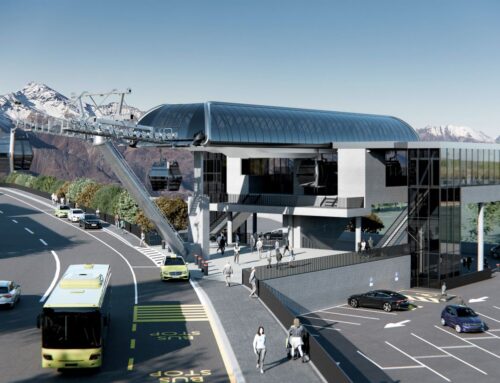
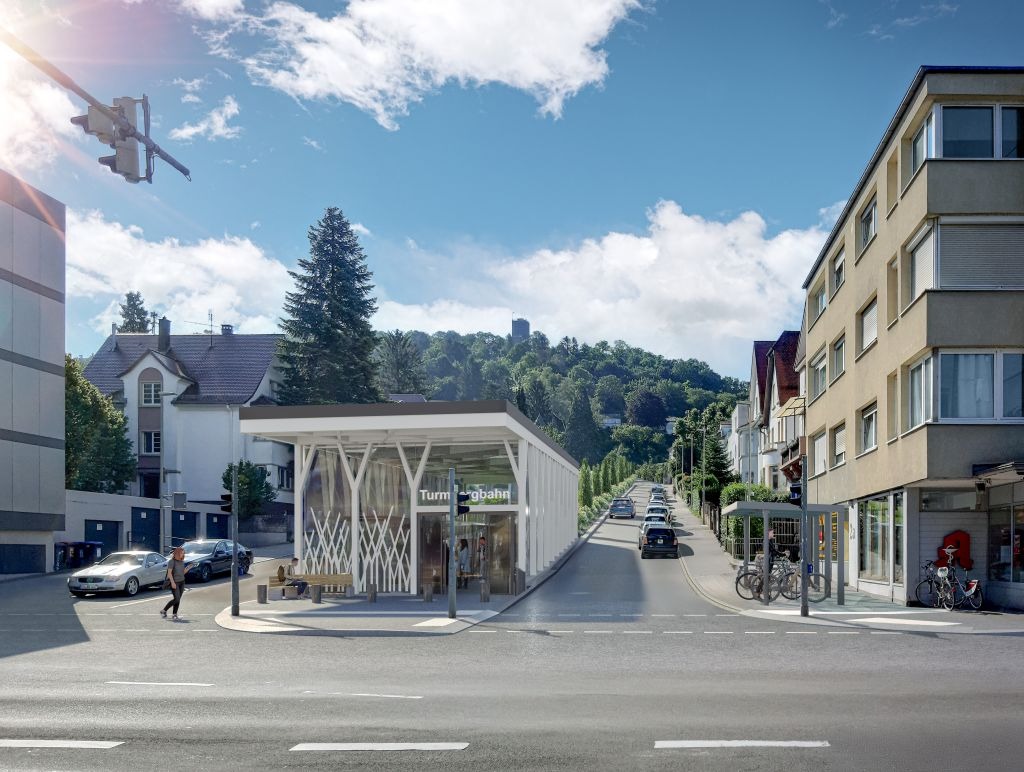
Valley station visualization.
The new Turmberg Funicular will be integrated into the public transport system.
Modernization plans
The plans for the Turmberg Funicular foresee a comprehensive modernization, a barrier-free upgrade, and an extension to the Bundesstraße 3. At the same time, the facility will be updated to meet current technological standards and safety requirements.
In spring 2026, the dismantling of the existing railway infrastructure and station buildings is scheduled to begin. Construction of the new railway line and the new mountain and valley stations could then start in mid-2026.
The new construction work is expected to take around 15 to 18 months. As part of the redesign, a railway overpass will also be built over a pedestrian and bicycle path to cross the intersection of Bergbahnstraße/Turmbergstraße/Posseltstraße/Kastellstraße.
Mountain station visualization.

New vehicles
The state of Baden-Württemberg is also supporting the purchase of two new vehicles with €1.755 million.
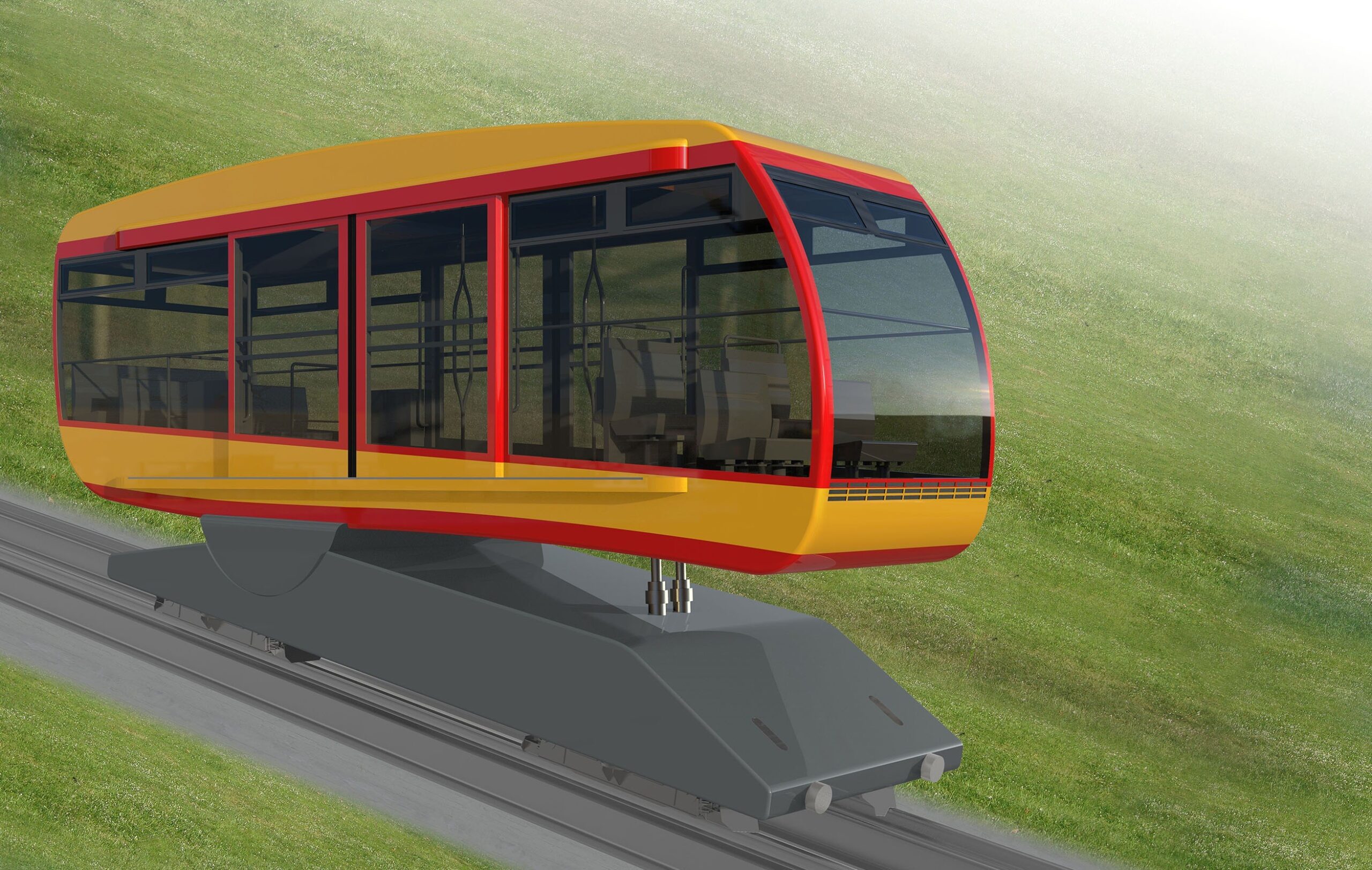
Each cabin will have a capacity of 70 passengers and feature a level adjustment system, ensuring that the cars remain horizontal during the ride and that barrier-free access is guaranteed. The new system, including the two vehicles, will be built by the company GARAVENTA.
New vehicle visualization.
Integration into public transport
It is also planned that, after the construction work is completed, the funicular will be integrated into the fare system of the Karlsruhe Transport Association (KVV). This will allow passengers to use the funicular with their regular public transport ticket.
The planned automatic operation will allow extended operating hours while simultaneously reducing operating costs.
Germany’s oldest funicular
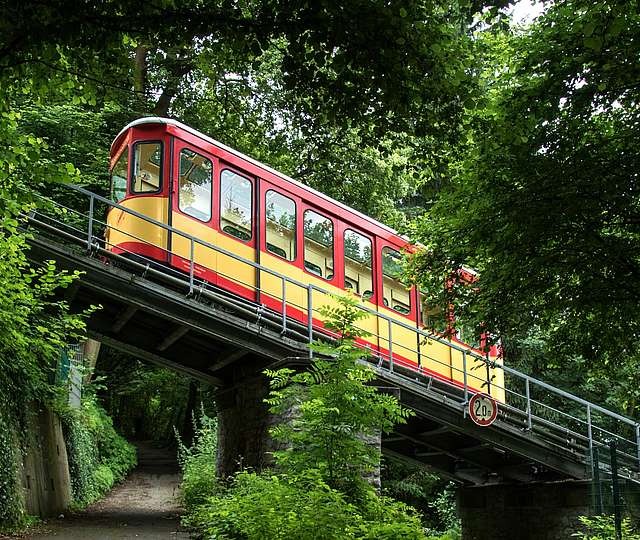
Since 1888, the Turmberg Funicular has transported passengers to Karlsruhe’s local mountain, which is 256 meters high. On its 315-meter route, Germany’s oldest funicular overcame a height difference of 100 meters with a maximum gradient of 36.2 percent.
The last rides with the historic cars, which had been in service since 1966, took place on December 29, 2024. The operating license for Germany’s oldest funicular expired on December 31, 2024, and service was subsequently suspended.