
Management & Tourism, Snowmaking & Slope Maintenance
Driving Force for E-Mobility
For years, the German-Austrian ski resort Oberstdorf · Kleinwalsertal has been committed to ecologically sustainable operations through their MyMountain Nature initiative. As part of the Global Sustainability Ski Alliance (GSSA) founded in 2025 – a group of eight ski resorts aiming for more sustainable business practices – the German-Austrian ski area has intensified its electrification efforts, as board members Henrik Volpert and Johannes Krieg report in an interview with SI.
SI Magazine: Why are you focusing on e-mobility?
Volpert: We cable car operators have always been pioneers of sustainable electric mobility. Electrifying our fleet is the next logical step. Compared to other industries, however, alpine technology – meaning fully electric snow groomers, snowmobiles, and the like – is still in its infancy.
We want to actively push this topic and, as a partner to the industry, gain early experience and bring the technology into daily operations on the snow. Ultimately, we expect tangible economic and operational advantages.

Henrik Volpert
Board Member ski resort Oberstdorf · Kleinwalsertal
What specific steps have you taken?
Krieg: Following our 100 percent green electricity initiative with PV systems and hydroelectric power plants, as well as the introduction of HVO diesel for our 38 conventional snow groomers, we are now actively seeking fully electric solutions for our entire fleet. Other sectors are much further ahead here.
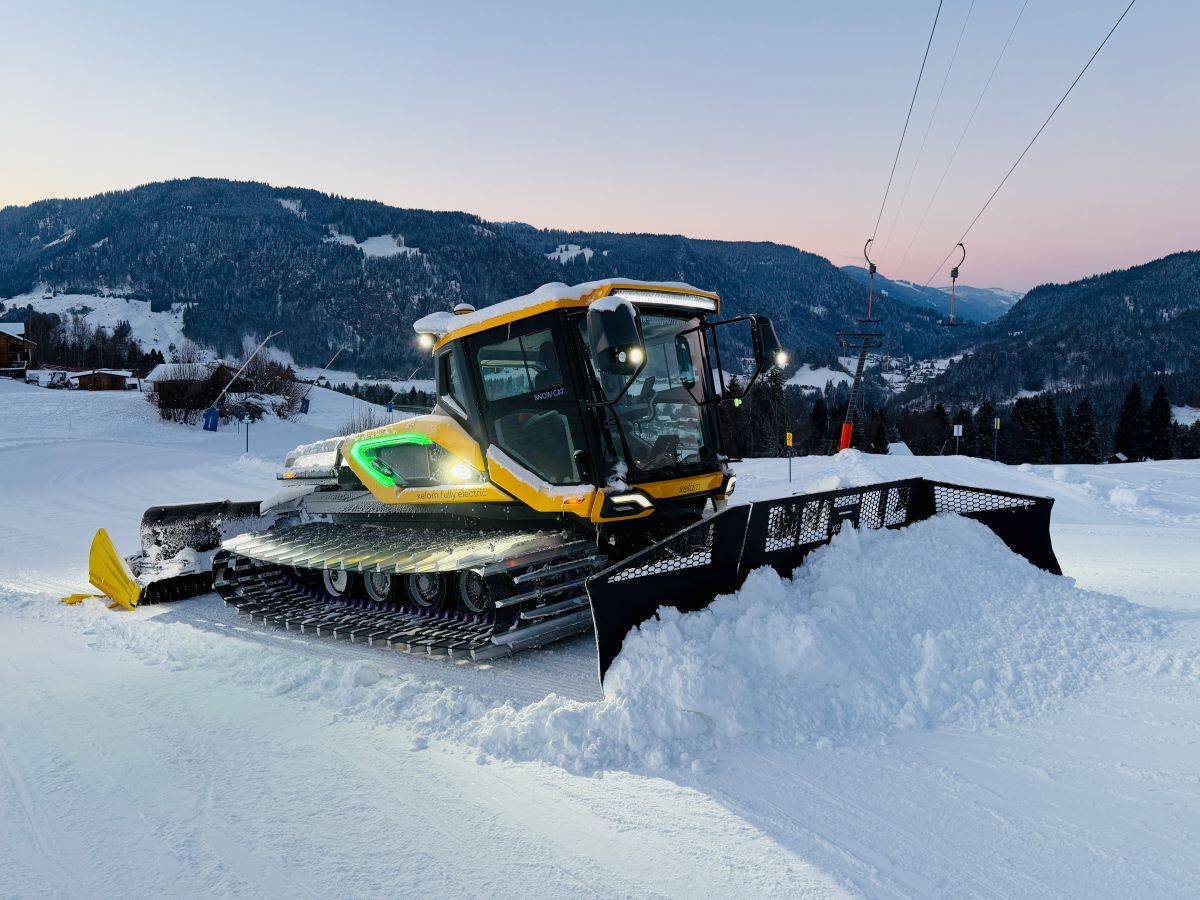
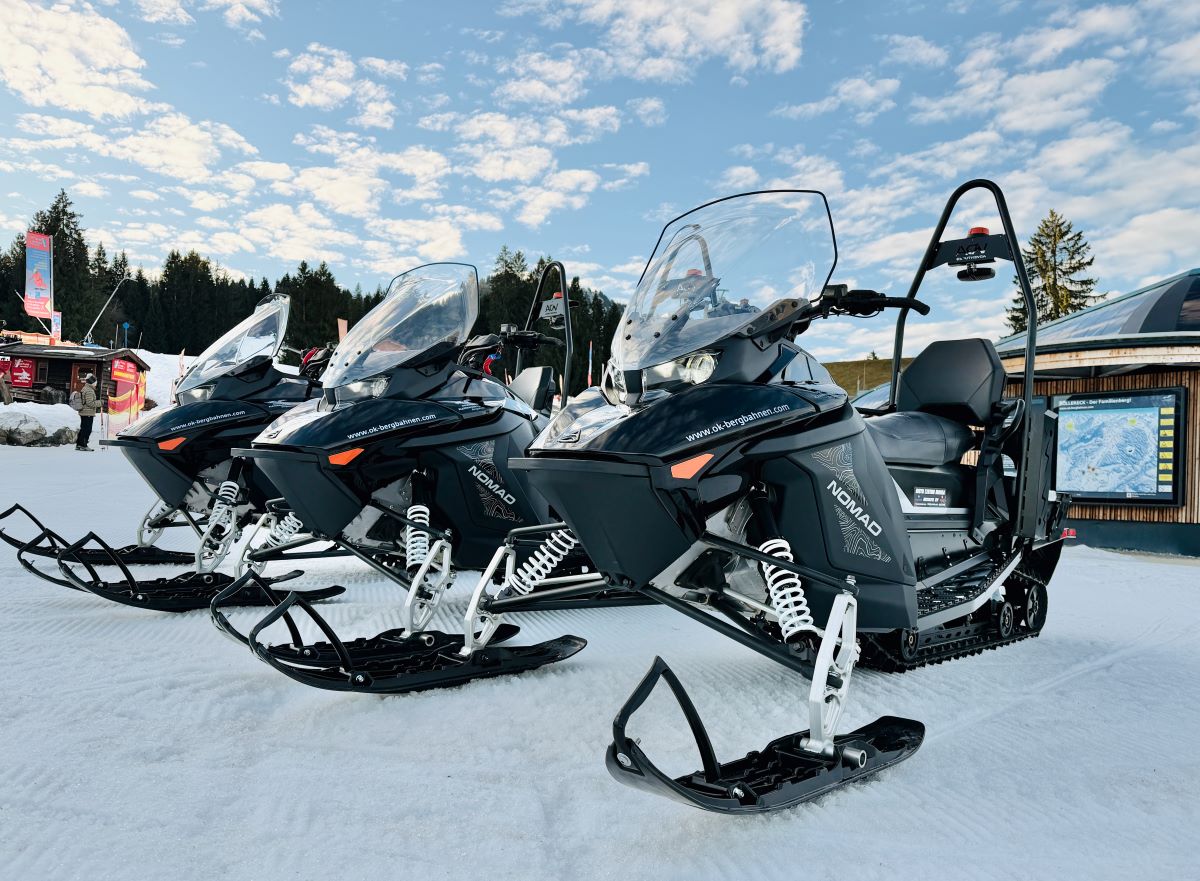
After initial successful trials in the 2024/25 winter season, we have now purchased three fully electric snowmobiles as well as three snow groomers and snow blowers for regular operations.
We had to import the snowmobiles from North America because there was no comparable offer here. For the grooming vehicles, thanks to close cooperation with TechnoAlpin, we are using Xelom Snow Cats.

Johannes Krieg
Board Member ski resort Oberstdorf · Kleinwalsertal
What has your experience been with the e-snow groomers?
Volpert: Operationally, there is a lot to be said for electric drives: the torque and sheer pushing power of fully electric vehicles are significantly superior to internal combustion models.
Additionally, electric sbow groomers suffer less wear and are less maintenance-intensive, which is not only cheaper but also increases availability. Most importantly, they are quieter and emission-free, which is a real advantage in our valley ski area.
At the same time, vehicle development is still in its early stages. For example, the range of applications for snow groomers is still limited, and features like winches are not yet available.
As early adopters, we consciously accept these challenges. I am very pleased that our mountain teams are so committed and willing to experiment – even if it occasionally tests our nerves (laughs).
Rarities on the slopes?
The ski resort imported the fully electric snowmobiles from North America because they could not find any suitable options in Europe.
What about the range?
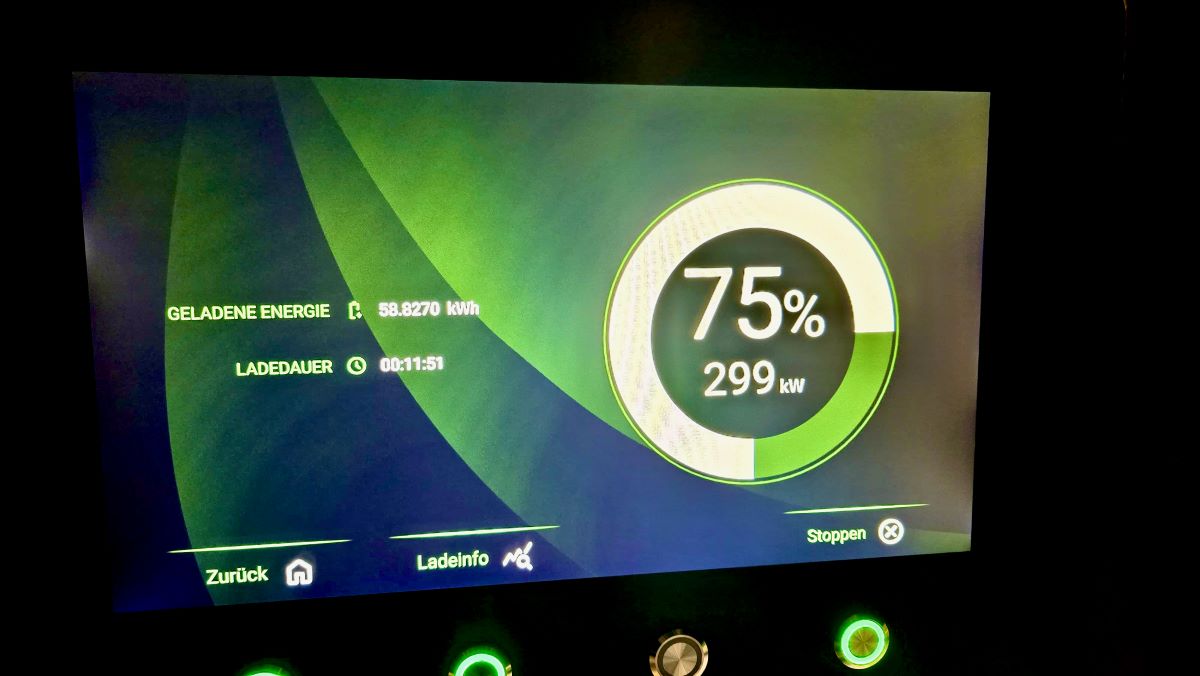
Krieg: We have no problem with the operational range of five to six hours; the vehicles fully recharge at 300 kW superchargers during the drivers‘ breaks. Thanks to snowmaking and cable car systems, we have transformer stations everywhere on the mountain, making the charging infrastructure easy to implement.
Our e-snowmobiles in particular can be flexibly charged at any lift station. We are aware that there is still potential regarding range, and we expect to see major leaps in performance in the coming years.
Contrary to what people know from electric cars, the cold has not been an issue so far. We firmly believe in battery-electric solutions. A look at the bigger picture, especially toward Asia, shows that the race for the right technology was decided long ago.
Power-Brake
Thanks to superchargers, the vehicles‘ batteries can be charged with up to 300 kW during work breaks.
What strategic advantages do you see in e-mobility?
Volpert: Take the snow groomer fleet: conventional groomers are dead capital outside the winter season. Electric vehicles with their 300+ kWh batteries, however, can be used year-round as battery storage – essentially a “grid on the mountain“.
The future applications seem endless: as a power supply for maintaining snowmakers, as energy storage to bypass price peaks on the energy market, as a buffer for the hydroelectric plant, or as emergency power backup to avoid having to keep diesel generators on hand.
Theoretically, we could operate the Nebelhorn almost autonomously for an entire summer day using five snow groomers as energy storage. Furthermore, the entire fuel logistics on the mountain are eliminated, not to mention the ecological benefit.
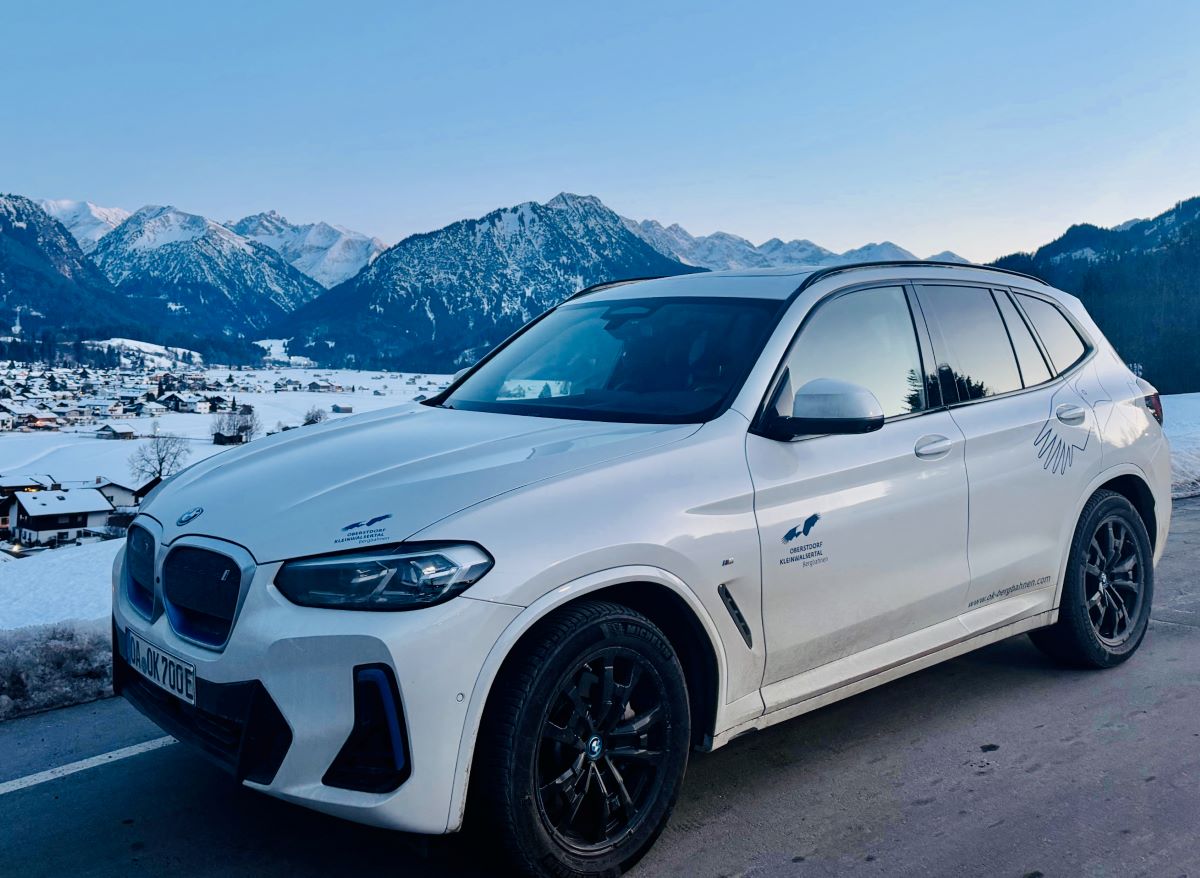
Availability depends on the model:
For regular passenger cars, the ski resort has already partially switched to electric drives, but for pick-ups, they are still searching.
How does the e-mobility offensive fit into the GSSA?
Krieg: Within the GSSA, we work on various topics in working groups. Regarding e-mobility, Kronplatz (South Tyrol), SkiStar (Sweden, Norway), and ourselves are primarily in charge. We are also in close exchange with Compagnie des Alpes (France).
It is important that we remain brand-independent and allow every manufacturer to test their vehicles with us. We want to encourage the supply industry to increase the variety and quality of their e-vehicles and have a great interest in healthy competition. Our industry colleagues who are not yet involved expect us to lead the way as early adopters and provide momentum.
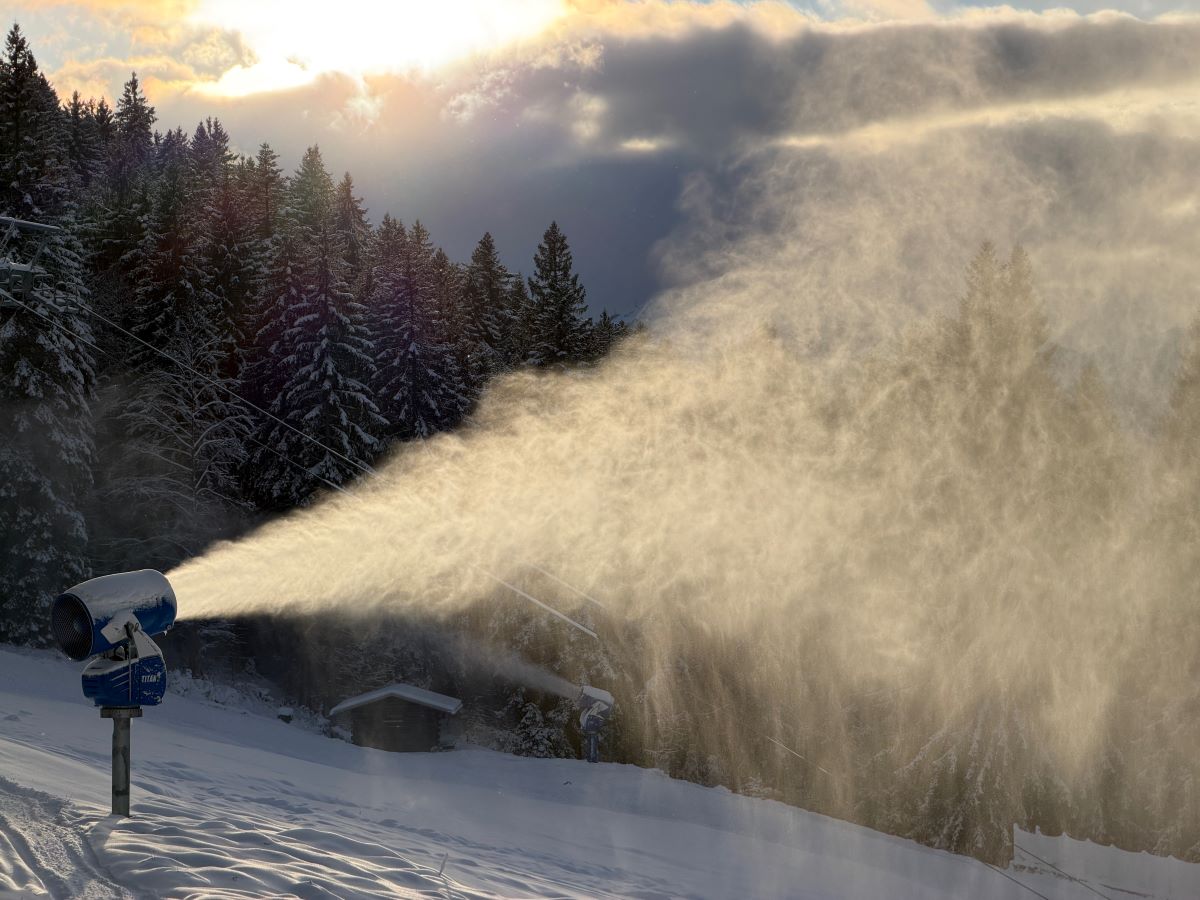
Everything’s already there:
The existing power supply for the snowmaking network makes it easy to implement a charging infrastructure for e-vehicles.
What further steps will you take?
Krieg: Mature fully electric models already exist for tractors and other specialized vehicles; we will be making purchases there soon. For pick-ups for our maintenance and work teams, we are still looking for suitable European suppliers, as short uphill and downhill trips are predestined for electric drives.
Ultimately, it will certainly take some time before sufficient and fully functional electric alternatives are available for all vehicle types. Technical availability and vehicle quality during tough mountain use remain the dominant decision criteria.
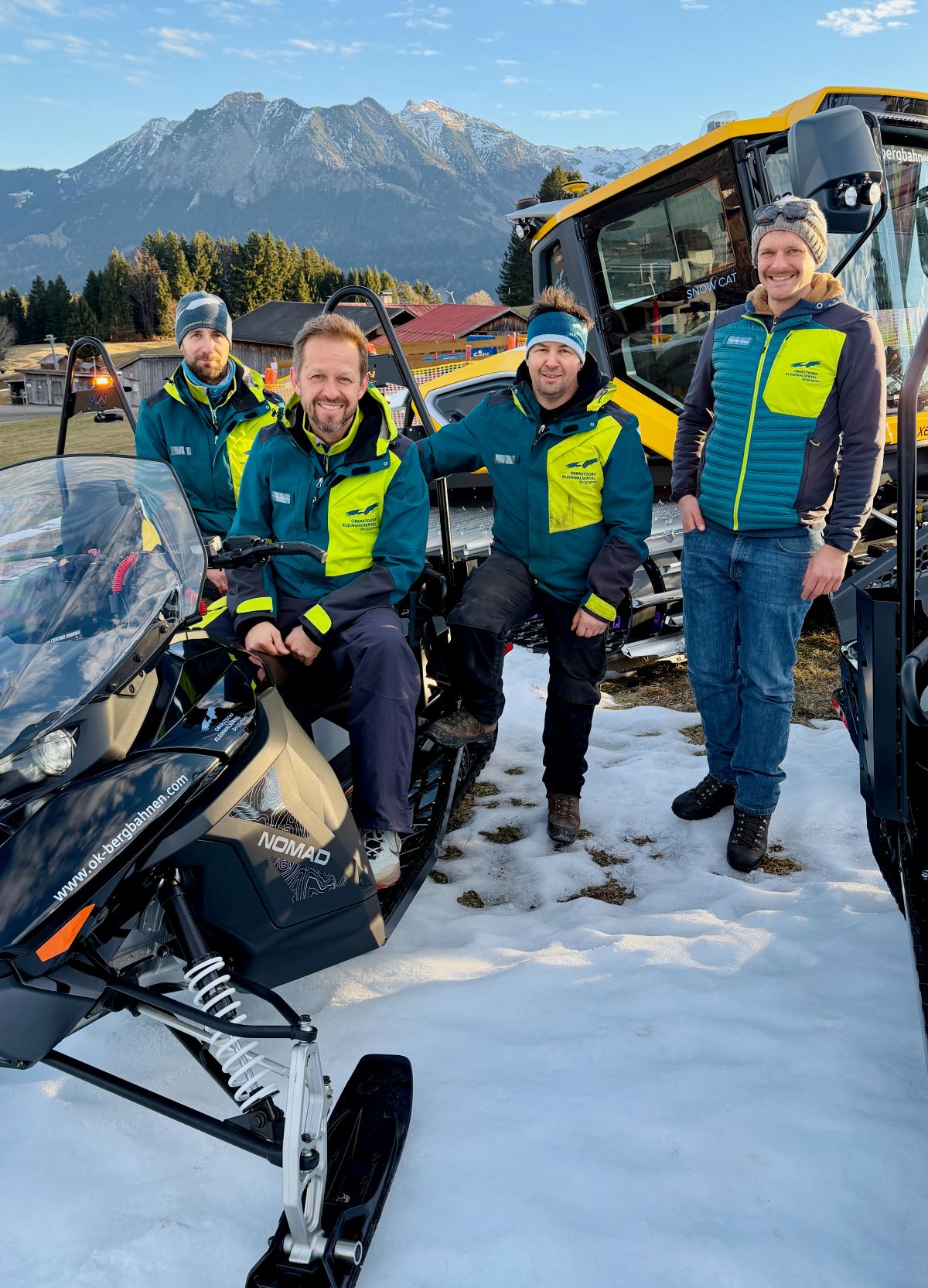
Early Adopter:
As pioneers in the field, the drivers and team leads are testing the often entirely new vehicles to determine their maximum capabilities.
How is e-mobility perceived by employees and guests?
Volpert: We are very grateful to our drivers and team leaders for acting as pioneers, being open-minded, and testing these sometimes entirely new vehicles to their limits. After all, due to the challenges on the mountain, our industry tends to be quite skeptical by nature.
We bring guests and the media along through transparent communication. The feedback regarding less noise and fewer exhaust fumes is very positive, and even laypeople recognize the advantages of electric drives on the mountain. The general consensus is: If not on the mountain, where else does e-mobility make sense!