Snowmaking & Slope Maintenance
Turning old (snow) into new
All ski resorts that practice snowfarming are unfortunately very familiar with the following situation: the snow has reached the final stage before turning into slush and barely binds anymore – about as little as table salt. Skiing or snowboarding on it is unpleasant.
Grooming machines also sink deep into it, and preparing slopes and jumps is hardly possible, as the snow can only be pushed uphill with great effort and does not hold on the slope. With Snowglue LiMES, the Swiss specialist for snow management and snowmaking, Bächler, now provides the solution
Innovative snow production
Snowglue LiMES is based on the LiMES technology used in indoor snowmaking and makes it possible to restore the loadbearing capacity of old snow stored over the summer – already at a wet-bulb temperature (WBT) of 0°C. To achieve this, snow from the previous season is mixed with the very fine snow produced by LiMES.
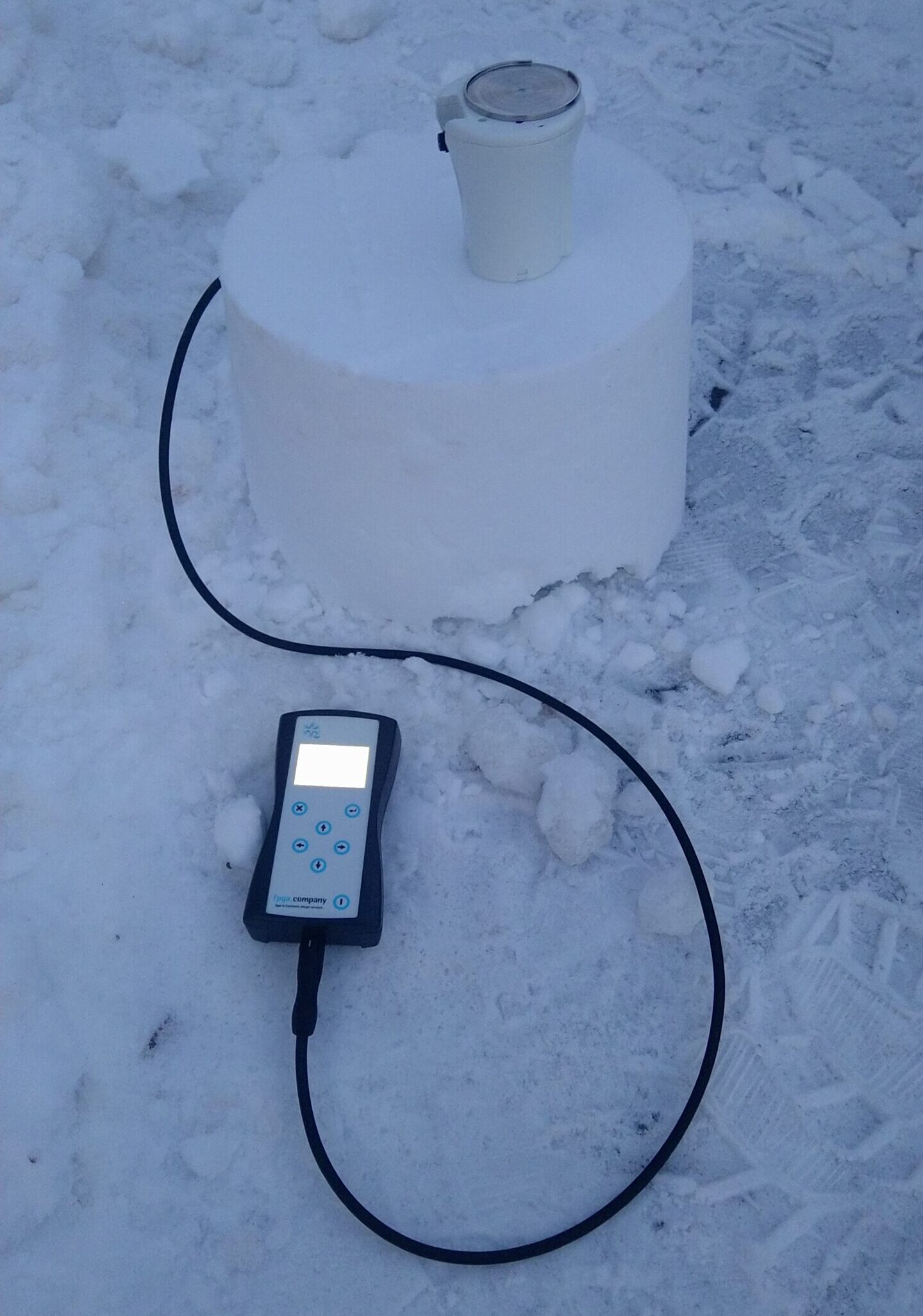
The SLF institute
conducted tests with Snowglue LiMES snow and confirmed the effectiveness of the technology. © SLF
Successful tests in indoor ski slopes
The Bächler team discovered the phenomenon at the indoor ski slope in Wittenburg, Germany. The snow that skiers pushed down in the hall had to be removed and disposed of from time to time, as people would sink up to 20 centimeters deep.
After the first tests with Snowglue LiMES, this snow rebonded and regained its load-bearing capacity. The same phenomenon was observed in the biathlon hall in Oberhof. Since then, Oberhof and Wittenburg have relied exclusively on LiMES technology for snow production and preservation.
SLF: Outdoor tests and measurements
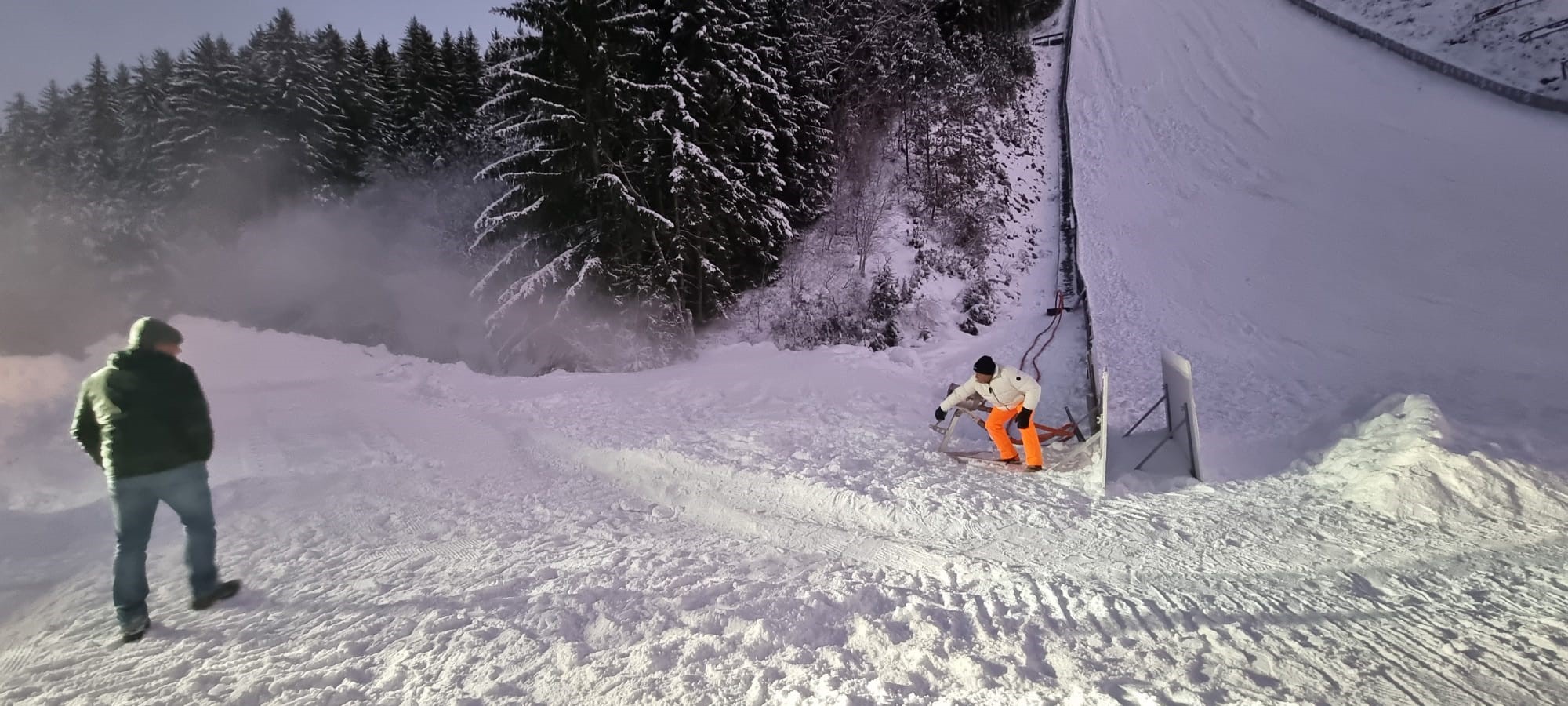
Subsequently, in collaboration with the WSL Institute for Snow and Avalanche Research (SLF) under the direction of Dr. Fabian Wolfsperger, tests and measurements were carried out at the Titisee-Neustadt ski jump. First, the values of the old snow were recorded.
Then, overnight, the Snowglue LiMES snow was applied and worked in the following morning. Additionally, two comparison areas were included using the same procedure. Significant improvements appeared after two to three hours. Eight to twelve hours later, the process was largely complete, and further changes were minimal.
Dr.-Ing. Fabian Wolfsperger
Research Engineer, WSL Institute for Snow and Avalanche Research SLF
“With roughly ten percent additional Snowglue LiMES snow, coarse-grained old snow can once again be made load-bearing.“
Result: snow becomes noticeably firmer
The results confirmed the hardening effect achieved by mixing fresh LiMES snow with old snow stored over the summer. The old snow combined with Snowglue LiMES reached approximately twice the penetration hardness of pure old snow three hours after milling.
The most important process in strengthening dry snow is sintering – the bonding of snow grains. The very large specific surface area (43 mm-¹) of the fine-grained LiMES snow measured on site plays a crucial role in enabling the sintering of the old snow to occur again.
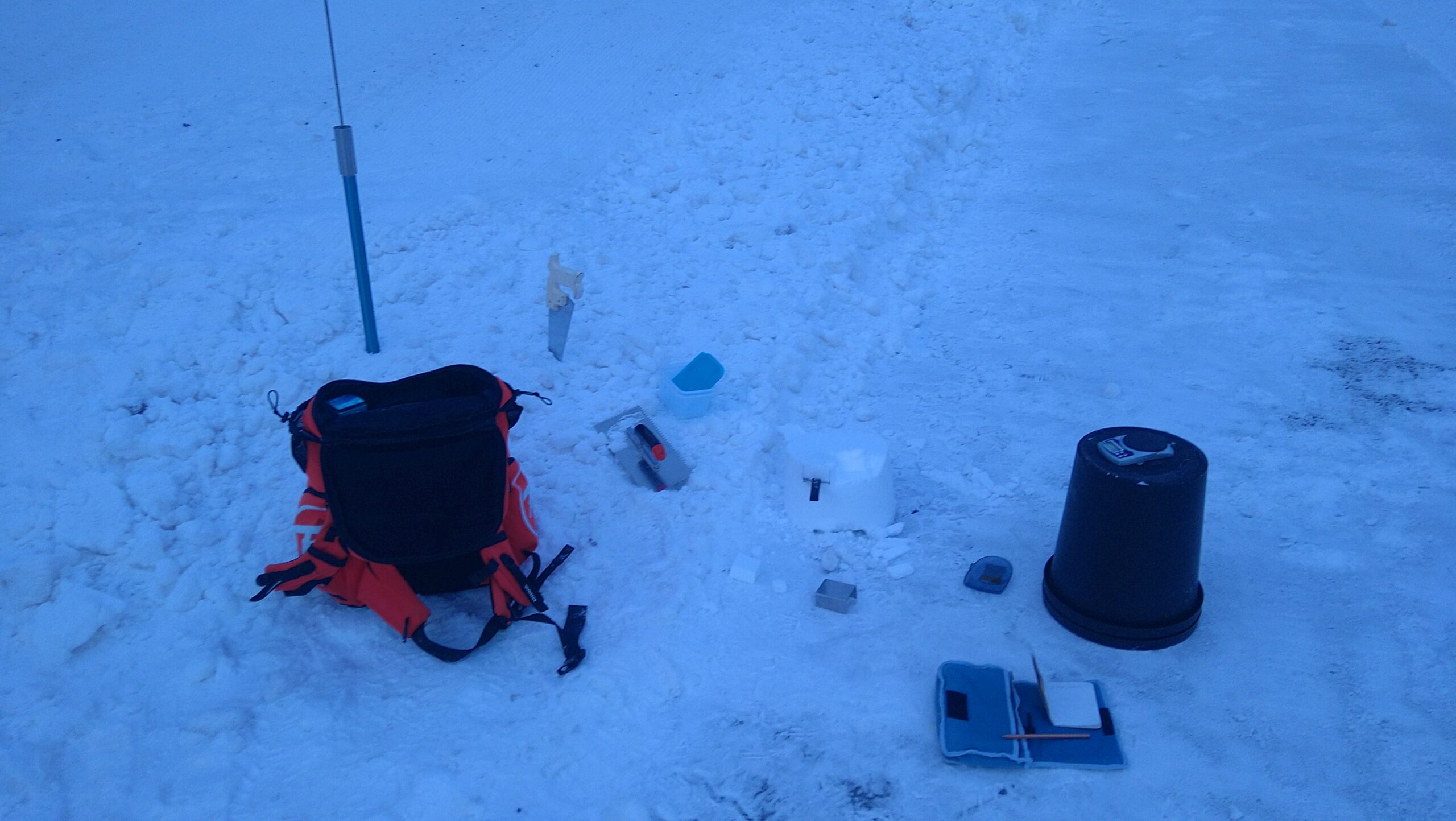
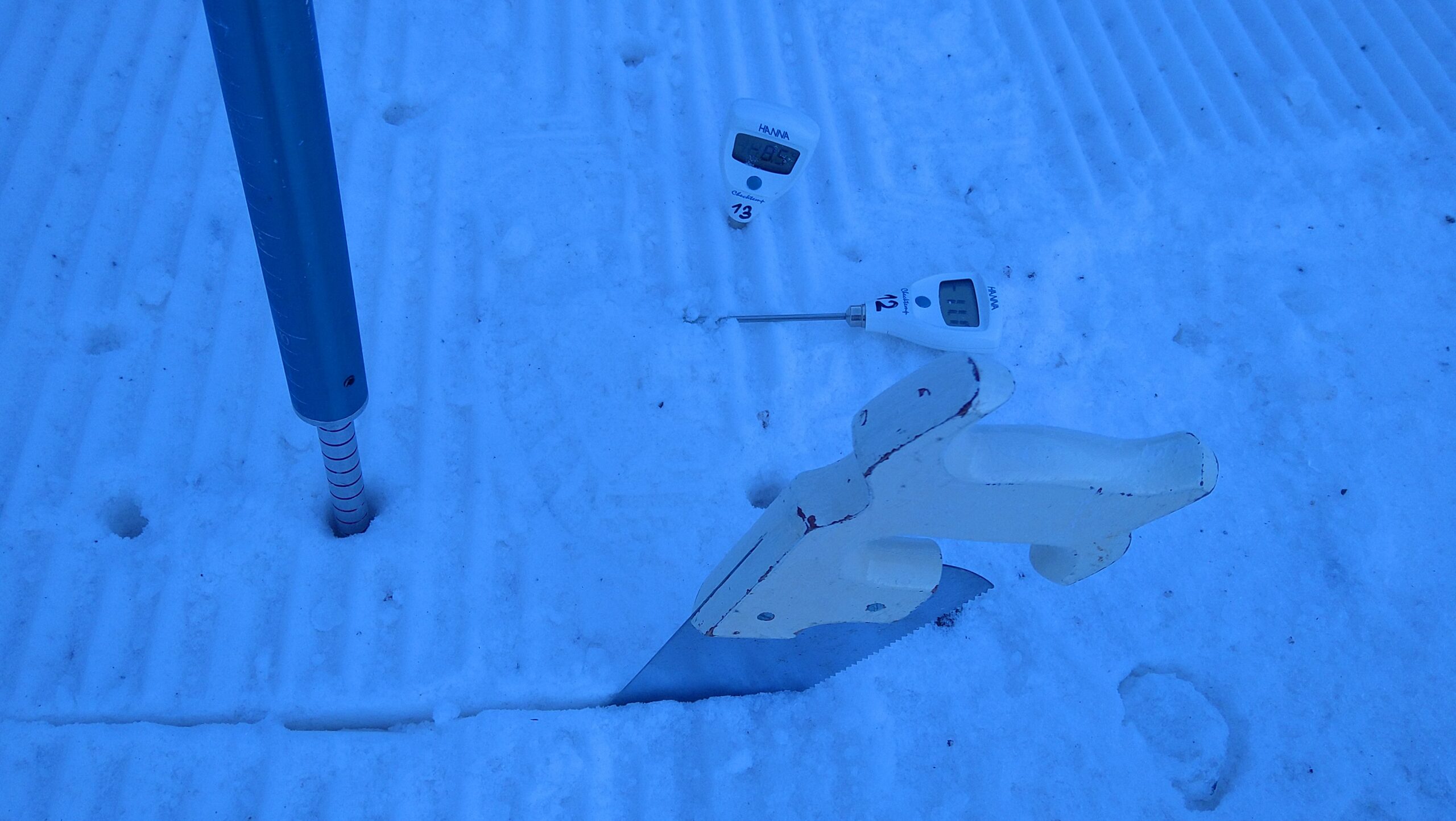
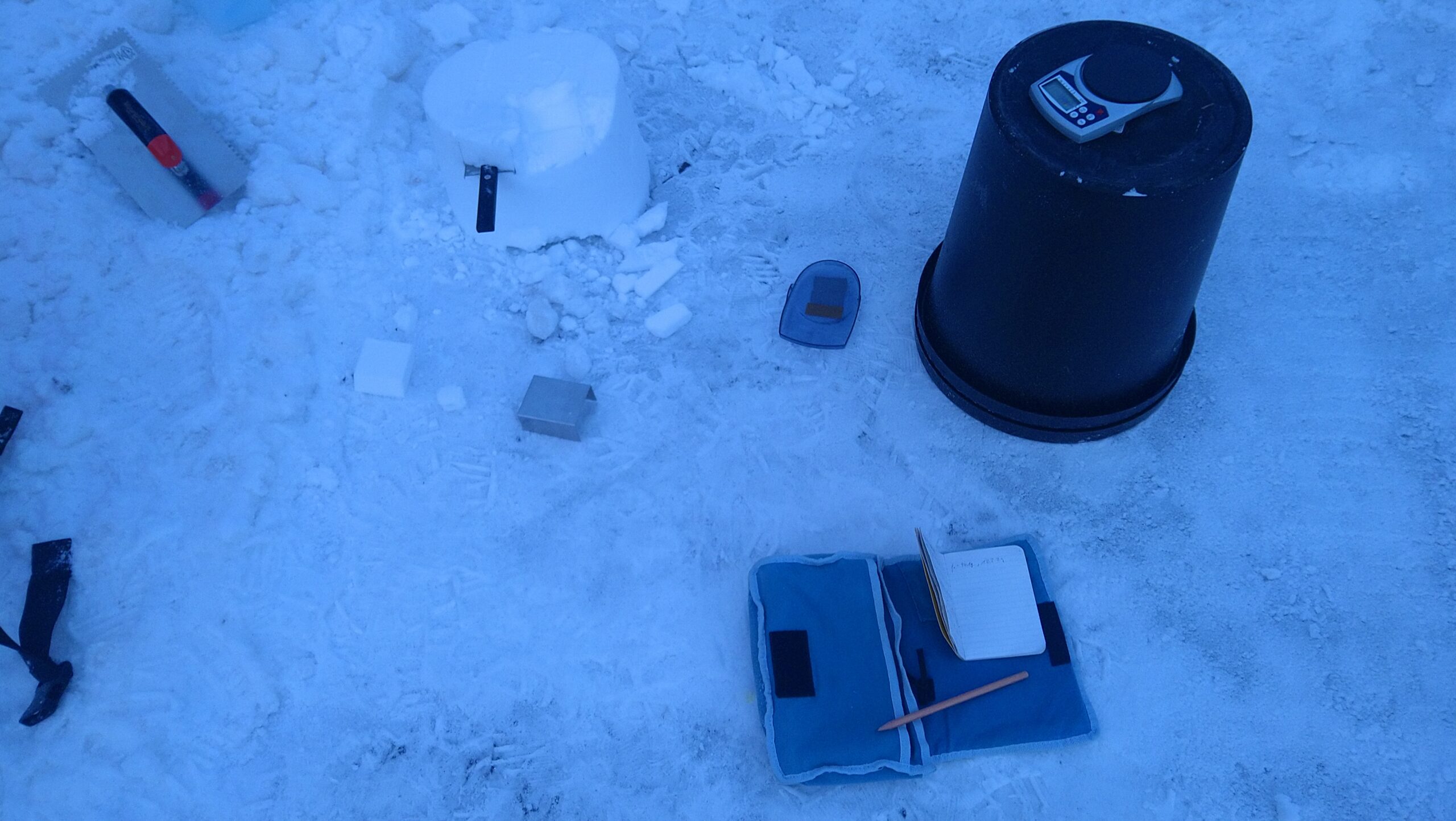
SLF measurements show that snow quality improves significantly just two to three hours after applying Snowglue LiMES. © SLF
IN THE INTERVIEW:
Claus Dangel, CEO Bächler Top Track AG
SI Magazine: Mr. Dangel, how did Bächler develop the Snowglue LiMES technology?
Claus Dangel: We developed the LiMES technology to be able to produce technical snow outdoors under extreme conditions at 0° WBT. This worked – but the energy required and the amount of snow produced were not proportional for us. So we decided not to bring the product to the outdoor market initially.
Contributing to this decision was also the fact that the prototypes were completed in summer and the tests took place indoors. It quickly became clear that LiMES performs excellently in indoor settings and can produce snow with practically no increase in hall temperature. This is unique for indoor snowmaking. Thus, we launched LiMES for indoor snow production. The next step is its application in snowfarming.
What is Snowglue LiMES based on?
The technology is based on Bächler’s patented NESSy technology, with a slightly adjusted mixing ratio. How does LiMES differ from other methods? A comparison is difficult, as there is nothing comparable.
Until now, one had to rely on natural snow or temperatures below -2° WBT for technical snow production, in order to gradually restore the load-bearing capacity of snow stored over the summer. Since LiMES can produce snow already at 0° WBT, snow can be processed much earlier.
How should Snowglue LiMES be applied?
Normally, the snow stored over the summer is spread out, and then a new layer of snow with Snowglue LiMES is applied and worked in. In principle, it is also possible to “treat“ the old snow in the storage area, although this makes the incorporation of the new snow somewhat more difficult.
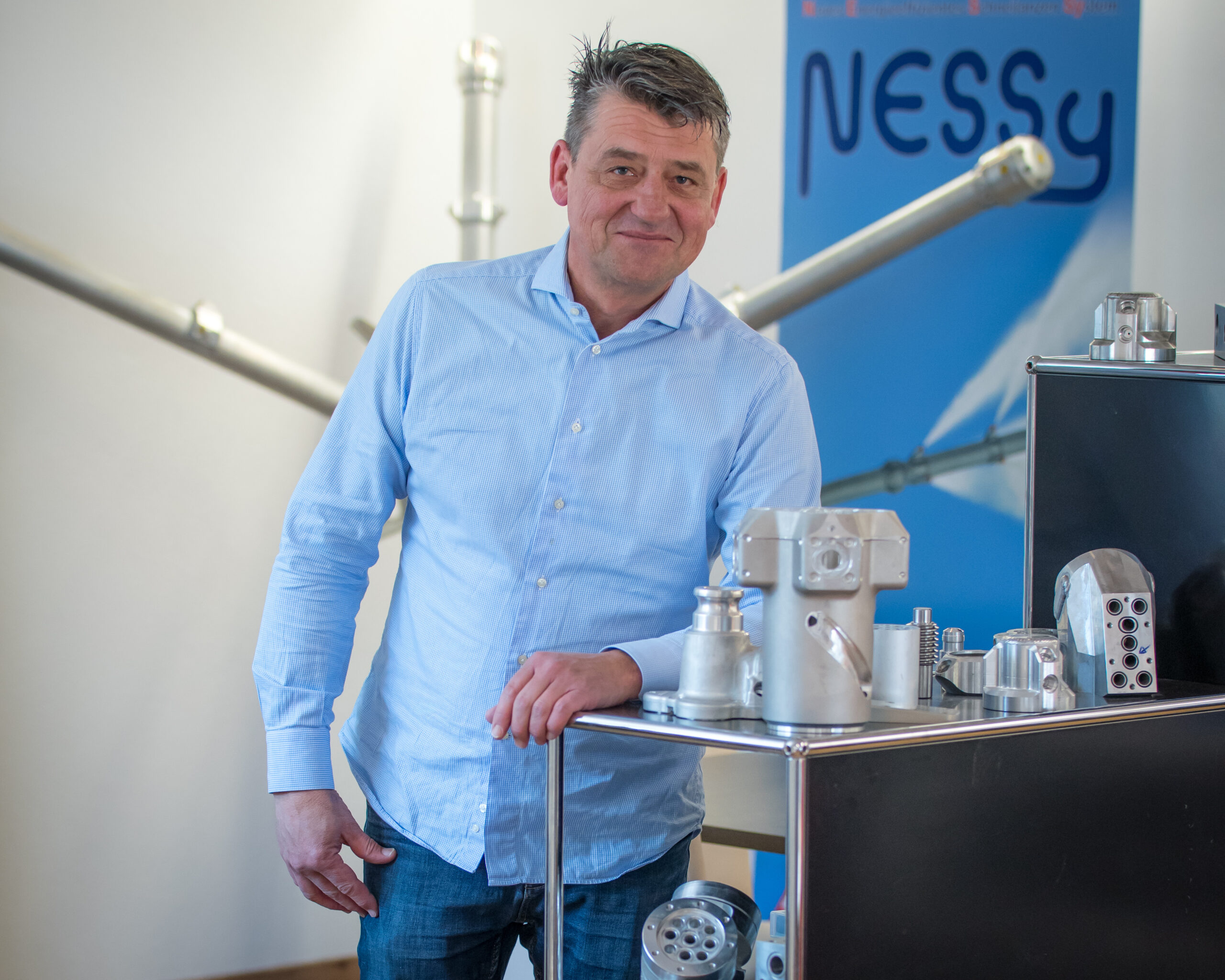
Claus Dangel
CEO Bächler Top Track AG
“A comparison to other methods is difficult, as there is nothing comparable. Until now, one had to rely on natural snow or temperatures below -2° WBT for technical snow production, in order to gradually restore the load-bearing capacity of snow stored over the summer. Since LiMES can produce snow already at 0° WBT, snow can be processed much earlier.”
How expensive is the technology?
The conditions on site and the existing infrastructure always need to be considered. If the basic equipment, such as a large compressor, is already available, we are talking about a low five-figure amount for Snowglue LiMES.
What economic advantage does LiMES offer operators?
As in many sectors today, it is about being able to offer services as early as possible – or simply for a longer period – and this is also true in the snow industry. At competition venues, there is the additional factor of ensuring operational reliability and being able to start preparations early.
Can LiMES be used with any type of snow (e.g., technical snow)?
It can be used without restriction with natural or technical snow.
How does the technology affect the quality of meltwater?
It has no impact on the quality of the meltwater, since the technical snow from Snowglue LiMES is produced only from water and air pressure. As with all Bächler snowmaking systems, no artificial additives are used.
How often does LiMES need to be applied?
In principle, a single treatment is sufficient. Of course, the weather plays the main role. However, it is possible, for example after a warm spell, to reapply Snowglue LiMES to melting snow and restore its load-bearing capacity.
How is LiMES blended into the snow?
After the Snowglue LiMES snow layer has been applied, the area is treated as usual with a snow groomer and the milling machine, working the new Snowglue LiMES snow into the existing snow.