Cities
Bonn cable car project: Updated budget and timeline
In Bonn, the city and the municipal utility, together with the program manager Drees & Sommer, have almost completed the planning of the route for the new cable car. The cost-benefit index and the schedule have also been updated.
Starting in 2032, the cable car is expected to operate as part of the public transport network, running from Beuel on the right bank of the Rhine directly to the University Hospital on Venusberg.
The route and the stations
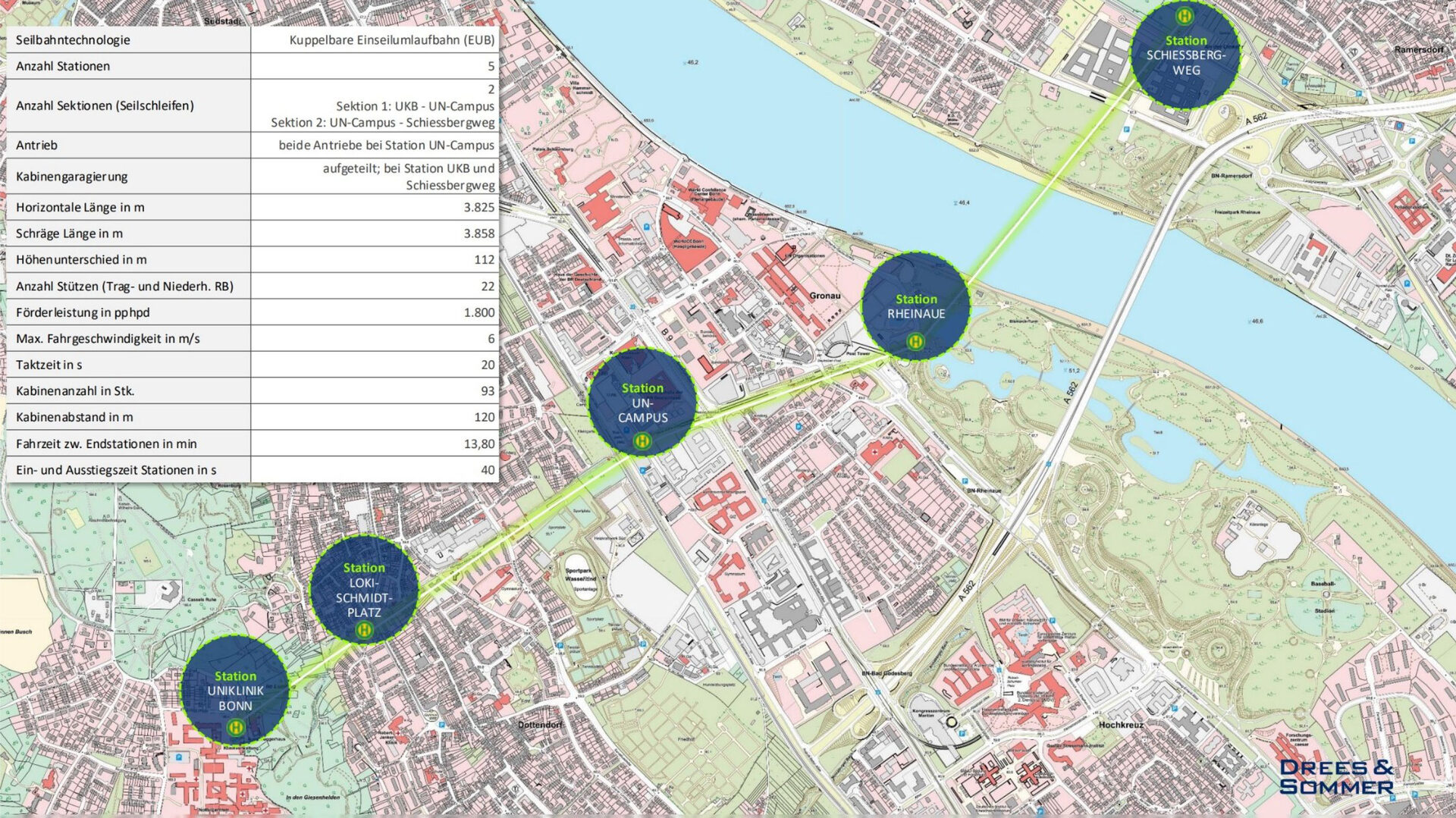
The entire cable car line will be approximately 3.8 kilometers long, include five stations, and be supported by a total of 22 towers. Compared to the previous plan, the cable car will cross the Rhine a few meters further south.
Thanks to more detailed planning and discussions with landowners and employers along the route, solutions have been found for all station and tower locations, achieving the following optimizations:
- Schießbergweg Station: The stop will be moved about 35 meters northwest, bringing it closer to the planned stop of S-Bahn line 13, which will make transfers easier. The cabins will pass lower over nearby office buildings, reducing costs. Cabins for the first section will be stored in a garage at Schießbergweg.
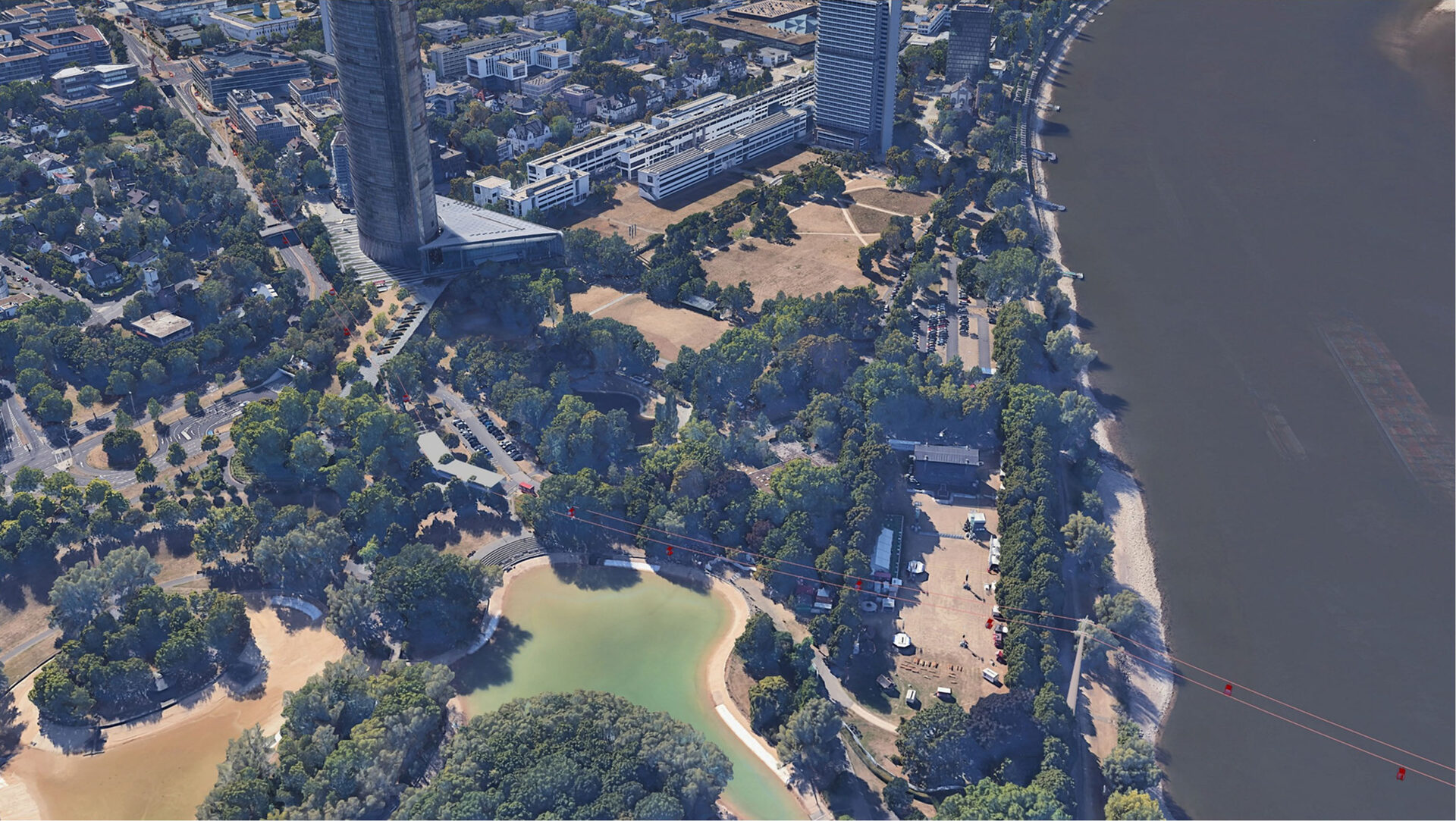
- Rheinaue Station: By shifting the station southeast, towers on DHL Group property can be avoided, while the existing transport infrastructure is preserved.
- UN Campus Station: Moving the stop eastwards allows optimization of the cable car route and passenger access, while maintaining the current traffic situation in the area.
- Loki-Schmidt-Platz Station: The stop remains at its previously planned location.
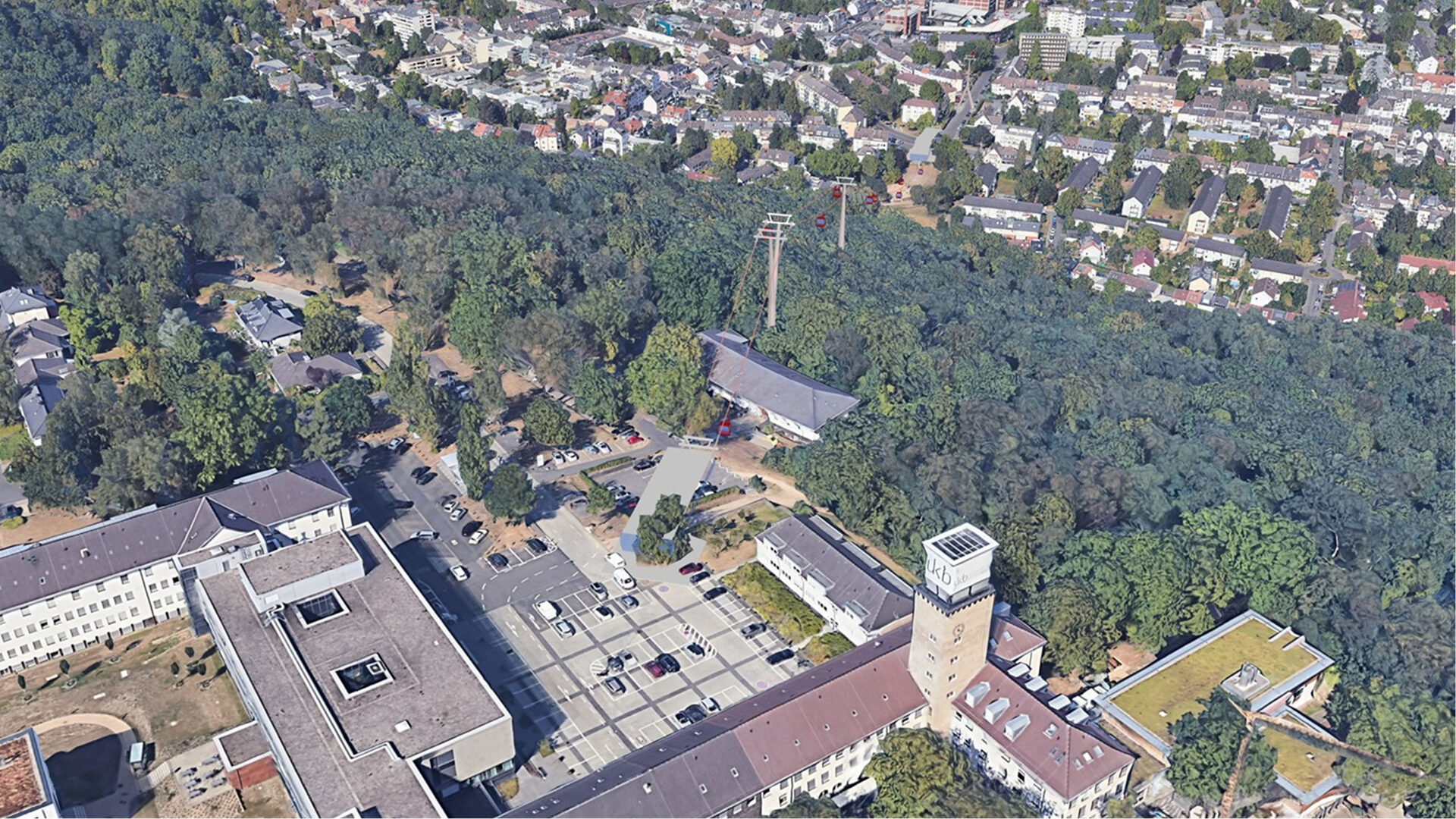
- University Hospital (UKB) Station: The stop on the hospital grounds will be moved to the northeastern parking area. This allows the station to be built at ground level, reduces noise impact, and minimizes the number of hospital buildings overflown. Additionally, there is space to store cabins for the second section, and bus connections will be improved.
The cable car route
Positive trend in the cost-benefit index
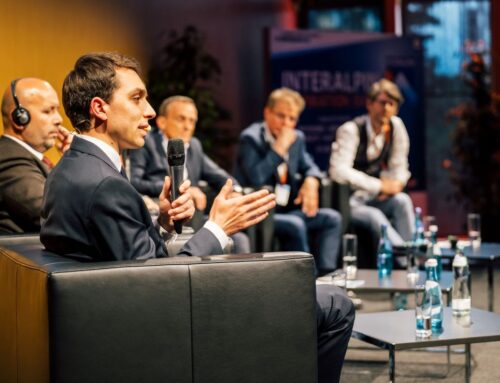
“From an economic perspective, the cable car is a worthwhile project. Current calculations show a cost-benefit ratio of 1.79, well above 1.0, the threshold for funding under the Municipal Transport Financing Act,” explained City Building Officer Helmut Wiesner.
Investment volume
The total investment is currently estimated at around €155 million net. The largest share is allocated primarily to cable car technology, stations, garages, and route equipment.
In addition, ancillary construction costs for planning, project management, assessments, and approval processes, as well as a reasonable provision for project risks and unforeseen events, have been taken into account.
Other accompanying project measures include, among other things, utility relocations, work along the route, and environmental and noise protection measures.
Compared to earlier cost estimates, the investment framework has increased, as the plans have been updated to reflect the current state of technology. Additional requirements for structures and noise protection, as well as more detailed geological findings, also play a role.
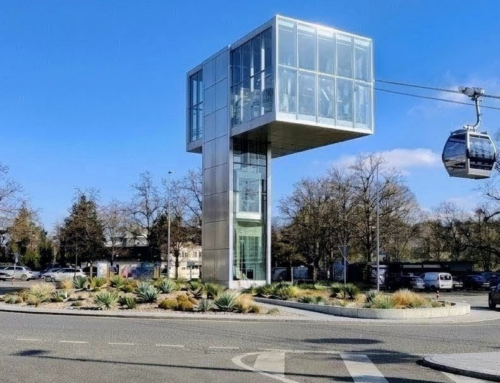
The stop on the University Hospital grounds has been relocated.
This allows the station to be built at ground level.
Funding
The majority of the investment can be covered through funding, primarily based on the Municipal Transport Financing Act. The City of Bonn will have to provide its own contribution of around €17.6 million.
The annual expenses for the cable car are expected to amount to approximately €5.2 million. This includes operating and maintenance costs of around €3.9 million, as well as debt service for the city’s own contribution of about €1.3 million.
These figures do not account for offsetting effects, such as revenue from ticket sales.
The city plans the expenses for 2027/28
According to Mayor Guido Déus, the costs will be included in the 2027/28 budget planning.
“Despite rising prices, the cable car—which enjoys broad support in the city council—remains attractive thanks to high funding ratios. However, this is subject to the condition of a sustainably viable financing. That is why we are carrying the planning through to completion and will decide on construction only after the formal planning approval and based on all the facts,” the mayor explained.
At the foot of the Post Tower in the Rheinaue,
one of a total of five stops on the cable car will be built.
The next project phases
In autumn 2026, another public dialogue event is planned. Further information will be published by the city administration in due course.
By the end of 2026, preliminary planning is expected to be completed, and a functional tender will be issued, allowing a general contractor to be appointed by the end of 2027.
From mid-2028, the formal planning approval process (Planfeststellungsverfahren) will be conducted by the Cologne District Government. During this procedure, the interests of residents along the route and of public authorities will be independently reviewed and balanced.
And the construction?
After the successful completion of the formal planning approval process, construction of the cable car can begin. Currently, around two years are planned for construction, with the cable car expected to be operational in 2032.
Despite public subsidies, the financial implications of building and operating the cable car must be carefully examined. This is done within the project for task review and as part of the preparation of the 2027/2028 draft budget and the medium-term financial plan.
Given the precarious budget situation of the City of Bonn, it will need to be assessed whether the cable car can be implemented within an approved budget. This assessment will also consider the results of the revised public transport plan.
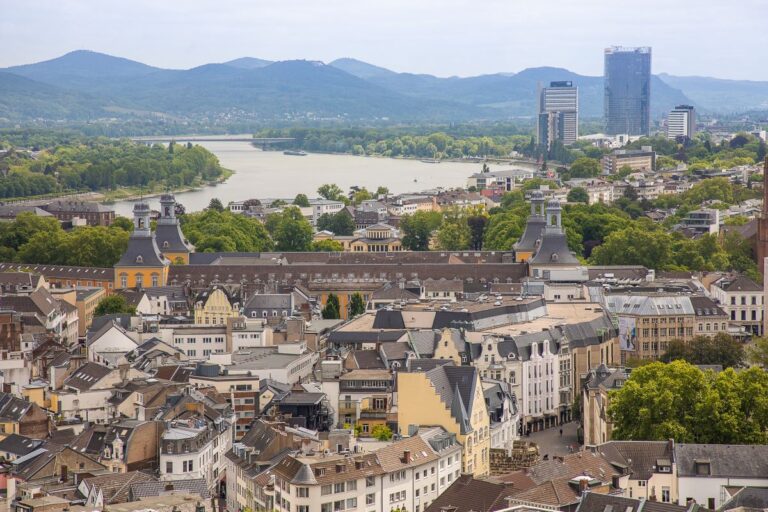
Bonn could become the first city in Germany
where an urban cable car is integrated into the public transport network and can be used with a regular ticket.
Innovative project
The Bonn cable car is considered a pioneering project, as it will be one of the first in Germany to achieve full integration into the public transport network, emphasized SWB Group CEO Anja Wenmakers.
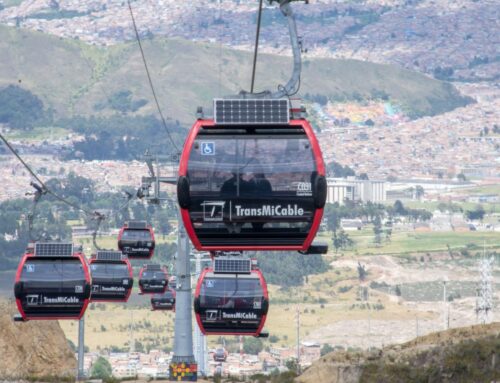
“The cable car is not intended to be a tourist gimmick, but a high-frequency means of transport. The modern cable car fleet will include 95 barrier-free cabins, departing every 20 to 40 seconds, capable of carrying bicycles, strollers, and wheelchairs. This is only possible if both construction and operation are financially feasible,” said Anja Wenmakers.
After its launch, the cable car is expected to transport up to 15,000 passengers per day. This forecast consists of 9,150 newly generated trips—for example, from car users switching to the cable car—and 6,000 trips by existing public transport customers.
This shift could allow certain bus lines to be reduced or shortened. Specific studies on the potential elimination of bus services to Venusberg will follow during the revision of the public transport plan, which will allow potential savings to be quantified more precisely.