
Cities
Cable car in Puebla: Social impact in focus
The new cable car network in Puebla (Mexico) is intended to connect zones with high concentrations of jobs and commercial activity, while also addressing additional social needs.
According to local media reports citing government sources, more than 43,000 workers who commute daily in the Mexican metropolis of Puebla are expected to benefit from the project.
SI has already reported on the project and its technical features, the focus is now shifting to its economic and social impact on the population.
State cabinet coordinator José Luis García Parra recently outlined detailed employment and operational figures for the key areas along the planned route.
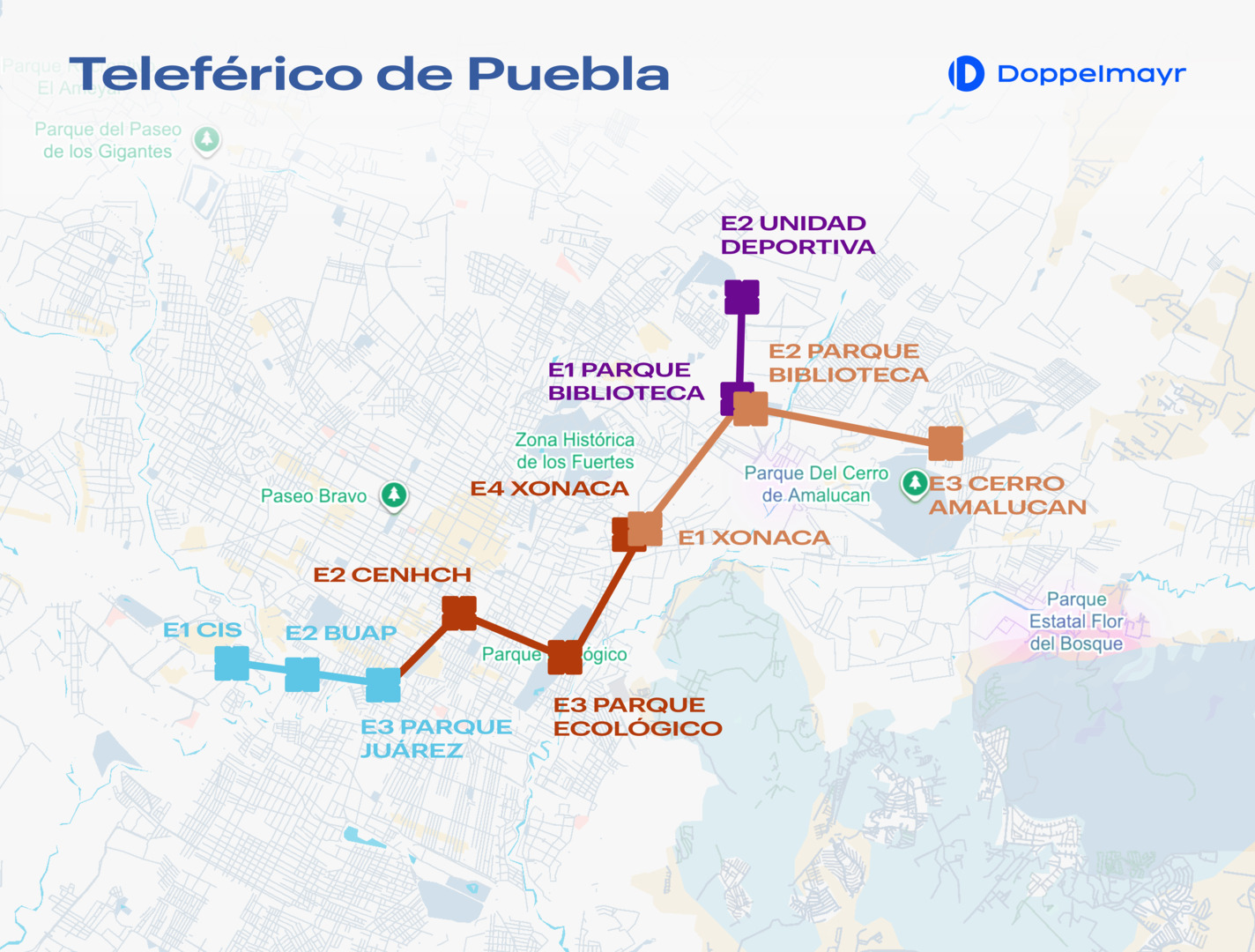
Major economic hubs are expected to benefit significantly, including the Centro Integral de Servicios with more than 7,900 employees across 717 businesses, as well as Parque Juárez, which alone has around 8,400 employees in 1,118 establishments.
The area around CENHCH also hosts nearly 6,000 workers in 939 businesses. Other key stops include Parque Ecológico with over 2,500 employees, the Xonaca district with around 3,840 jobs, Unidad Deportiva with nearly 5,000 workers, and the Amalucan area with approximately 1,741 employees.
The cable car is intended to serve as a real and time-saving alternative to the often overloaded traditional public transport system, while also significantly reducing daily commuting costs for passengers.
Puebla ropeway network
Social mobility
The government plans free rides for certain groups: primary school children, senior citizens, and people with disabilities will be able to use the new cable car free of charge.
Integration into the urban transport network
Governor Alejandro Armenta Mier emphasized that the cable car will not remain an isolated system. It will be directly connected to existing public bus lines, city bike lanes, and a new state-run bike-sharing system.
Access to the cabins and transfers between different modes of transport are intended to be as simple as possible for passengers. Payment will be possible via a chip card or mobile phone.
The stations will be directly linked to the cycling network: bicycles will be allowed in the cable car cabins. The government has allocated 100 million pesos (around US $5.8 million) this year for new bike lanes and improved neighborhood connections.