
Cities
C1 Cable Car Evacuation Drill: How the Emergency System Works
The C1 cable car, the first aerial cableway in the Greater Paris region, suspended operations between Limeil-Brévannes and Villa Nova on Tuesday, June 9, 2026, from 10 a.m. to 3 p.m. for an evacuation drill conducted by the Paris Fire Brigade.
During the exercise, firefighters rehearsed emergency response procedures specifically designed for cable car operations.
Emergency drive systems
Under normal emergency conditions, cabins are automatically brought back to the stations using backup drive systems.
According to Île-de-France Mobilités, all critical systems on the C1 cable car are fully redundant, including the motor, emergency power supply, and communication systems.
In the event of a malfunction, an integrated rescue system automatically returns the cabins to the nearest station, allowing passengers to disembark safely on the platform without the need for external intervention.
According to Île-de-France Mobilités, these safety mechanisms are designed to cover 99.9 percent of all potential emergency scenarios.
Emergency Response Plan:
Manual evacuation procedures would only be activated in the event of a complete failure of all backup and safety systems.
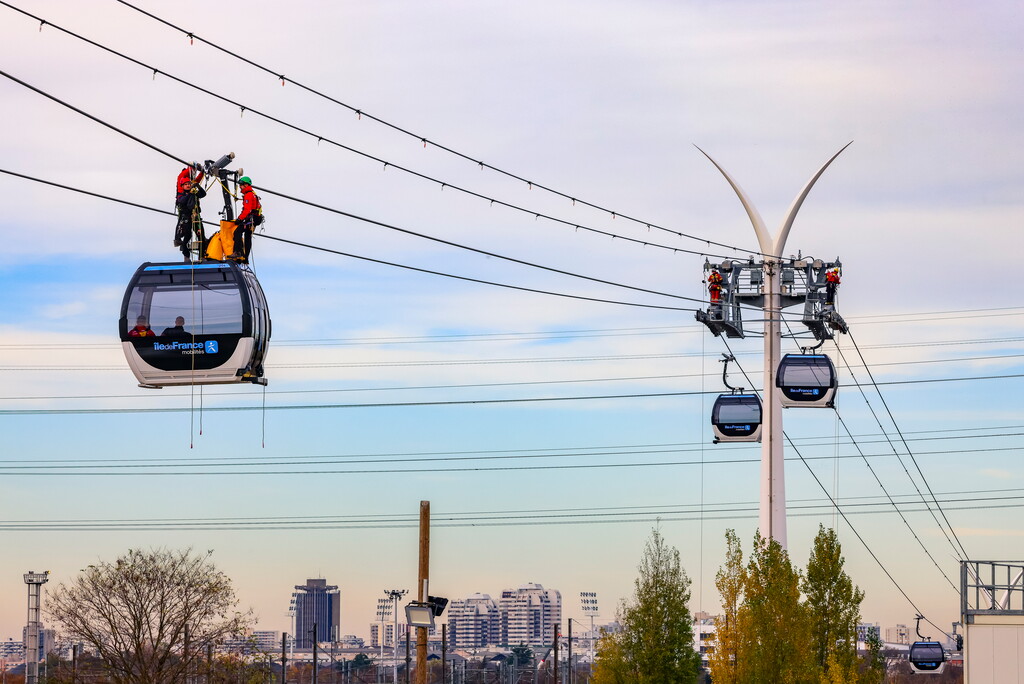
No Such Thing as Zero Risk
However, no system is entirely risk-free. Only in the extremely unlikely event of a simultaneous failure of all systems would a manual evacuation be required.
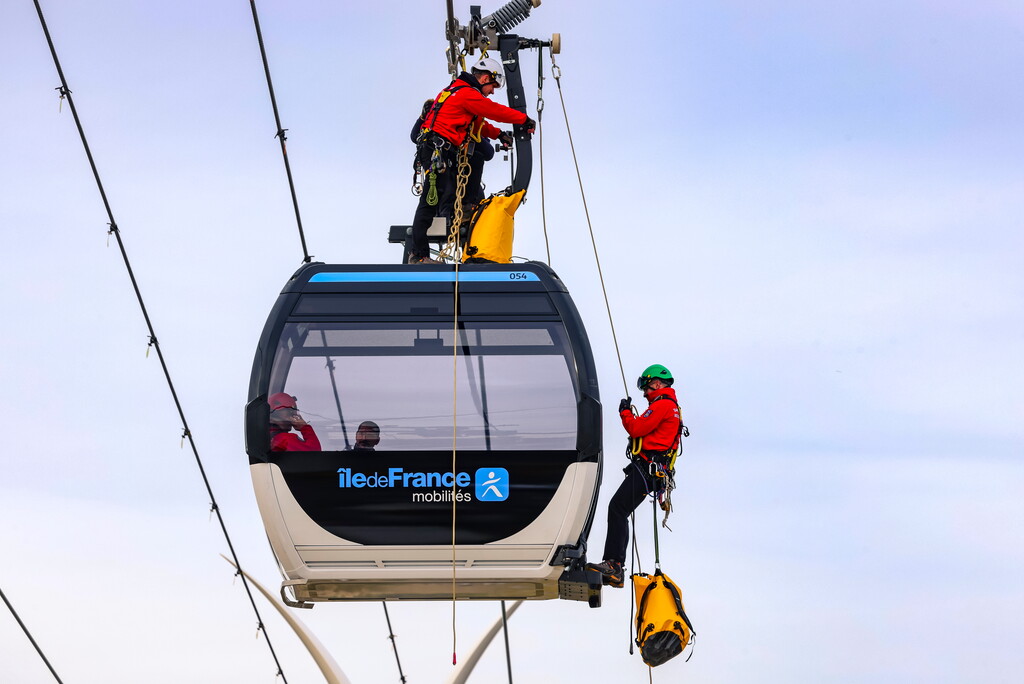
In such a scenario, specialized rescue personnel from the Paris Fire Brigade (Brigade de Sapeurs-Pompiers de Paris, BSPP) would be deployed.
Manual Evacuation Procedures
Safety Drills on the C1 Cable Car
will be conducted regularly in the future.
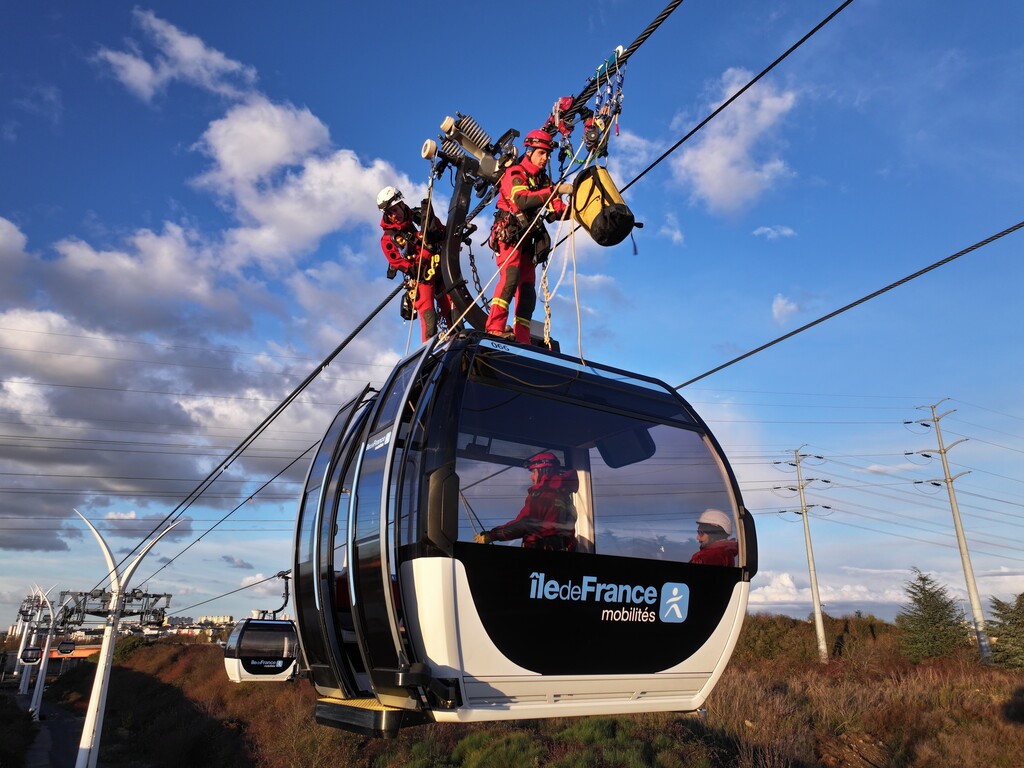
The June 9 Drill
For June 9, organizers deliberately selected the most demanding scenario: a total system failure in which a cabin becomes stranded high on a support tower, requiring the evacuation of passengers played by volunteers acting as role-players.
The alert was triggered through an actual emergency call to the fire brigade (BSPP), allowing the full real-life alarm chain to be reproduced.
The exercise therefore brought together Transdev (the operator of the C1 cable car), the fire service (BSPP), the high-angle rescue unit (GRIMP), and departments of the Paris Police Prefecture under a unified command structure—from the initial alert to the conclusion of the operation.
A similar exercise had already taken place in November 2025, and such regular training will continue in the future. Given the uniqueness of this infrastructure, ongoing preparedness is considered an operational necessity to ensure passenger safety.