
Planning & Construction, SI World 2/2026
Thawing Mountains: Risks for high-altitude ski resorts
Long-term measurements in the Alpine region have shown a clear, persistent trend since the 1990s: the temperature in the frozen ground is rising, as seen in almost all observation boreholes. However, what is often underestimated is that permafrost does not need to reach zero degrees to become problematic.
Even warming to temperatures just below the freezing point can significantly reduce the mechanical strength of the now only partially frozen material due to increased mountain water pressure, which in turn multiplies creep deformations.
The threat to infrastructure
For alpine resort areas, this specifically means that foundations of installations that were previously stable can begin to shift. Lift towers start to tilt, mountain stations settle unevenly, anchors for cables and safety nets shift, and slopeside structures and retaining walls crack.
In addition, there are slope movements involving entire rock shoulders and debris masses in which the structures are anchored, along with an increased risk of rockfalls.
Current example:
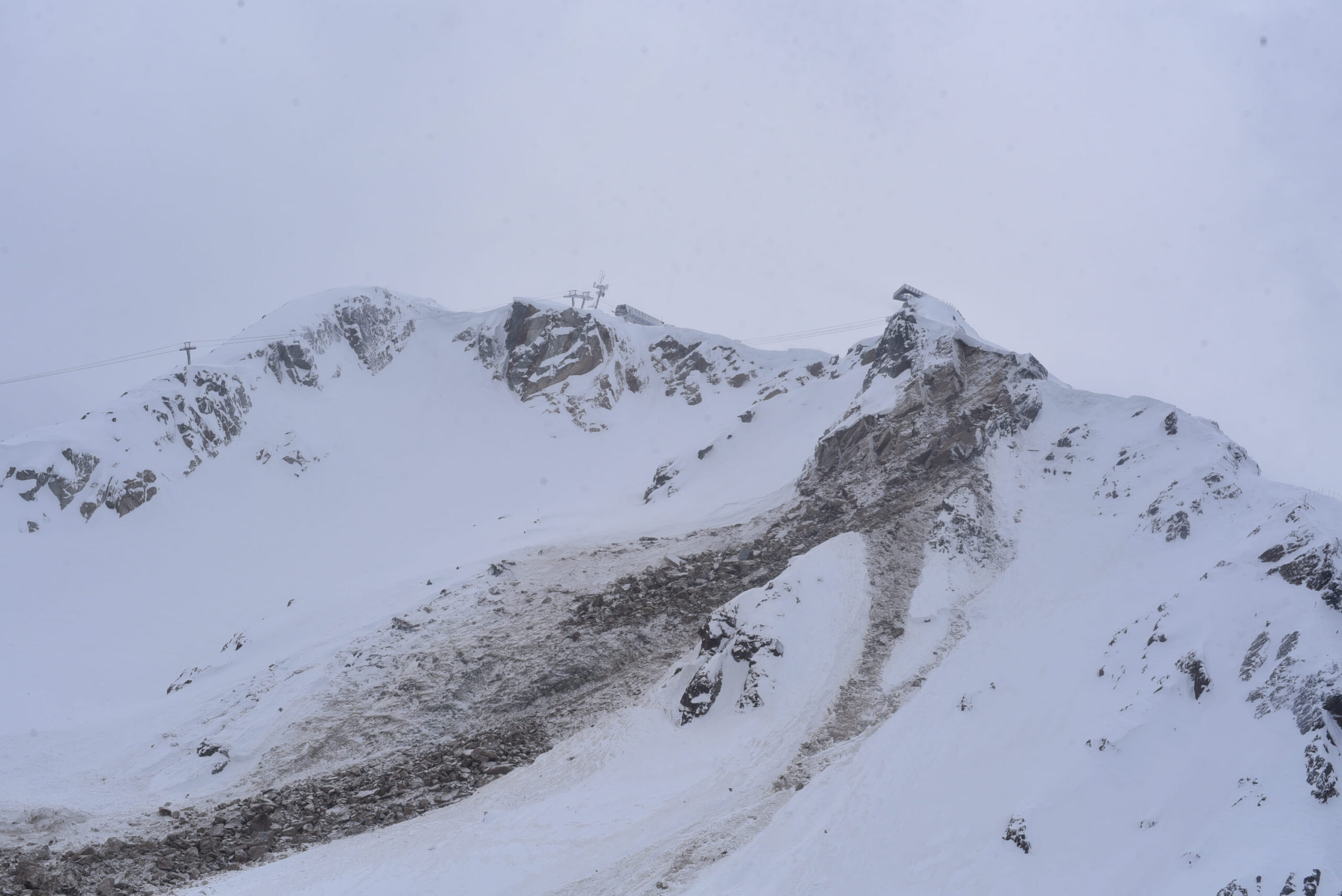
The rockfall of March 12, 2026, near Whistler Peak in Canada.
The Rockfall in Canada
Just how real this risk can be was demonstrated on March 12, 2026, in Whistler Blackcomb, Canada. In the early morning, a rockfall occurred on the north side of Whistler Peak at an altitude of around 2,130 meters, sliding about 300 meters down a slope that, fortunately, was still empty at that early hour.
The investigation into the cause of the damage is ongoing, but the incident is a striking example of how quickly highaltitude rock structures can change – with direct consequences for skiers, staff, and operations.
Repairs and securing measures in such locations are technically demanding, expensive, and usually only possible during short summer windows.
Warning signs: Subtle but serious
Initial warning signs are frequently subtle. They include cracks in concrete, jamming doors and windows, uneven settling at the base of a pylon foundation, slightly tilted or twisted lift towers, small misalignments between components, an increasing need for readjustment of tensioning and anchoring systems, or heightened rockfall activity.
If installations require “readjustment“ after every summer, this is a clear indication. Visible damage often points to an already advanced stage.
The Solution?
Installation of a thermosiphon in Engadin St. Moritz, Switzerland.
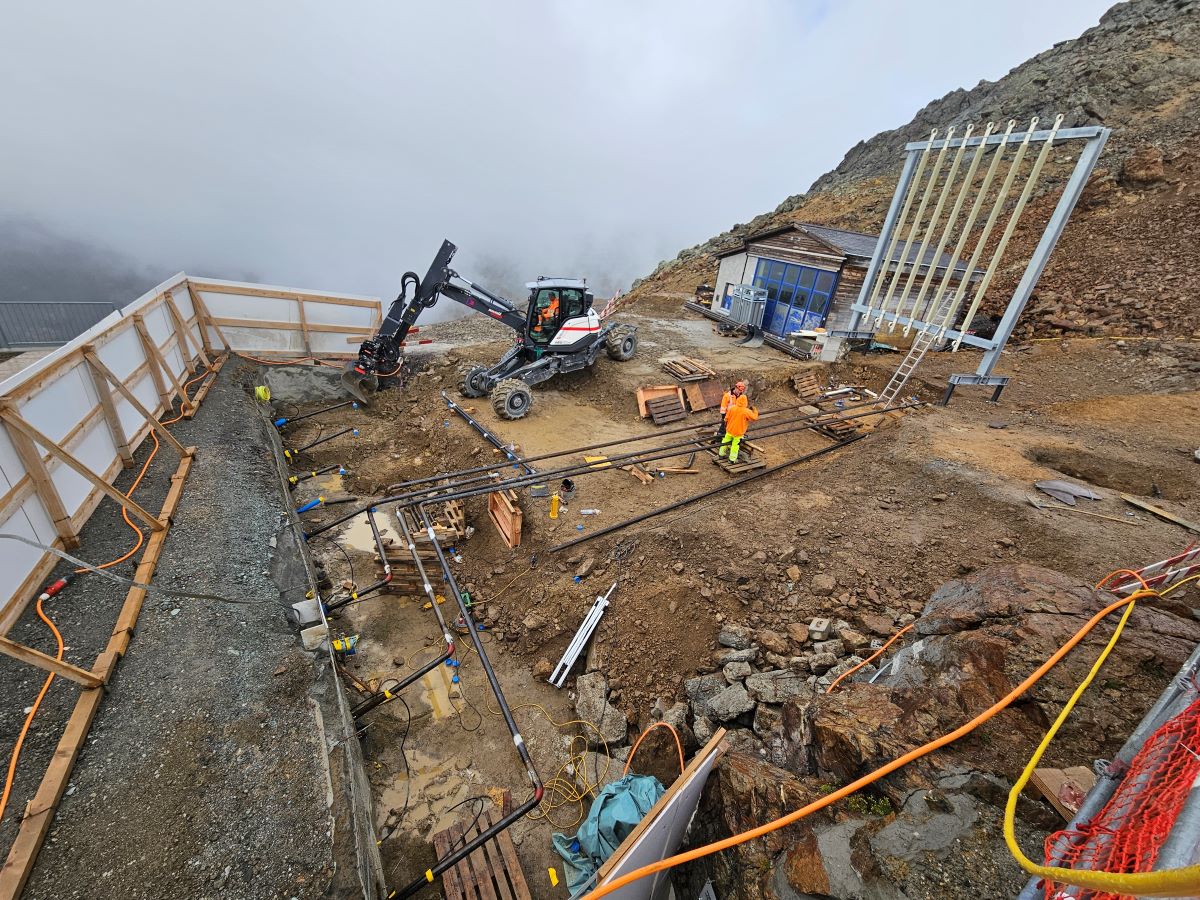
Danger recognized: How to react?
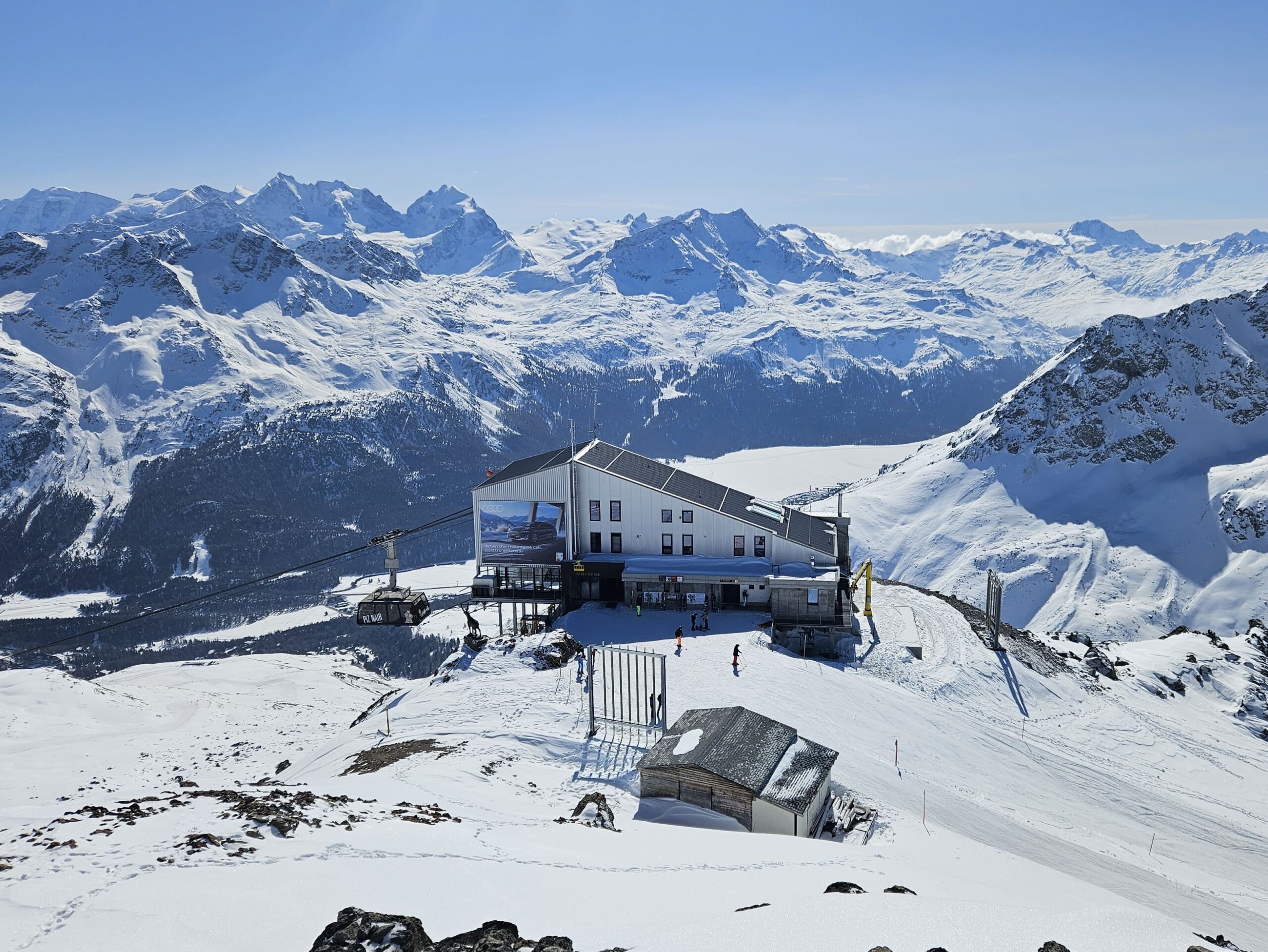
The first step is a geoscientific site investigation. Permafrost maps can provide initial guidance, as demonstrated by the mountain station at Piz Nair in the Engadin, Switzerland. According to a permafrost map from the Swiss Institute for Snow and Avalanche Research (SLF), the mountain station of the aerial
tramway is located in an ice-poor permafrost area with mean annual temperatures between 0 and -1°C.
These indicators should be supplemented by a specific geotechnical survey, for example through boreholes and geophysical measurements. Old construction documents can often provide relevant clues as well – for example: was frozen material encountered during the excavation?
To implement the right measures, the geophysical processes must be thoroughly understood. The primary goal is to detect temperatures and their changes, as well as shifts in the subsurface and the infrastructure.
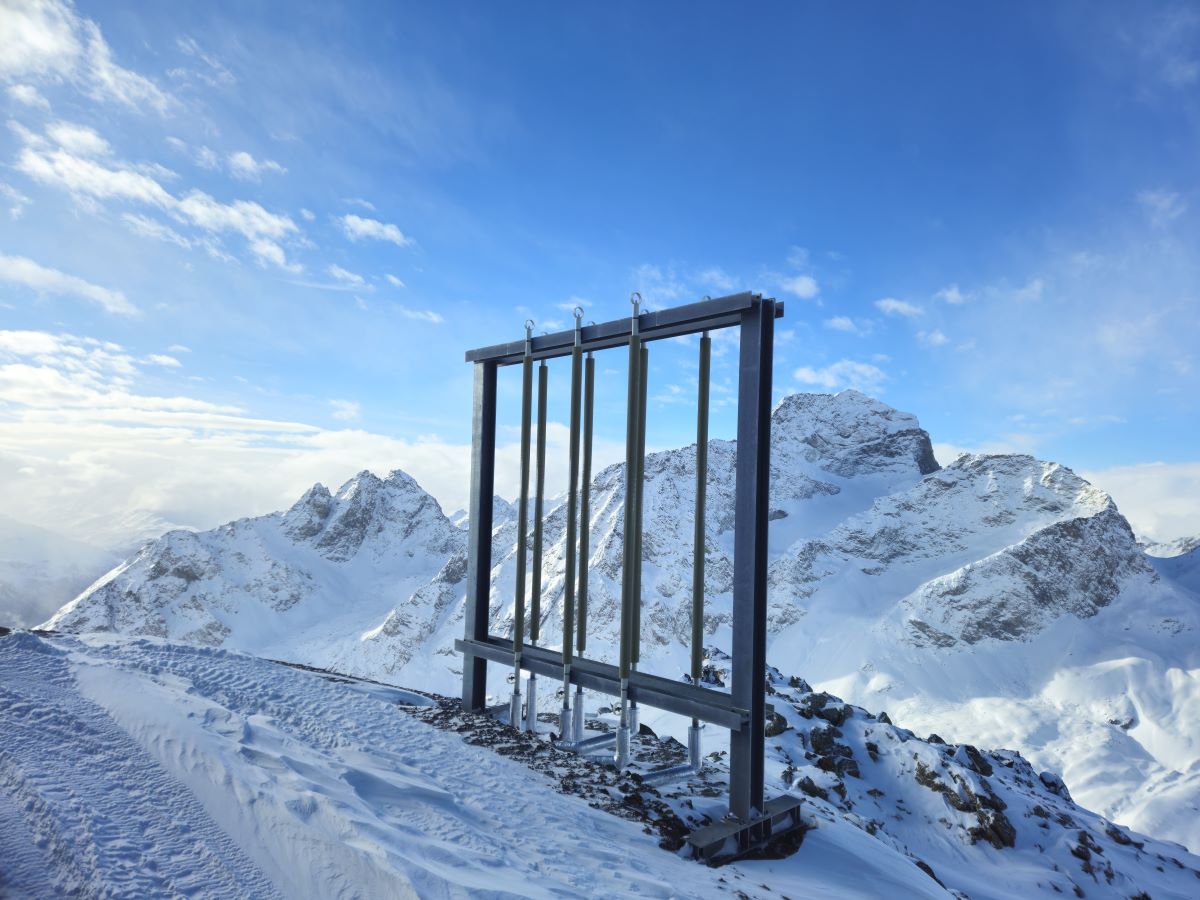
Thermosiphons:
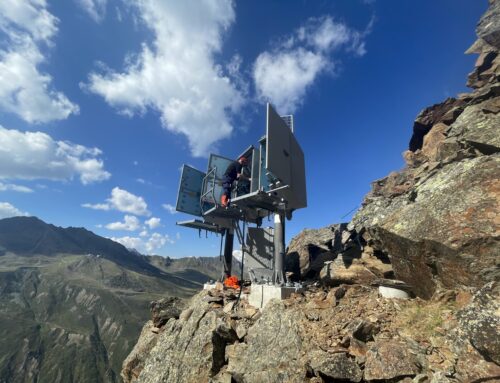
This is what part of the system looks like after installation.
Thermistor strings in boreholes provide critical temperature profiles over a depth of 20 to 30 meters and form the backbone of the monitoring. Inclinometers and extensometers can be used to record time-dependent deformations in the subsurface.
Geodetic measurements, utilizing automatic total stations or GNSS sensors, track movements on the surface. Recently, satellite data has taken on a particularly important role.
With radar interferometry (InSAR), largescale slope movements can be monitored with millimeter precision, and thanks to archived images, they can be analyzed retrospectively. For ski resorts this is a highly cost-effective way to gain an initial overview of critical regions and changing slope and building displacements.
For particularly sensitive infrastructure, it is often worthwhile to deploy additional specialized systems. What truly matters is not any individual technology, but how different solutions are intelligently combined and how the available data is interpreted.
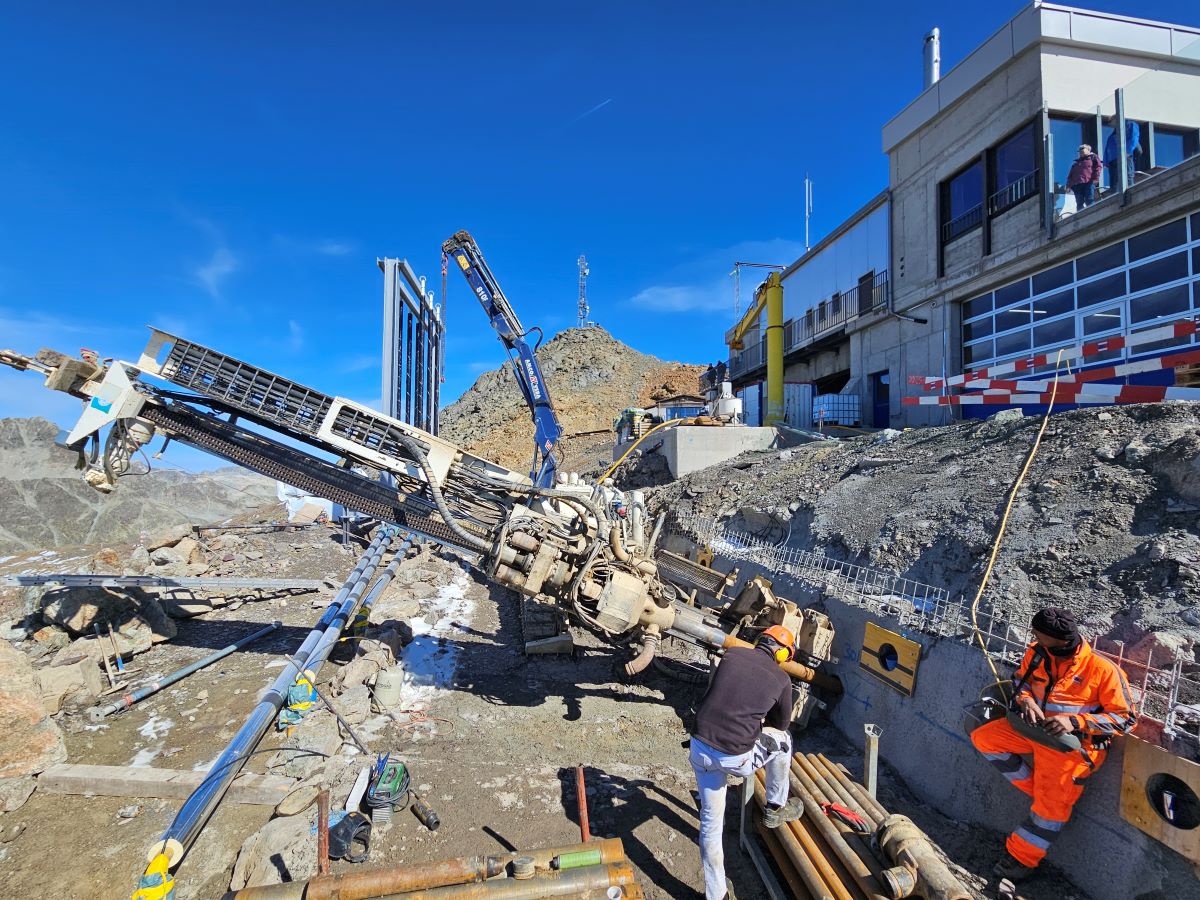
Inclined drilling
Learning from Canada: Thermosyphons
In Canada, construction in permafrost and the potential impacts of climate change on foundation stability have been a focus for decades. Even though the climatic conditions in the Alpine region differ from those in the Arctic, proven approaches show great potential for the alpine cable car industry.
An example of this are thermosyphons. This robust, low-maintenance, and energy-selfsufficient technology was used in this form for the first time at a mountain station in the Alpine region at Piz Nair in the summer of 2025.
A total of 17 thermosyphons with roughly 480 meters of total drilling length were installed across three borehole groups, supplemented by ten thermistor strings for monitoring.
The data from the first winter is highly promising, showing that the ground temperature at a depth of about ten meters was locally reduced by more than 2 °C, thereby increasing mechanical strength.

Lukas Arenson
Principal Geotechnical & Permafrost Engineer
Author of this article
A new mindset is required
Just as crucial as using the right technology is the mindset applied to planning and operating foundations in permafrost. Permafrost must be understood as a dynamic, actively managed component of the infrastructure, not as a static subsurface.
This requires long-term monitoring from the very beginning, as well as adaptability in design. For instance, passive thermosyphons can later be upgraded into active systems.
Close collaboration between operators, engineers, authorities, and researchers is also essential. If the ski resorts adopts this approach, it can continue to operate its high-alpine installations safely and economically, even in a warmer climate.
Author:
Lukas Arenson, Principal Geotechnical and Permafrost Engineer at BGC Engineering, and Vice President of the International Permafrost Association.