
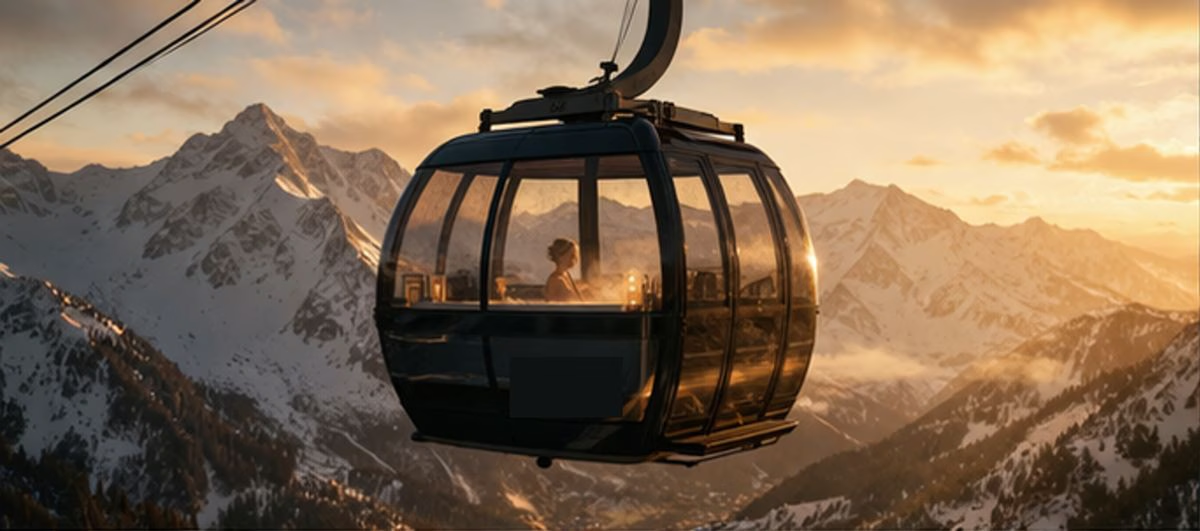
Bathing with a View: A PhD candidate from Styria (Austria) develops a gondola with an integrated whirlpool. © AI-based renderings / Paul Demschar
Cableway & Technology
Gondola with a Whirlpool: The Idea and Technical Design
A gondola as a floating spa experience: What initially sounds very unusual would actually be technically feasible according to Paul Demschar from the Montanuniversität Leoben - and could become an exclusive added feature for select destinations. By smartly separating stationary water treatment from mobile bathing technology, he safely brings whirlpools to the rope. An inside look at the concept and its implementation.
1. September 2026
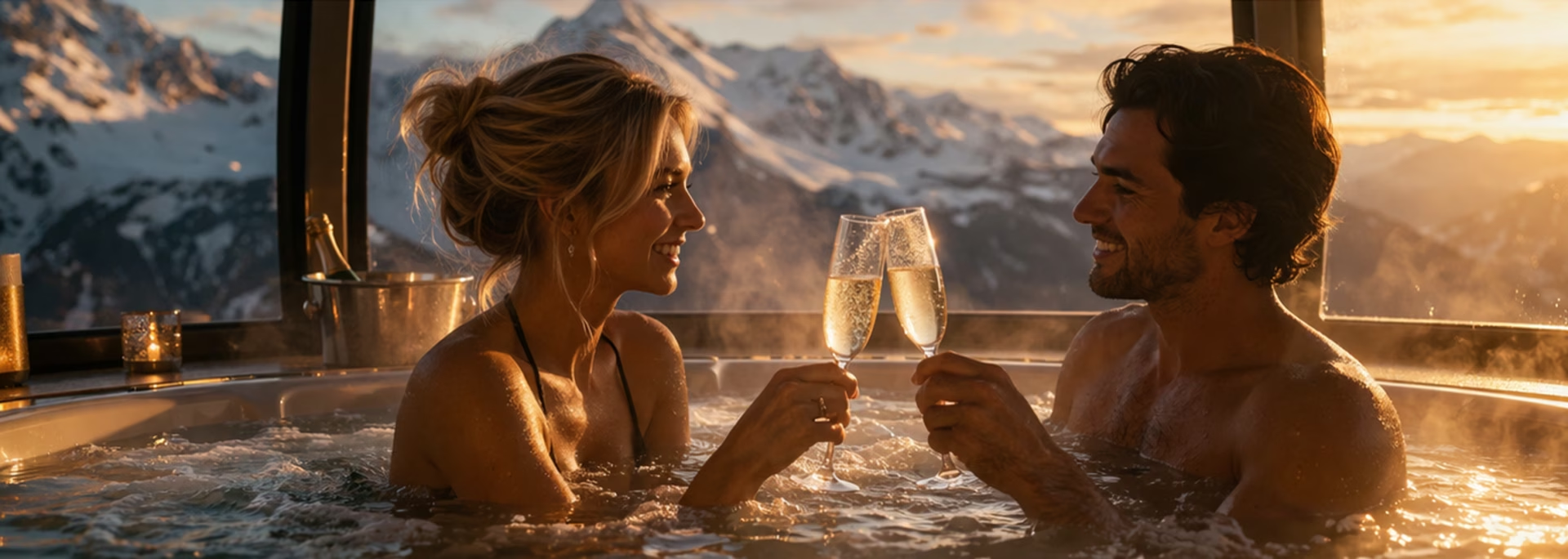
PhD candidate Paul Demschar from the Montanuniversität Leoben (Austria) has filed a patent for a whirlpool gondola. According to his concept, a two-person whirlpool can be integrated into a cable car cabin, creating an attractive feature for the summer season.
Speaking to SI, Paul Demschar explained the technical details. According to him, the core innovation lies in the system separation between the bathing unit inside the cabin and the stationary water treatment system located in a cable car station.
As a result, essential technical components – especially heavy or energy-intensive system parts such as water filters, initial heating, as well as cleaning and dosing units – can remain stationary. This means they do not need to be carried inside the vehicle or supplied with power along the route.
From a technical perspective, the cabin itself contains only the two-person whirlpool basin, a heater to maintain the water temperature, an air injection unit, and a corresponding battery.
Whirlpool cabin and water treatment station
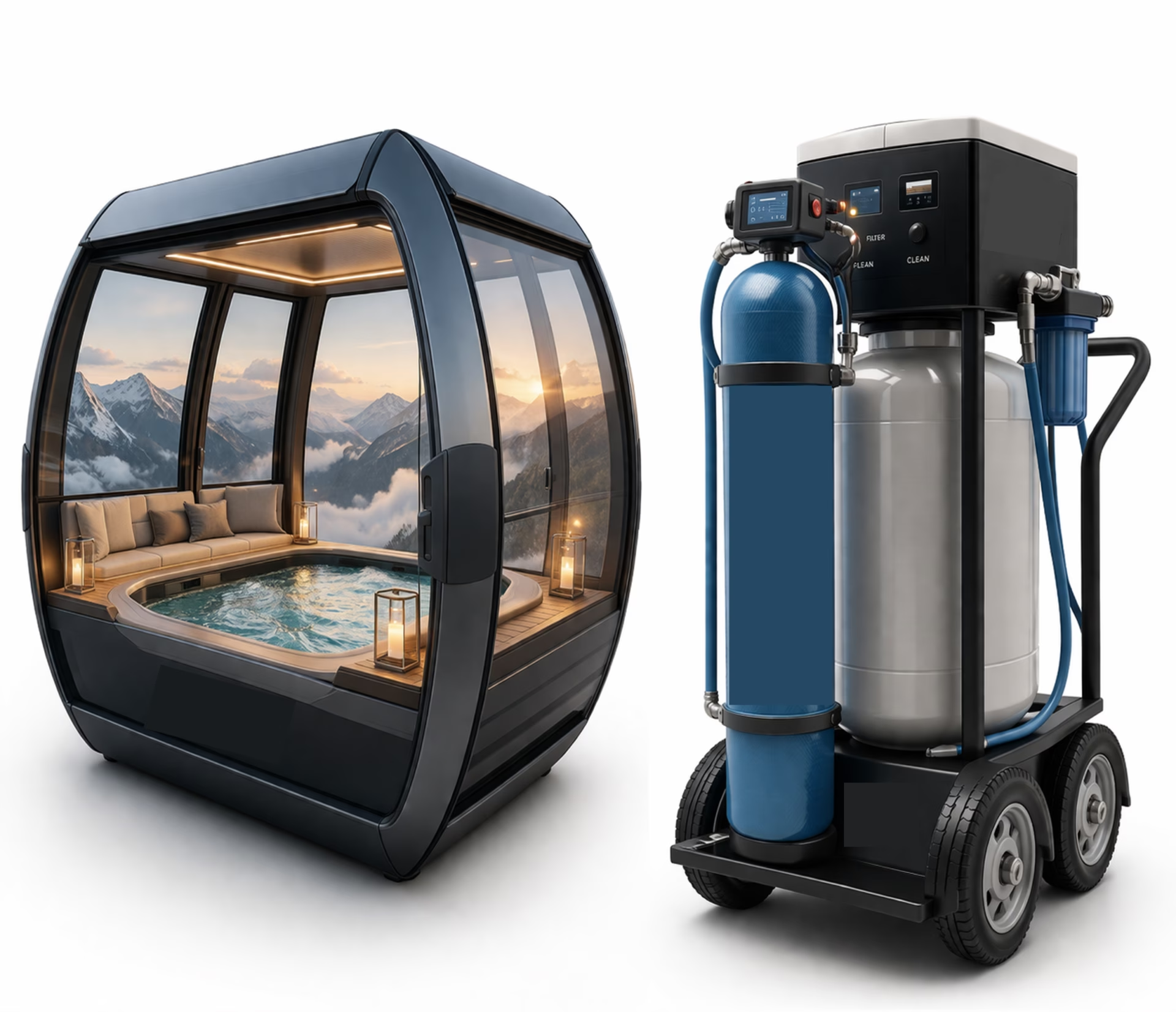
© KI-basierte Renderings / Paul Demschar
Overflow Concept Inside the Cabin
Another central innovation that makes the technical implementation of the concept possible in the first place is the specially developed overflow concept inside the cabin.
This ensures that no water can escape from the vehicle during operation while simultaneously guaranteeing a comfortable bathing experience for the guests.
Technical provisions have also been taken into account in the concept for evacuation and emergency situations (emergency stop, etc.).
Suitable for Continuous and Aerial Tramway Systems
The whirlpool gondola concept is fundamentally suitable for both continuous monocable ropeways and aerial tramways.
For monocable continuous ropeways, the plan is to permanently integrate the basin into a appropriately equipped cabin that can be brought onto the line as needed. For larger vehicles, on the other hand, mobile slide-in modules are conceivable, which can be rolled into the cabins as required.
The Whirlpool Gondola
can be part of a destination’s overall tourism experience.
Exclusive Added Attraction
Paul Demschar emphasizes that a core aspect of the concept is operating the whirlpool cabins only when there is actual demand.
It is therefore designed as an exclusive added feature that – depending on the specific technical implementation – can be integrated into existing ropeway systems without requiring fundamental modifications to the cable car infrastructure.
In addition to its use on ropeway systems, a stationary version of the whirlpool gondola is also possible. According to the developers, this opens up interesting application opportunities, for example in the hotel industry, at events, or in marketing

Paul Demschar
PhD Candidate at the Montanuniversität Leoben
“From my perspective, a key success factor lies in integrating the whirlpool gondola into a destination’s overall concept. Possible scenarios could include tailored offers combined with culinary experiences, special events, or exclusive experience formats. The gondola should not merely be an extraordinary technical product, but become part of an overall holistic tourism experience.”
How it Works in Practice
A trip up and down the mountain in the gondola can take up to 30 minutes. That is as long as the water inside the cabin can be circulated and the temperature maintained. After that, the gondola must be reconnected to the water treatment station.
The weight limit for operation on 10-passenger monocable gondola lifts is 800 kg. This allows for 400 to 500 liters of water alongside two bathers inside the cabin. A single water treatment station can service up to six cabins.
For cable cars with higher payload capacities, larger tubs are naturally also possible.
Outlook
Paul Demschar has presented the concept to several departments within the Doppelmayr Group. Although no binding agreement or manufacturing order is currently in place, the discussions were very important for the project’s further development.
“The conversations were extremely valuable to me, particularly with regard to the fundamental technical and economic assessment of the concept,” says the innovator.