Management & Tourism
How do Americans and Chinese behave on an alpine ski holiday?
USA
In September 2025, ÖW Tourism Research surveyed a total of 1,000 American winter sports enthusiasts via an online panel. The aim of the USA winter sports study was to gain a solid understanding of the potential of American guests for trips to Europe – especially to Austria.
The survey targeted tourists who had participated in winter sports in the past three years and had taken at least one winter sports holiday (including overnight stays).
Young, wealthy, educated: the US target group
One in three winter sports enthusiasts is between 35 and 44 years old. Overall, the group is younger, with only seven percent over the age of 65 – compared to 17 percent in the general population.
The income level is very high: two out of ten winter sports enthusiasts have a household income (gross) of over 200,000 USD per year. Educational levels are also very high: 31 percent hold a master’s degree or higher (compared to 13 percent in the general population).

Nature as a motive, snow reliability as a selection criterion
The main reasons for taking a winter sports holiday for Americans are experiencing nature and landscapes, escaping everyday life, and spending time with friends and family. The most important factors when choosing a winter sports destination are:
- snow reliability
- price or budget
- travel time or distance
The most important element of the holiday is therefore snow reliability.
Target group is experienced with destinations
The most well-known destination is Aspen. Among European destinations, St. Moritz is the most popular. In Austria, Innsbruck leads (benefiting as a city). St. Anton and Kitzbühel are known to 18 and 17 percent of American winter sports enthusiasts, respectively.
Seven out of ten respondents have already visited Colorado for winter sports. 36 percent have been to Canada, 20 percent to Switzerland, 16 percent each to France and Italy, and 13 percent to Austria.
The most attractive country for future winter sports holidays outside the USA is Switzerland, followed by Canada, Italy, and Austria. Europe is seen as a very “special” experience. Half of the respondents are interested in European ski resorts but also want to pursue other activities in Europe beyond winter sports.
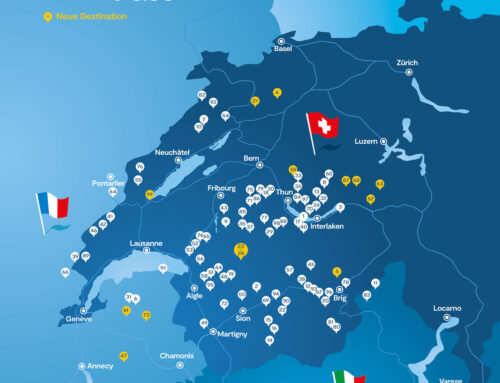
Switzerland is the most popular among Americans:
Austria is also already among the top four countries for US winter sports enthusiasts.
Americans think skiing is cheaper at home
Switzerland and Austria have very similar image profiles as winter destinations, though Switzerland scores higher on image ratings. The USA (e.g., Colorado) differs more noticeably from Austria in terms of image.
This is particularly evident when it comes to price. Surprisingly, American winter sports tourists perceive the USA as significantly more affordable. This also appears in more detailed questions about price perception.
Therefore, the often-heard argument that Americans come because ski tickets are much cheaper abroad requires attention. In reality, ski tickets in the USA are on average 2.5 to 3 times more expensive, so there is a communication gap, and these differences need to be made more clearly known.
Affluent guests:

A budget of up to 5,000 USD
Around 60 percent of respondents are very interested in taking a winter sports holiday in Europe within the next five years. There is a hard potential of 25 percent who are actively planning such a trip.
The biggest barrier is the overall cost of a European holiday. For 43 percent of respondents, the price range for a seven-day winter sports holiday (including flights) in Europe is 3,000 to 5,000 USD, while another 33 percent would plan for more than 5,000 USD.
More than just skiing
But what attracts people to Europe for winter sports? The top reason is the nature and landscapes of the Alps, followed by culture and history. For around 50 percent, the possibility of combining a winter sports trip with sightseeing or cultural activities would increase their willingness to travel. In other words, it is rarely just about skiing.
The winter sports guest from the USA
- Target group: aged 35 to 44, predominantly male, highly educated, high income, multi-active – 80 percent alpine skiing, two-thirds snowboarding; daily spending of around 530 USD per person.
- Typical winter sports holiday duration: three to five days, usually with a partner or family.
- Main travel periods: Christmas holidays and January.
- Top motives for a winter sports holiday: experiencing nature, escaping everyday life, spending time with family/friends, relaxation.
- Key criteria for choosing winter sports destinations: snow reliability, price/budget, travel time/distance.
- What attracts them to Europe: the nature and landscapes of the Alps, as well as culture and history.
- Potential for Austria: 13 percent of respondents have previously been to Austria. Around 25 percent plan a trip to Europe, which corresponds to 5.5 million Americans.
- Background: 1,000 Americans were surveyed, all of whom had participated in winter sports in the past three years and had taken at least one winter sports holiday.
CHINA
In September 2025, ÖW Tourism Research surveyed not only 1,000 Americans but also the same number of Chinese online who are interested in a winter holiday in Europe. Many of the respondents had already skied before.
The aim of the winter study was to gain a clear picture of the potential of Chinese travelers for winter holidays in Europe – especially in Austria.
Young, female, wealthy – and urban
The potential group is significantly younger and more female than the general population. Nine out of ten hold a bachelor’s degree or higher. Their income is well above average. Half of the respondents live in a megacity.

Experienced travelers – except when it comes to skiing
Eighty percent of respondents travel abroad annually, and around half have already been to Europe; 13 percent have visited Austria. So far, their trips have mainly focused on sightseeing. Many have tried skiing, but most are beginners.
For most, the goal is to try as many snow activities as possible (56 percent), while 18 percent are primarily interested in skiing or snowboarding.
Chinese travelers are also drawn by cuisine
Europe attracts Chinese tourists with its mountain scenery, charm, cuisine, and sightseeing. The perfect winter holiday in Europe combines a winter idyll, skiing, good food, Christmas markets, and culture. It is clear that cuisine is a very important element of the holiday for Chinese travelers.
The winter sports guest from China
- Target group: young, predominantly female, urban, high income, highly educated, with daily spending of around 350 euros per person; two-thirds of respondents are beginners in winter sports, and 56 percent want to try as many snow activities as possible.
- What attracts them to Europe: 75 percent have so far traveled for sightseeing, but mountain scenery, winter atmosphere, cuisine, culture, history, and the quality of ski resorts are also appealing.
- Top motives for a winter holiday in Europe: winter idyll, winter sports, cuisine.
- Key criteria: attractive combination packages.
- Duration: ideal trip length is eight to ten days, preferably staying in a hotel with a spa.
- Main travel periods: Christmas and Chinese New Year.
- Potential for Austria: 50 percent of respondents have already been to Europe, 13 percent to Austria; nine out of ten respondents can imagine a winter holiday in Austria within the next three years.
- Background: 1,000 Chinese were surveyed who are interested in a winter snow holiday in Europe.
Half book independently: for New Year and with 350 euros per day
The preferred duration of a European trip is eight to ten days. A hotel with a spa is favored. Half of the respondents plan their holiday independently as Free Independent Travelers (FIT). The most popular travel periods for such a European trip are Christmas and Chinese New Year. On average, respondents budget around 350 euros per day for an eight- to ten-day stay.
Image of Austria: the potential is there
Seven out of ten respondents have heard of Austria as a winter sports destination. For the Chinese, this is associated with idyllic snow and alpine landscapes, skiing, good food, culture, music, and Christmas markets.
For a winter holiday in the snow, Switzerland is still the most attractive destination, followed by Austria and France. Nevertheless, nine out of ten respondents can imagine a winter holiday in Austria within the next three years.
Of course, not everyone in this target group will actually make the trip, but it demonstrates Austria’s strong appeal even in winter.