
Cities
Urban Cable Cars on demand
SI Urban: Mr. Salzmann, why are urban ropeways suitable for temporary purposes?
Stephan Salzmann: Unlike railbound transport modes, cable cars can be built quickly and affordably – in under a year and for just a few million euros. If the route passes over public land, such as down the center of a major street, securing permits is usually straightforward, especially since the installation is time-limited.
Cable cars also require very little land area – just for the support towers and stations. As a result, once operations end, only the foundations may need to be decommissioned; the towers and ropeway technology can be easily dismantled.

Stephan Salzmann
CEO Salzmann Engineers ZT GmbH
Dipl.Ing. Stephan Salzmann completed his technical education as a mechanical engineer at the HTL Bregenz before pursuing a degree in Mechanical Engineering – Transportation Engineering at the TU Wien. Since 1995, Stephan Salzmann has been the managing director of the planning company Salzmann Ingenieure, overseeing over 200 cable car projects across all project phases. In addition to his extensive experience in alpine cable car projects, concrete experience in the implementation of international urban cable car projects has been added since 2022.
In which situations do temporary cable cars make sense?
The most interesting use case is certainly connecting new city districts to the public transport network. When a new quarter is being developed, a ropeway can be built simultaneously to immediately link the area with existing transit lines.
The cable car then operates until, for instance, a metro line extension is completed – which, as we know, usually takes several years. As ropeway planners, we have already conducted a feasibility study for a real estate developer in a major German city.
Two parallel cable car routes with up to seven sections would connect two existing S-Bahn lines with the planned quarter and an existing hospital. These twelve kilometers of ropeway lines could be implemented quickly and cost-effectively, immediately securing mobility for local residents and employees.
Read more on the topic
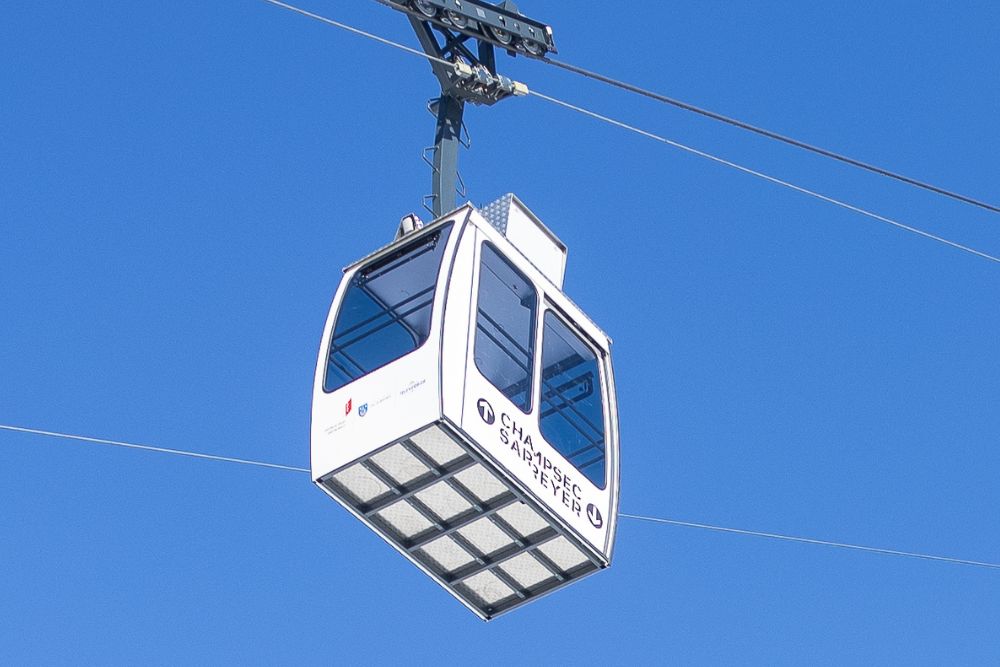
@ Valérie Pinauda / Photoval
Cable car replaces destroyed bridge
Since February 17, 2025, a temporary cable car has been connecting the villages of Champsec and Sarreyer (Switzerland). It replaces the road bridge that was washed away in a storm and reduces travel time for locals from 26 minutes to just five. The system demonstrates how quickly cable cars can be implemented.
So the cable car serves as a temporal bridge?
Exactly, and that works in existing city districts as well. If you want to quickly cross-connect two subway lines or relieve pressure on existing transport corridors – such as busy bus routes – a ropeway can be an attractive solution. It also literally replaces bridges: if a road or railway bridge is being renovated or rebuilt, a cable car can serve as a rapidly implementable alternative that acts as a temporary “detour.“
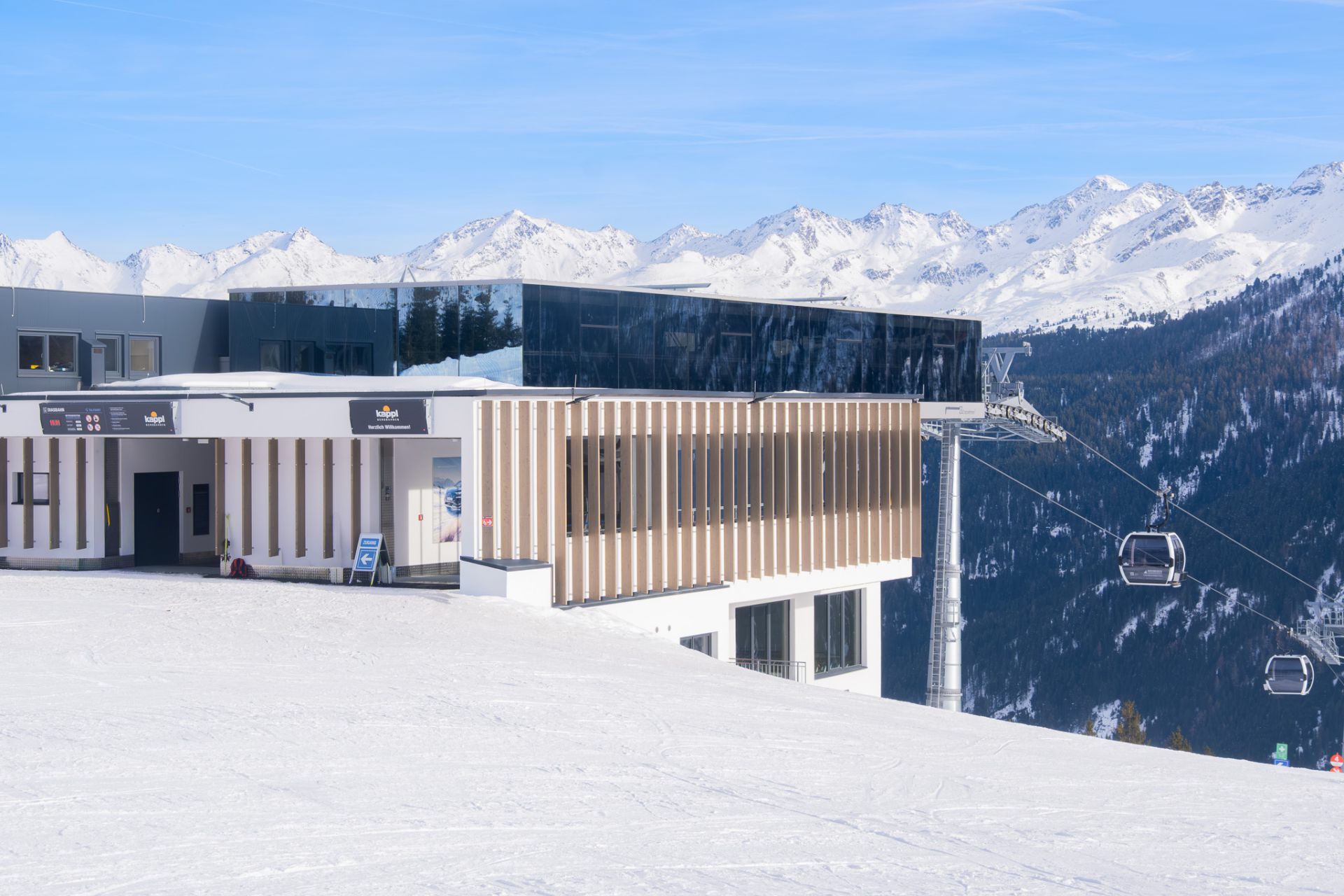
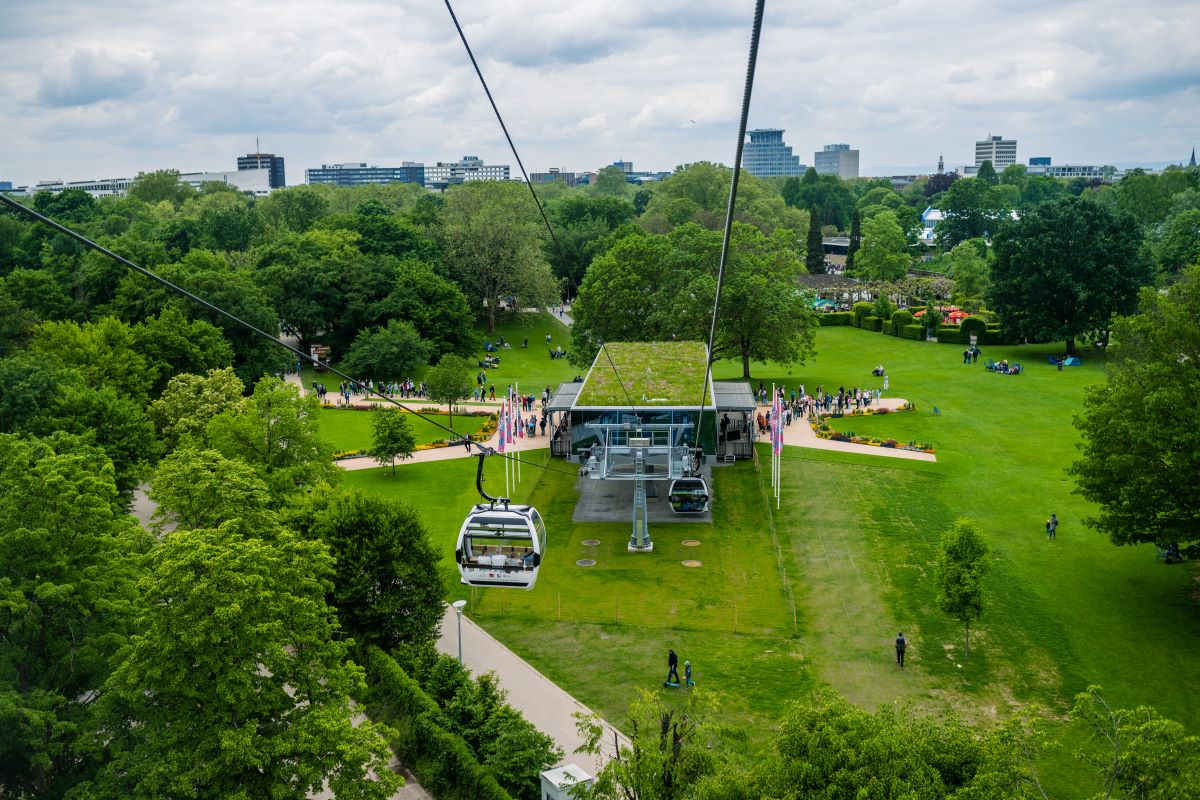
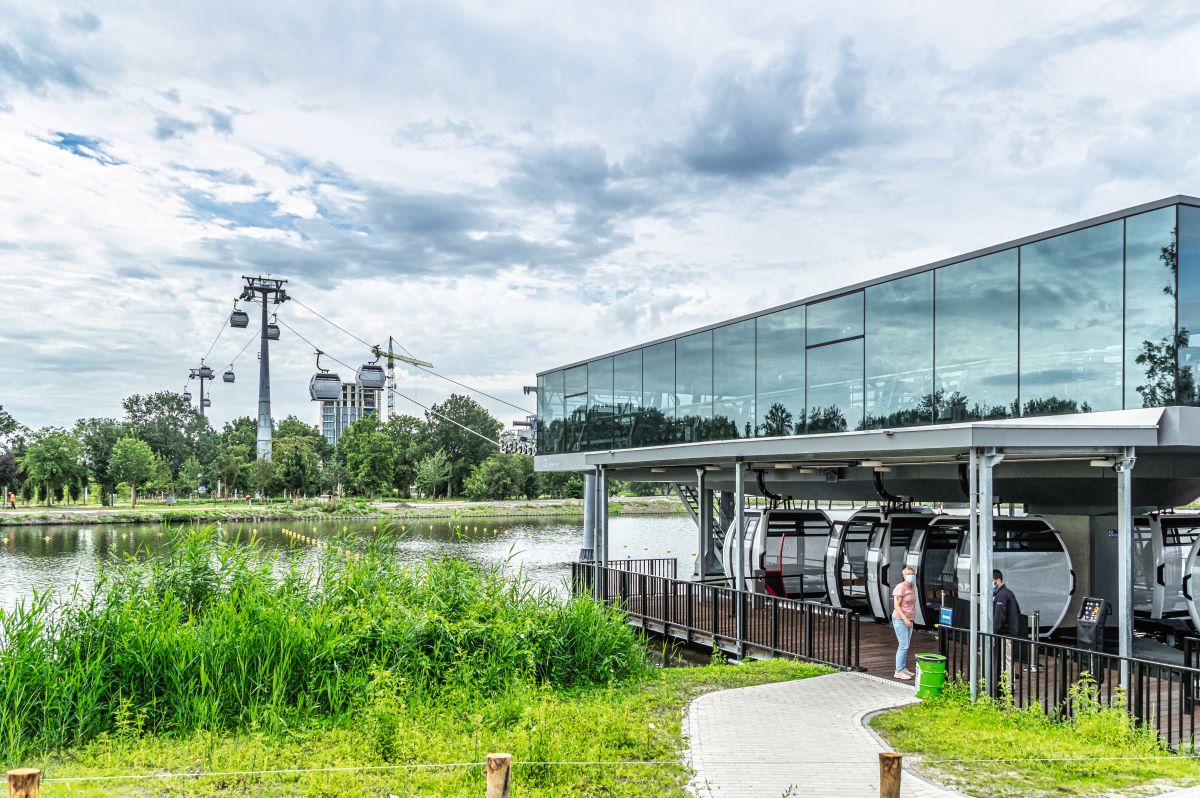
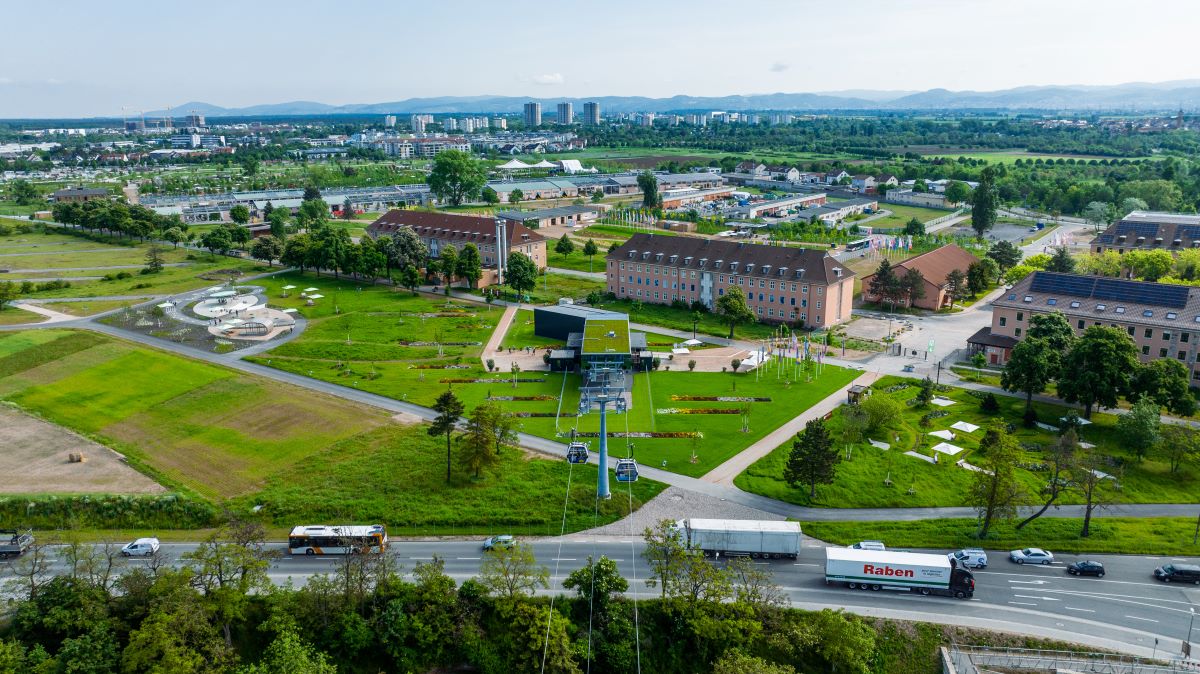
Erected three times: The Diasbahn (Kappl, Austria), the BUGA Cable Car (Mannheim, Germany), and the Floriade Cable Car
(Almere, Netherlands) are, from a ropeway engineering standpoint, one and the same system. © FREY Austria/Doppelmayr
Another application is horticultural expos and trade fairs – correct?
That‘s where the idea of temporary cable cars originally comes from. The best example is the system built in 2022 for the Floriade in Almere, Netherlands. It was dismantled after the event ended and re-erected in 2023 for the Federal Horticultural Show (BUGA) in Mannheim, Germany.
But that’s not all: since 2026, the exact same system has been operating as the Diasbahn in the Austrian ski resort of Kappl. The ropeway is, so to speak, in its third life.
How well does this multi-use model work for ropeways?
Unlike alpine systems, urban ropeways are much easier to reuse multiple times because key parameters – such as incline or tower spacing – barely change. With the exception of the haul rope and electrical engineering, almost all components can be reused. Modern ropeway technology has been heavily standardized since the 2003 CEN European standard, which plays right into the hands of system owners.
Read more on the topic
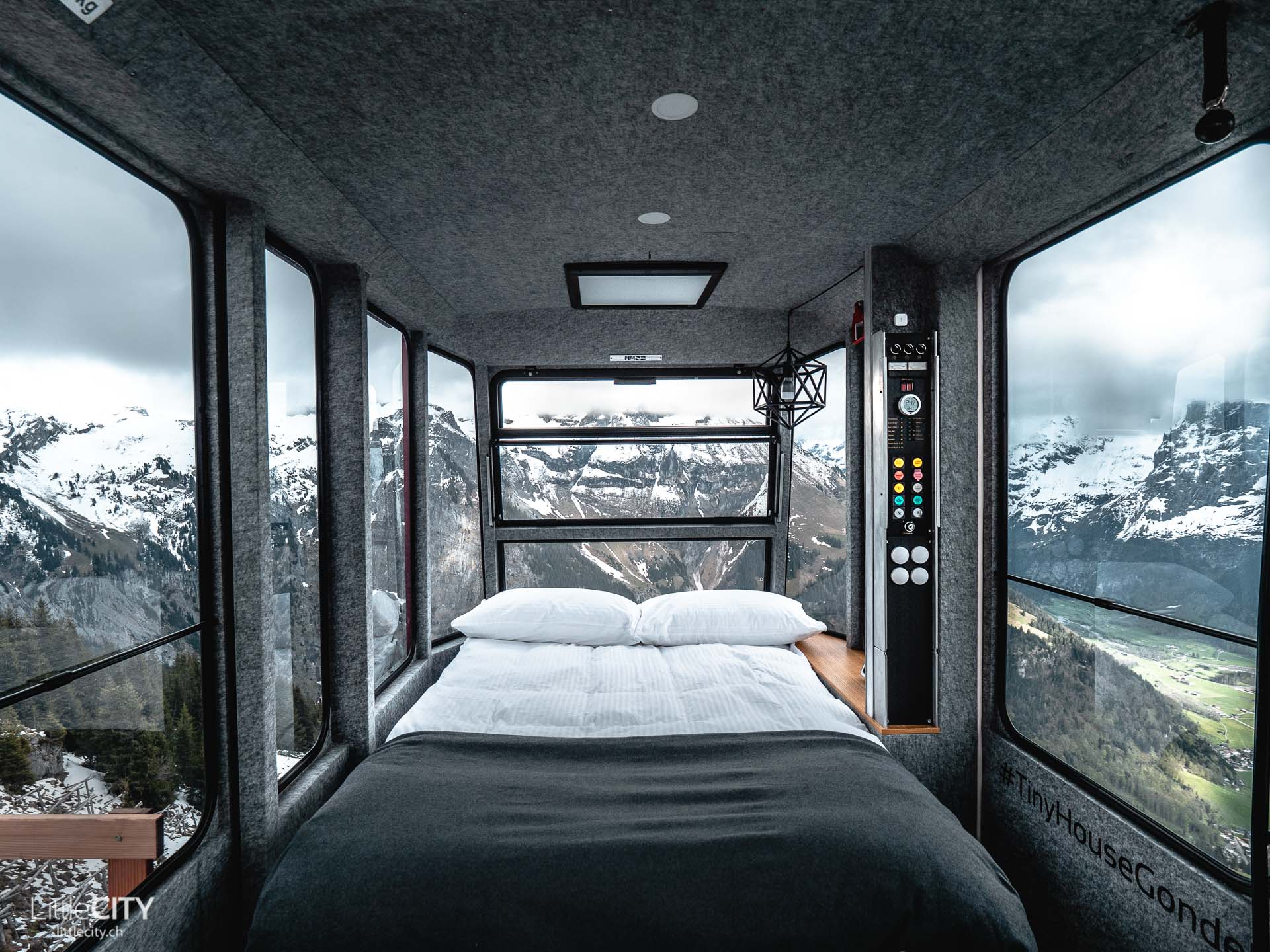
Foto: LitteCity.ch
Sustainibility: Cable cars have multiple lives
After an average of 30 years, cable cars reach the end of their life, although some components such as cables have to be discarded considerably earlier. In some cases, legal requirements demand the removal of installations after just twenty years, so it is a good thing that cable cars have multiple lives.
To what extent is this financially attractive?
On one hand, ropeway owners – such as real estate developers – can move their system from location to location and re-erect it cost-effectively multiple times.
On the other hand, the pre-owned market is currently very attractive: existing cable cars are up to 50 percent cheaper than new systems, saving investors a third of total costs overall.
Demand is correspondingly high and good prices can be achieved – sometimes higher than the book value, even after ten years! Whole systems don‘t always have to change hands either; partial purchases or sales are also common. Working with an expert broker, such as a ropeway planner, is key here.
To what extent do pre-owned systems need to be refurbished?
As mentioned, the rope, electrical system, and control system must always be purchased new. The core ropeway technology, including stations and support towers, can usually be reassembled with minimal effort after maintenance and inspection – provided parameters like rope tensioning force and rope diameter were chosen foresightedly in the first place.
That’s why involving a ropeway planner before purchasing is so vital. The cabins usually undergo a retrofit to achieve a fresh appearance. Where necessary, minor modifications are made – such as removing ski racks if an urban deployment is to follow. Starting out directly with a pre-owned system is therefore entirely realistic, making a temporary urban cable car even more attractive from a price perspective.
Interview: Thomas Surrer