
Cities
“Integration does not end with construction.“
SI Urban: What makes ropeway such as Teleférico Santo Domingo high-performance installations?
David Albornoz: Performance cannot be defined by a single technical parameter. For me, a highperformance installation is the combination of capacity, availability, reliability, maintainability and passenger experience.
What challenges arise by integrating ropeways into dense urban areas?
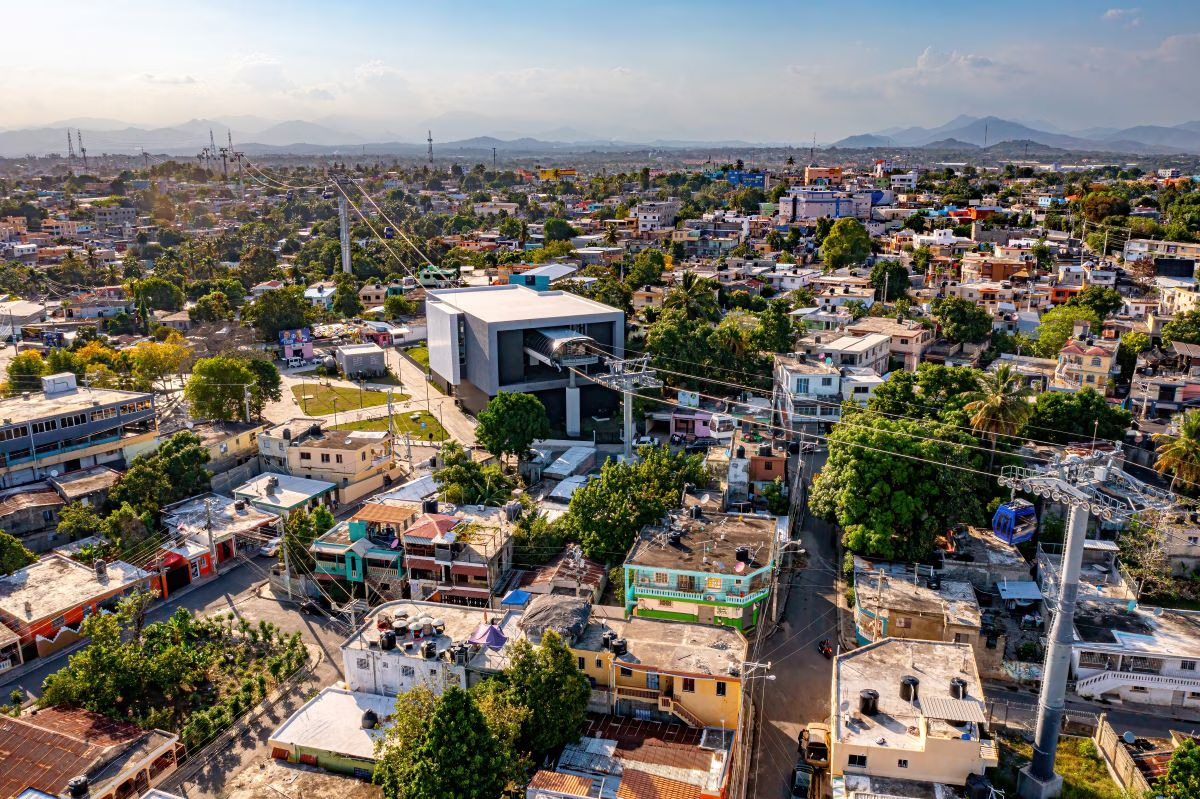
Space is one of the main challenges, but certainly not the only one. An urban ropeway must coexist with roads, buildings, and other infrastructure. This makes construction methods, installation logistics and maintainability particularly important. And integration does not end with construction: once the system enters operation, accessibility, noise, maintenance logistics and interaction with the surrounding communities become permanent considerations.
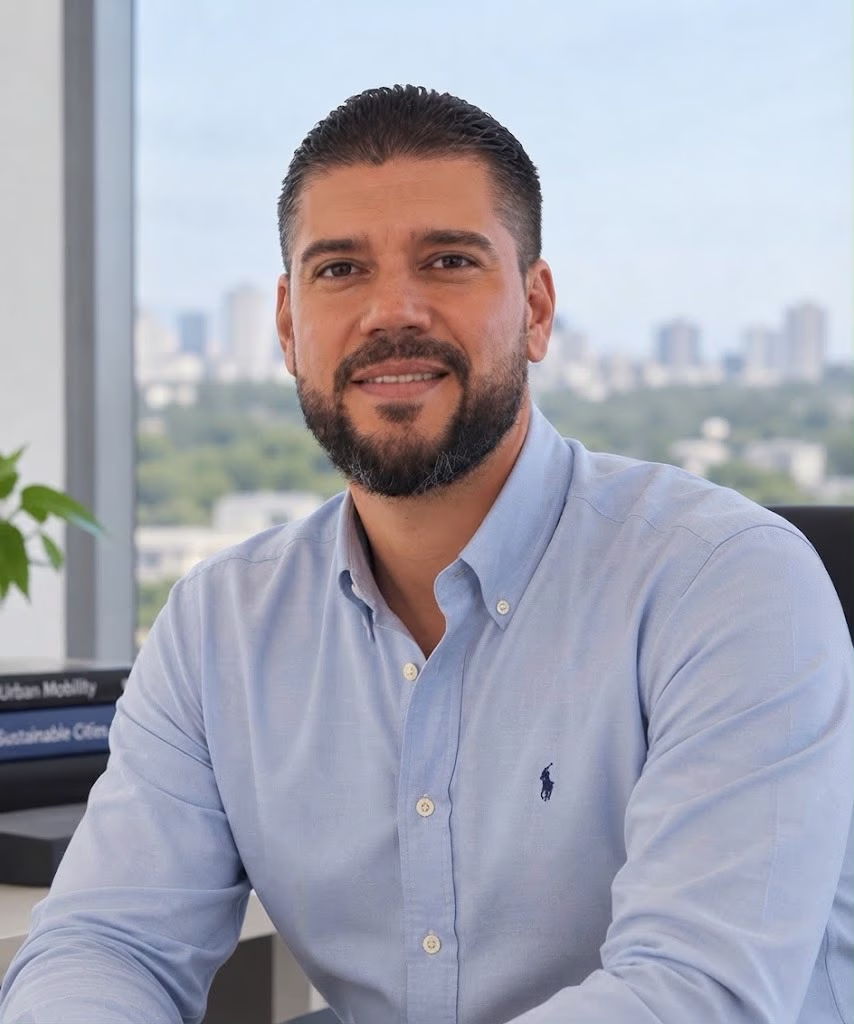
David Albornoz
Director of POMA Dominican Republic
What lessons from Lines 1 and 2 are applied to current projects?
One of the most important lessons is that operation and maintenance must be considered from the earliest stages of a project. Maintainability, access to equipment, maintenance logistics and future operational needs should be integrated into the project well before commissioning.
Article on the topic
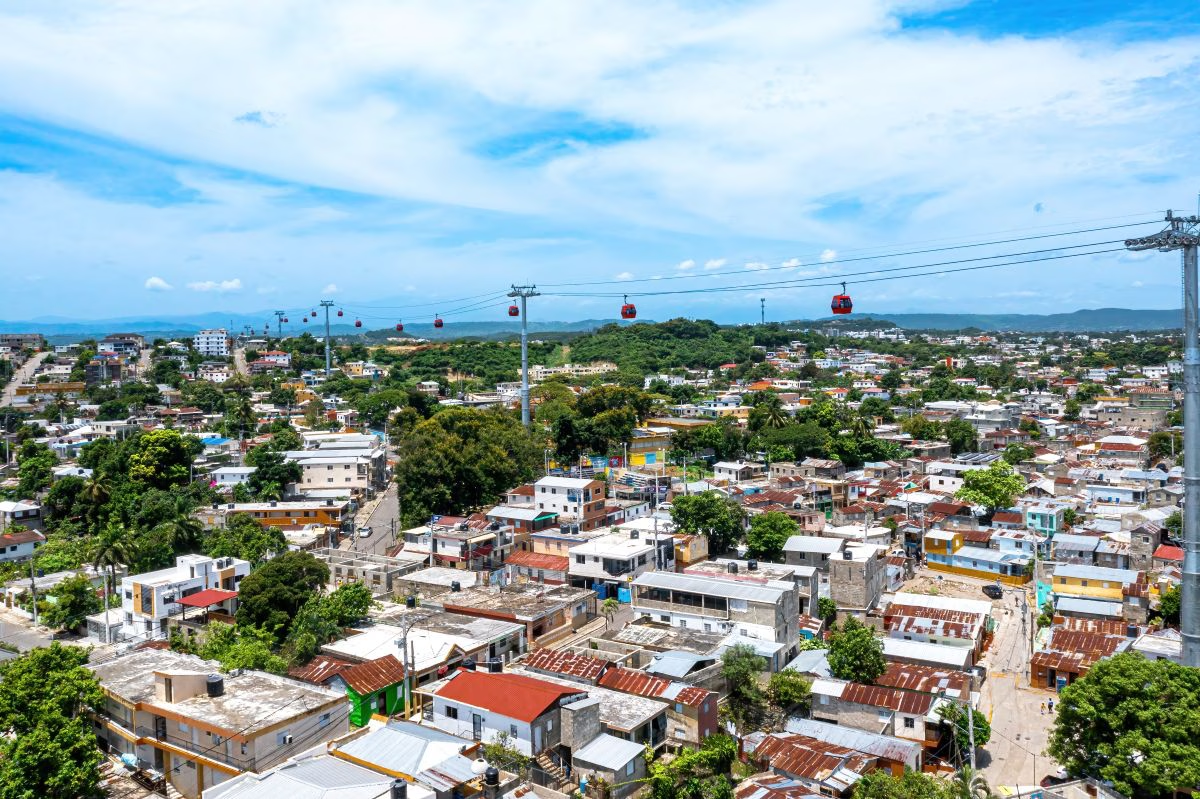
190 Years of Rope-Making for Urban Cable Cars
Urban ropeways are among the most demanding applications in the industry. High availability and near-continuous operation place the highest demands on ropes and technical expertise. With 190 years of experience, FATZER provides rope solutions for installations that transport thousands of people every day.
What requirements must a carrying-hauling rope fulfil in installations such as Santo Domingo?
We expect reliability, stable behavior over time, good ride characteristics and, increasingly, the ability to monitor its condition and anticipate its evolution. Noise and vibration are also particularly important.
The interaction of the rope with the sheave liners along the line can influence the acoustic behavior of the installation, and this becomes especially relevant when the system operates close to homes and communities.
Today, people expect urban infrastructure not only to provide efficient mobility, but also to integrate into their environment with the lowest possible levels of noise and disturbance. Long-term performance therefore depends not only on the rope itself, but also on proper installation, inspection, maintenance and technical follow-up throughout its service life.
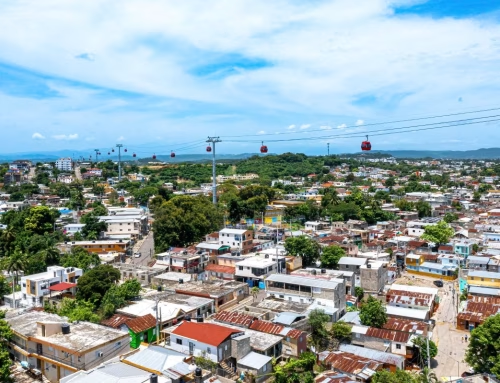
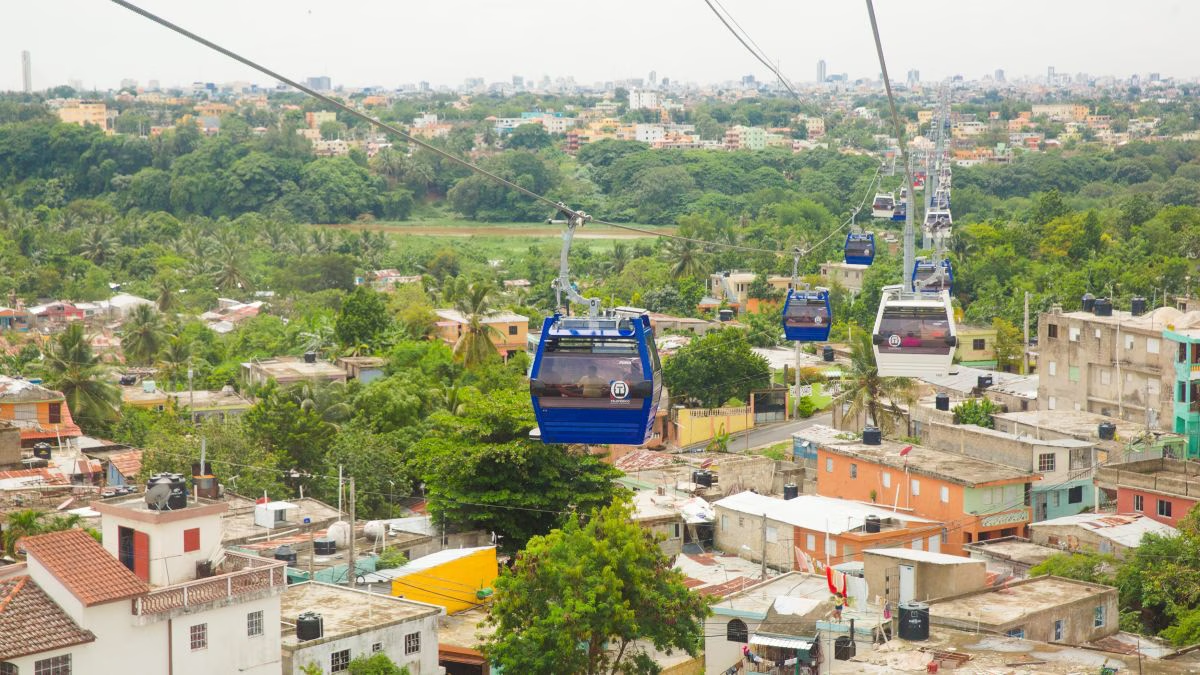
Santo Domingo Linea 1
What value does TRUsplice ES bring?
The application of TRUsplice ES in Santo Domingo will provide us with the opportunity to evaluate these benefits in a real urban project. Based on the expected characteristics of the solution, a shorter splice and amore efficient installation process could bring important advantages, particularly in dense urban environments where space, time and resources are constrained.
What aspects of POMA and FATZER’s collaboration are important to you?
For POMA, the value of this collaboration lies in combining our expertise as a ropeway system manufacturer and operator with FATZER’s specific expertise in the ropes it supplies. Sharing technical feedback and product-related knowledge helps both companies continuously improve their respective contributions to increasingly demanding urban ropeway projects. Clear communication, responsiveness and a technical dialogue are particularly important to me.
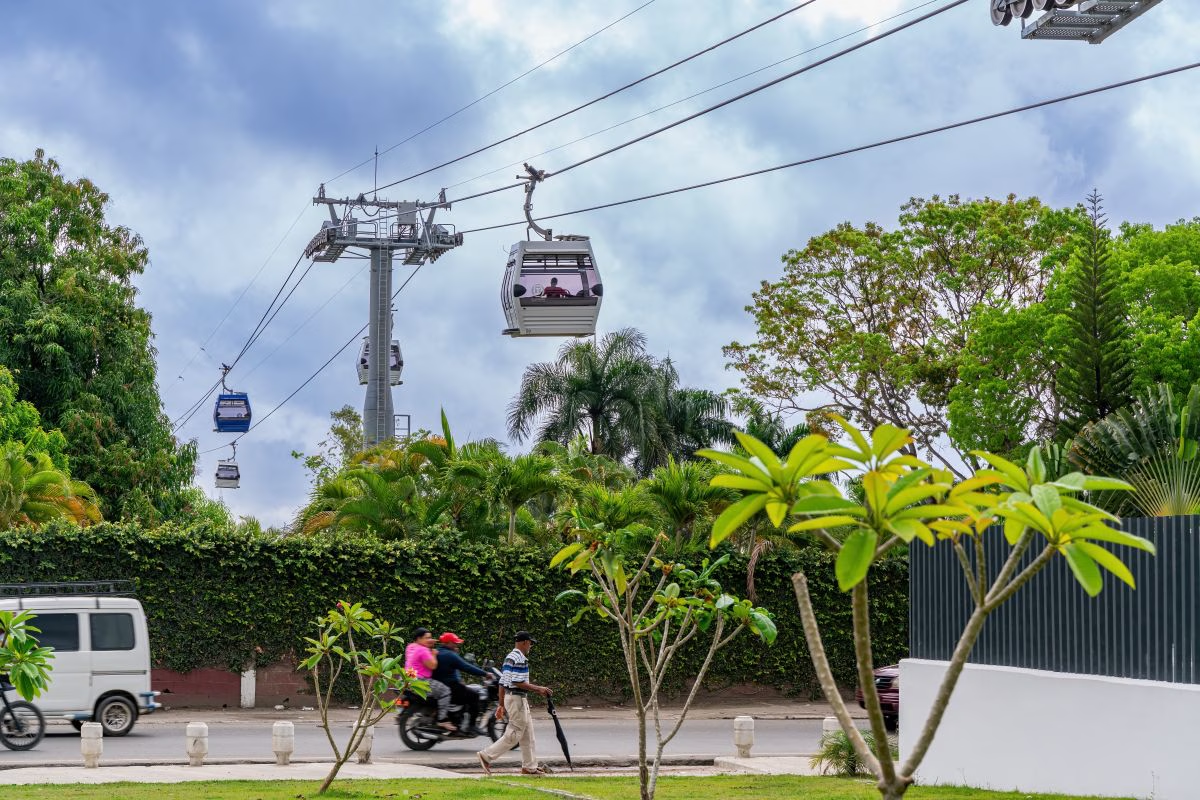
Santo Domingo Linea 2
Which FATZER services have the greatest potential for future ropeway systems?
I believe FATZER, like POMA, should continue developing technologies that allow us to better understand the condition and evolution of critical components, ideally without affecting normal operation.
Real-time monitoring, better data visualization and tools that support earlier and better-informed decisions have great potential. The objective should be to anticipate rather than react: extending the service life of critical components, optimizing maintenance interventions, reducing execution times and improving availability, while always keeping safety as the priority.