
Cities
190 Years of Rope-Making Experience for Urban Cable Cars
Fourth Project in Eight Years
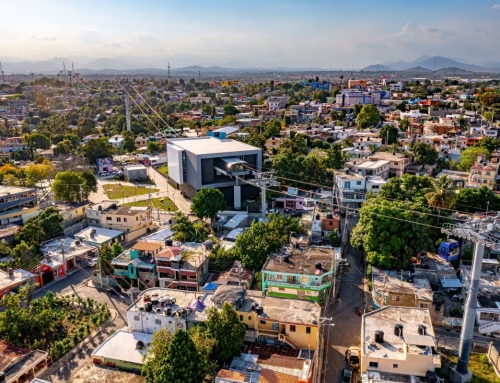
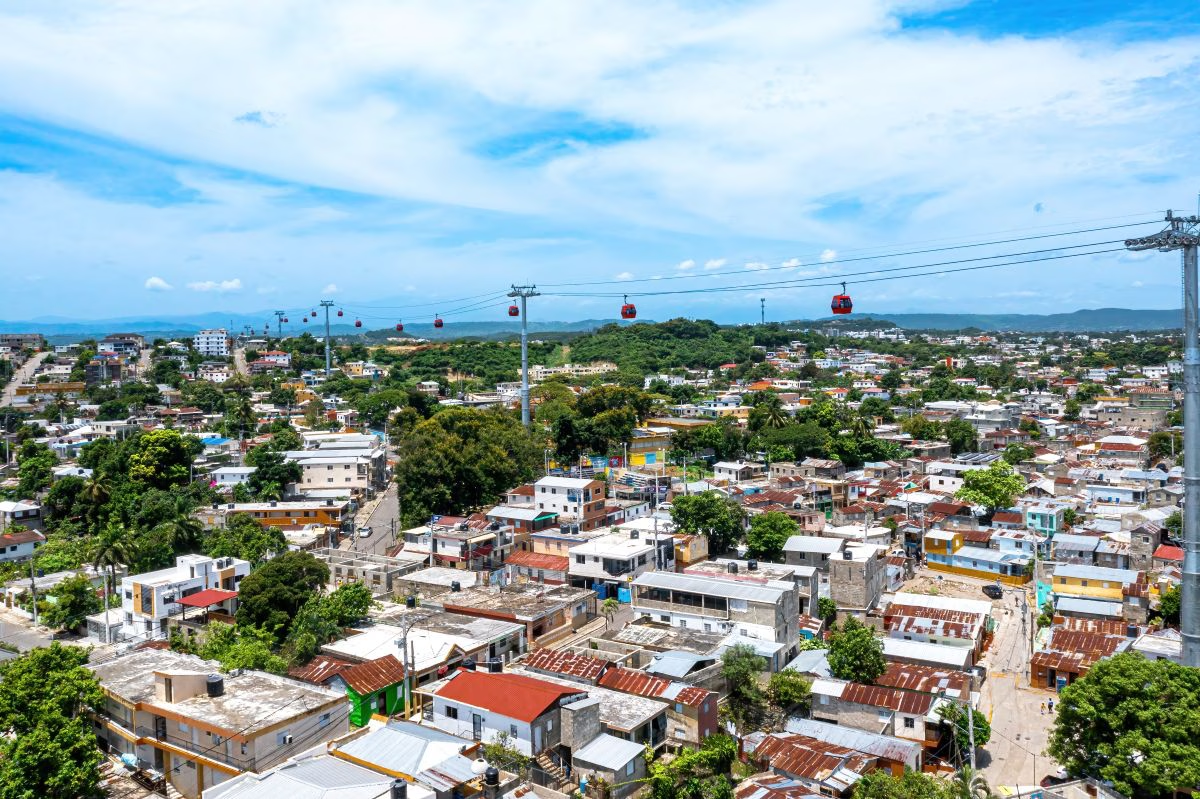
Current projects in the Caribbean and Central America illustrate just how demanding the requirements have become. In the capital of the Dominican Republic, the third line of the Teleférico network in Santo Domingo is currently under construction.
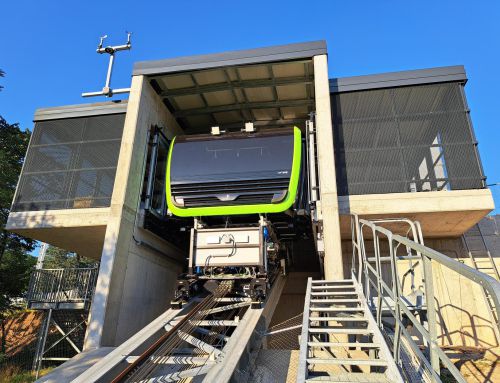
The seven-kilometer route with seven stations is being implemented by the French ropeway manufacturer POMA, just like the existing Lines 1 (2018) and 2 (2023). Following this projects, POMA set new benchmarks with the installation in Santiago de los Caballeros. The “Santiago Line 1” reaches operating speeds of up to 7 m/s.
Interview on the topic
 “Integration does not end with construction.“
 “Integration does not end with construction.“
David Albornoz, Director of POMA Dominican Republic, shares insights into the operation and urban integration of Santo Domingo’s ropeway systems – and how technology and maintenance ensure reliable and comfortable journeys, especially the solutions from the rope manufacturer FATZER.
PERFORMA for the highest urban demands
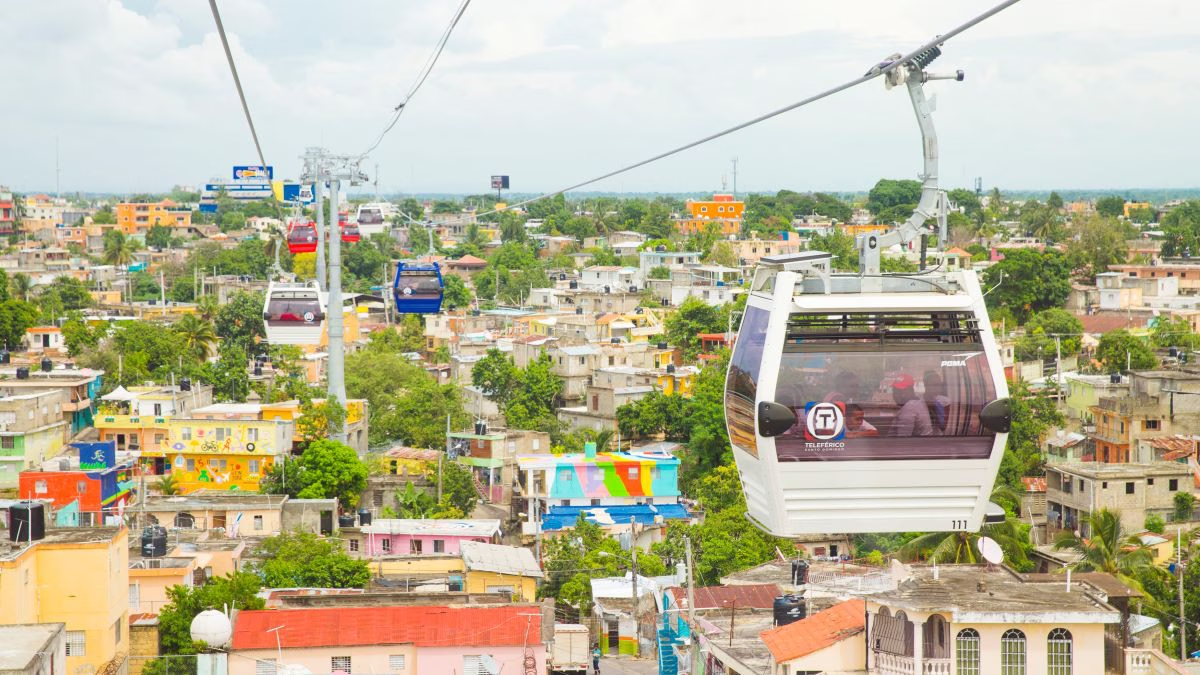
The new line in Santo Domingo will also operate at this speed during peak hours. Extending the existing network towards the south-west, it surpasses the previous lines not only in terms of length (four and five kilometers respectively, each with four stations).
Two FATZER PERFORMA carrying-hauling ropes, each measuring 60 mm in diameter and 3,400 meters in length, will be used to operate the nearly 300 gondola cabins. These ropes are specifically designed for high-performance urban installations
Santiago Linea 1
Splicing method for urban environments
FATZER’s contribution extends well beyond the supply of the ropes themselves. During the rope installation in Santo Domingo, the TRUsplice ES splicing solution will demonstrate its usefulness.
Developed by FATZER and used in around 100 projects worldwide, this engineering solution reduces splice length by up to one third. For a 60 mm rope, this translates into a reduction of nearly 30 meters, requiring just under 44 meters instead of 72.
In urban environments, where space is often limited, this offers significant advantages. Smaller splice bridge dimensions, lower costs and shorter installation times all contribute to greater efficiency.
Last but not least, around one-third fewer support staff will be required. In Santo Domingo, the splice will require 14 support staff instead of 23.
FATZER Splicing Bridge
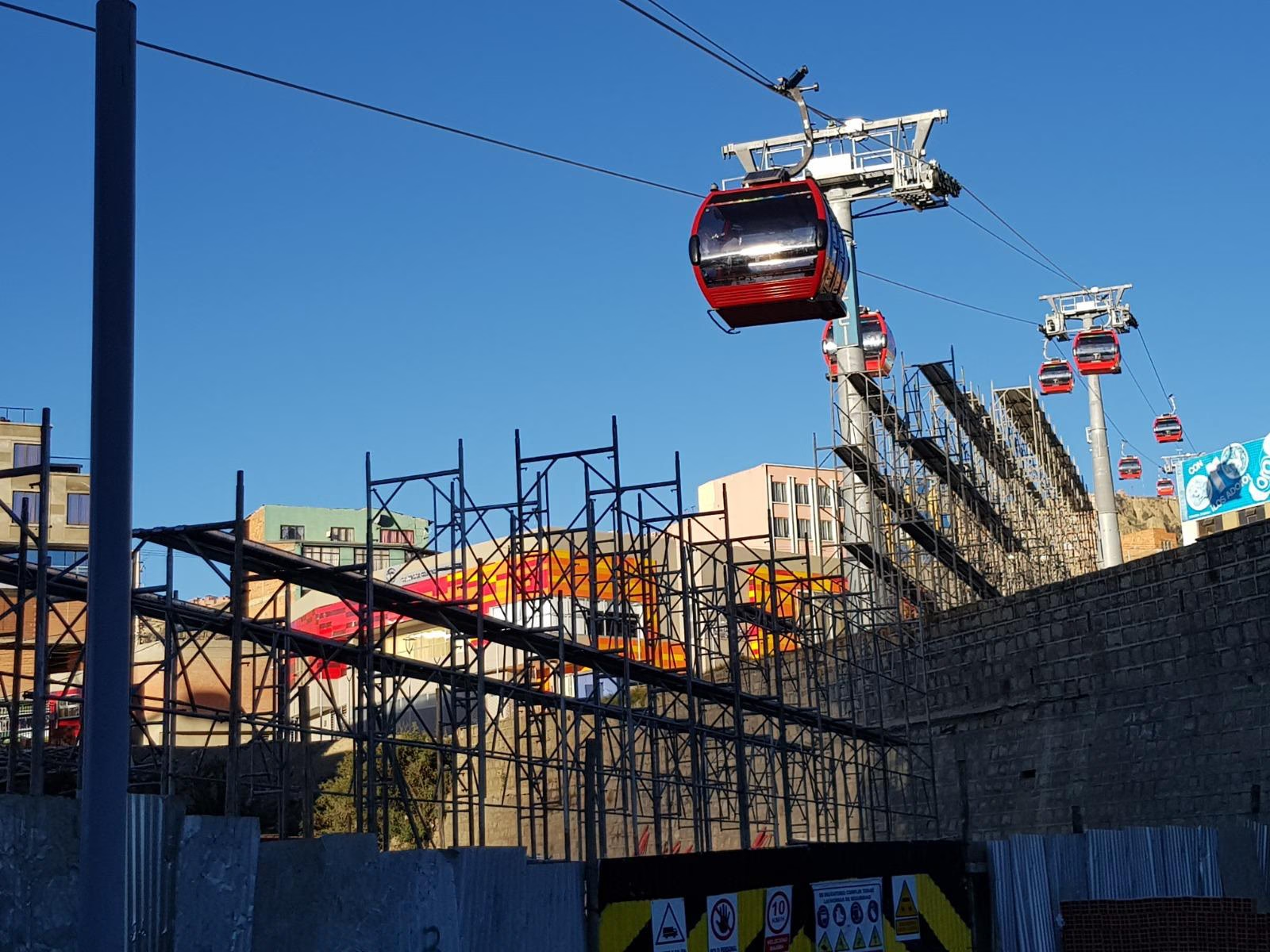
Ropes spanning miles
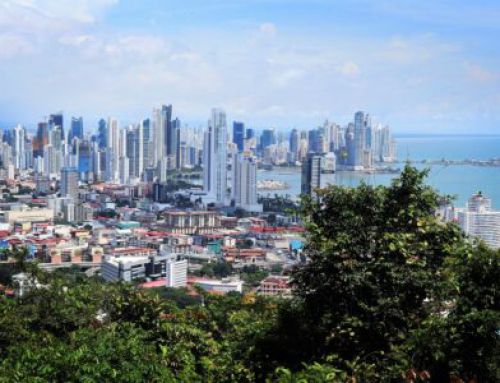
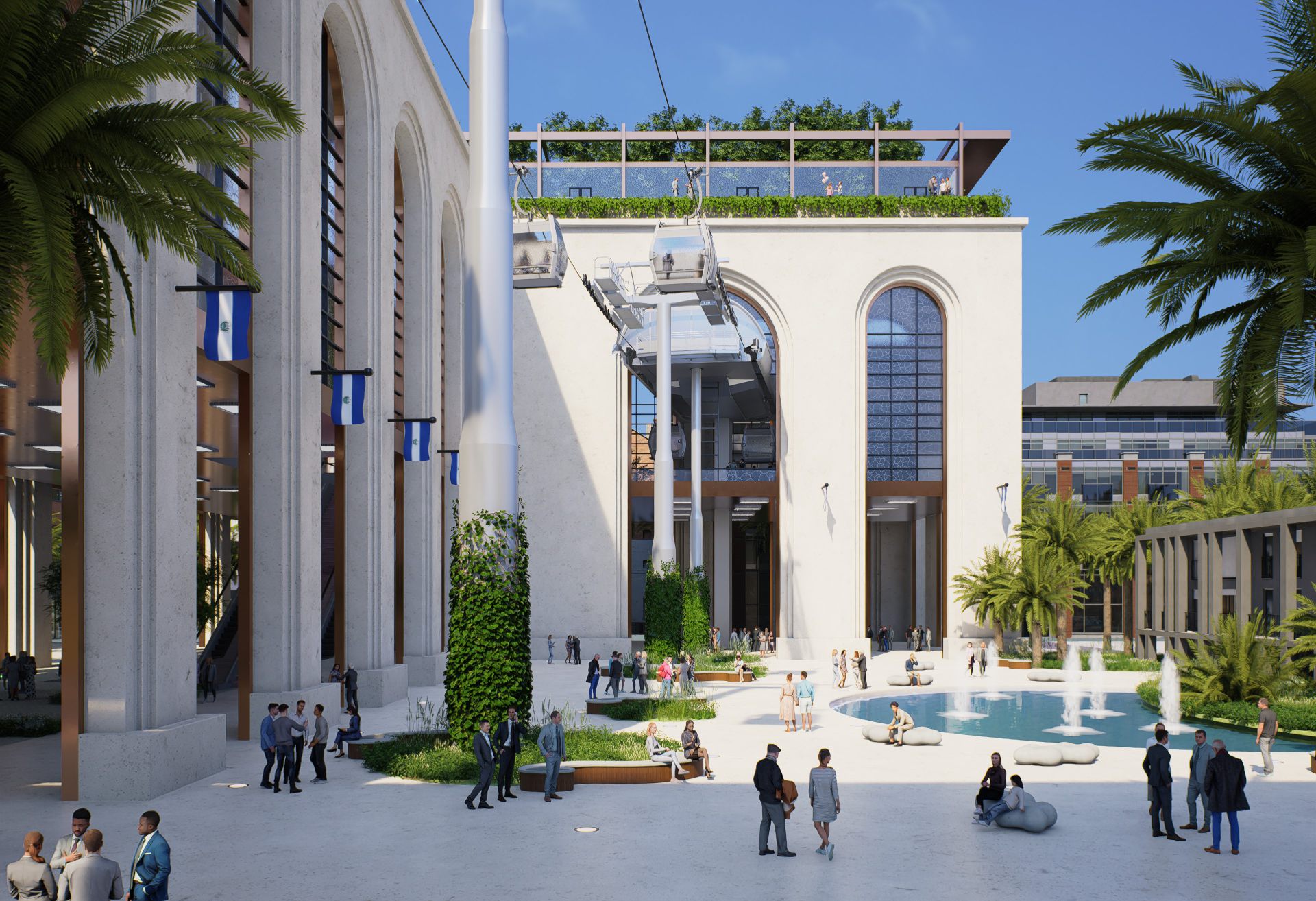
As Santo Domingo expands its urban ropeway network, San Salvador is building its first system, connecting residential districts, the university, administrative center and city center while complementing metro and bus services.
Here, too, two PERFORMA carrying-hauling ropes with a diameter of 60 mm will form the heart of the installation. With a length of 3,700 meters each, the total volume of FATZER ropes supplied to the two countries amounts to almost 34 kilometers, including more than 23 kilometers of PERFORMA rope.
Planned cable car in San Salvador
Factors for performance
High operating speeds, long service hours and short maintenance windows demand components that perform reliably under high loads. At the same time, ropes must run smoothly in densely populated urban environments and minimize vibrations.
For operators and manufacturers alike, products and services are therefore far more than just a technical component. They have a significant impact on availability, maintenance requirements and the service life of an installation.
Particularly in urban ropeways that transport thousands of people every day, they become a decisive factor in the performance of the entire system.