Cities
What science knows about urban cable cars
To what extent is science focusing on urban cable cars?
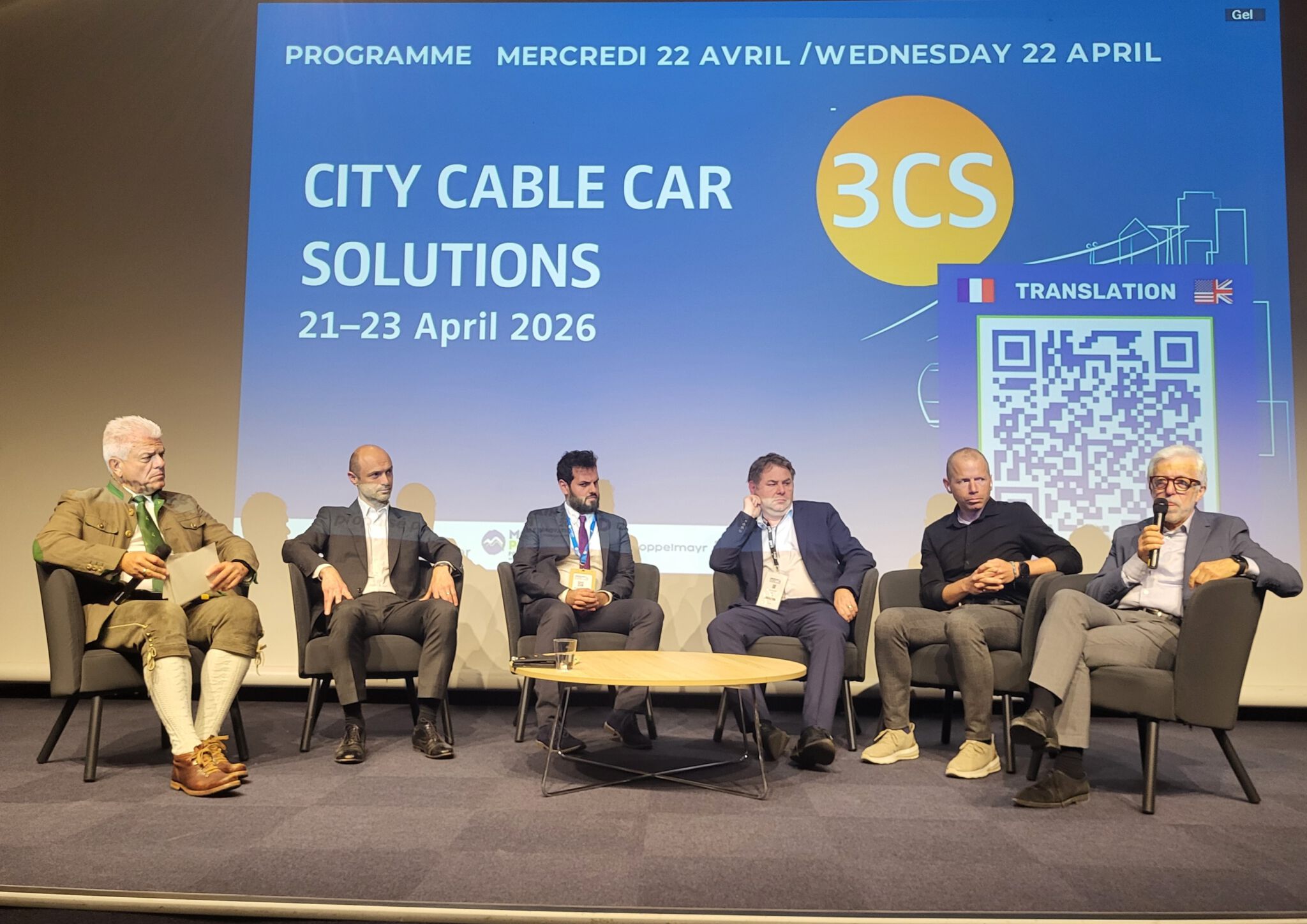
The rise of the cable car as a serious urban mode of transport has been accompanied by an increase in scientific publications. Transport scientist Stephan Tischler recently outlined what researchers are focusing on at the “City Cable Car Solutions 3CS“ event, held as part of the Mountain Planet trade fair in Grenoble.
He addressed four key fields of research: technical fundamentals and engineering physics, environmental sciences and sustainability, social urbanism, and urban planning and network science.
Transport researcher
Stephan Tischler

Mechanics, Capacity, Topography
In the “technology“ field, research is conducted on the mechanics of movement on the one hand: “We are talking here about the science of detachable grips and circulating systems,“ says Tischler.
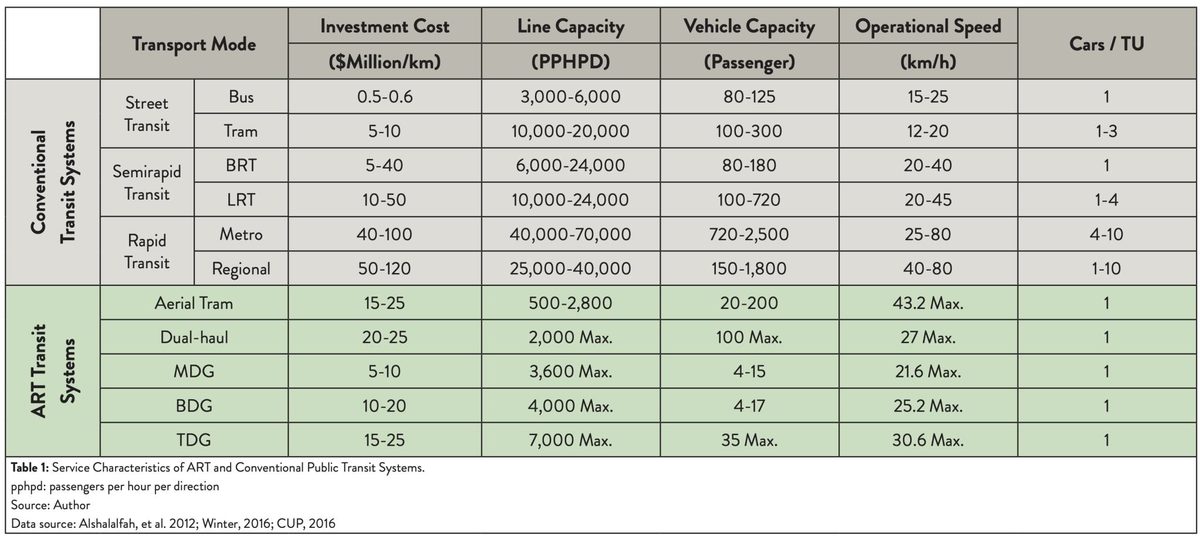
On the other hand, the focus lies on the capacity metrics of cable cars – specifically, passengers per hour and direction. Researchers like to compare these with the transport capacity of other public transport modes (see table).
“Furthermore, the topographical advantage of urban cable cars is being investigated, specifically the physics of linear gradient profiles versus elevation gain,“ Tischler reports.
The integration of urban cable cars into the public transport network is another key topic, particularly regarding capacity limits caused by passenger queues at stations.
Comparison
of public transport capacities
Efficiency, Footprint, Noise
The second relevant research field concerns the environment and sustainability. For instance, research is being carried out into the energy efficiency profiles of cable cars by comparing energy consumption per passenger kilometer.
“In contrast to other modes of transport, urban cable cars offer the advantage of continuous movement,“ Tischler emphasizes, highlighting the key scientific finding on this topic.
The land consumption of cable cars is also a subject of research: scientists analyze the “point-to-point“ principle of cable car towers compared to the continuous swathes cut by roads and railways.
Another area is acoustic ecology, which measures noise pollution in residential areas near the routes. Last but not least, environmental research deals with the ecological footprint of urban cable cars over the entire lifecycle of the installations.
On the subject
© SI/Thomas Surrer
Industry Trade Fair Highlights Urban Cable Cars
As part of Mountain Planet – the international trade fair for mountain tourism held in Grenoble, France – urban cable cars were also a key topic on the agenda. The “City Cable Car Solutions 3CS” conference brought together five compelling speakers and around 70 participants. Here is a first look at the event.
Homicide Rates and Jobs
The third research area can be summarized as “social urbanism“ and focuses on the societal effects of urban cable cars. Researchers gather data on correlations between access to cable cars and employment rates in peripheral districts. Cable cars open up previously isolated areas, triggering socioeconomic development.
The most prominent example is the “Medellín Miracle.“ In the Colombian city, the homicide rate dropped significantly – in part due to cable cars, as they helped address underlying social issues (see info box). R
esearchers are also exploring the effect of “passive surveillance“ in the context of crime and security. Open sightlines and the continuous movement of cabins enhance both actual and perceived safety, while passengers act as passive observers.
“However, there is also another side – the gentrification paradox: studies show that real estate values increase in the vicinity of cable cars. This raises the risk of displacing the very demographic groups the system was originally built to serve,“ Tischler reports.
The Medellín Miracle
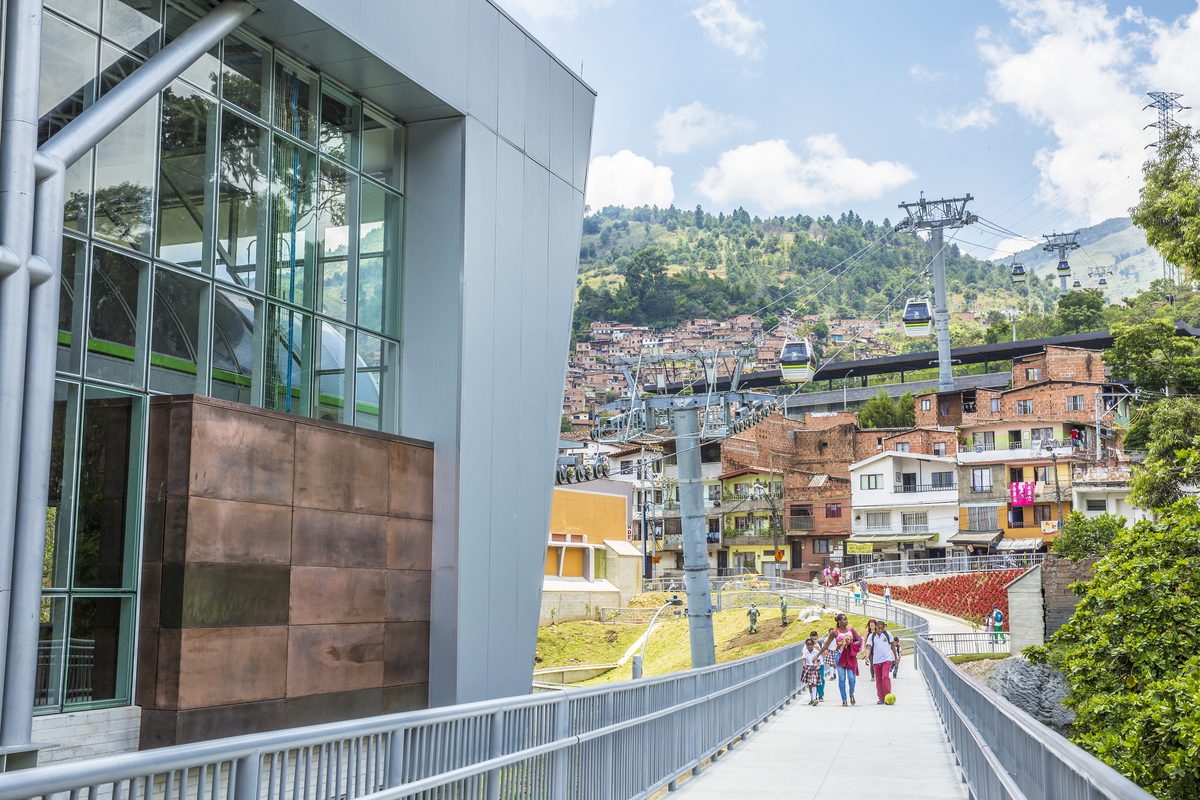
381 homicides per 100,000 inhabitants: In 1991, the Colombian city of Medellín recorded one of the highest crime rates in the world, plagued by deep-seated issues of inequality and exclusion. Through investments in education, public infrastructure, and public spaces, the situation was turned around. Six cable car lines now connect previously isolated neighborhoods with the city center, significantly reducing travel times. The prosperity of local residents increased, and the homicide rate dropped to 20 per 100,000 inhabitants.
Intermodality and Privacy
The fourth research field encompasses urban planning and networks. A key component here is intermodality – the “science of transfer resistance,“ according to Tischler. The core question is: How do cable car stations function as hubs for subways and buses?
Furthermore, research aims to solve the “last mile“ problem, referring to the final leg of a journey. In this context, mathematical models calculate the commute time savings enabled by urban cable cars.
“The cable car network in La Paz–El Alto reduces travel time by an average of 22 percent, cutting daily commute times by nine minutes. No matter how short or long the commute is, using the cable car system gets you to your destination faster,“ Tischler notes as an example.
A second major topic in urban planning is the impact of cable cars on the cityscape and the privacy of residents. Here, psychological studies have already been conducted on the “perceived privacy“ of residents living beneath transport routes.
Summary of the Current State of Knowledge
In summary, Stephan Tischler reports a significant increase in academic research on urban cable cars over the past two decades. Studies concentrate on four main thematic pillars: socioeconomic impacts, integration and connectivity, technical performance and ecological footprint, as well as urban planning and public perception. Incidentally, the majority of the analyzed systems are located in South America.