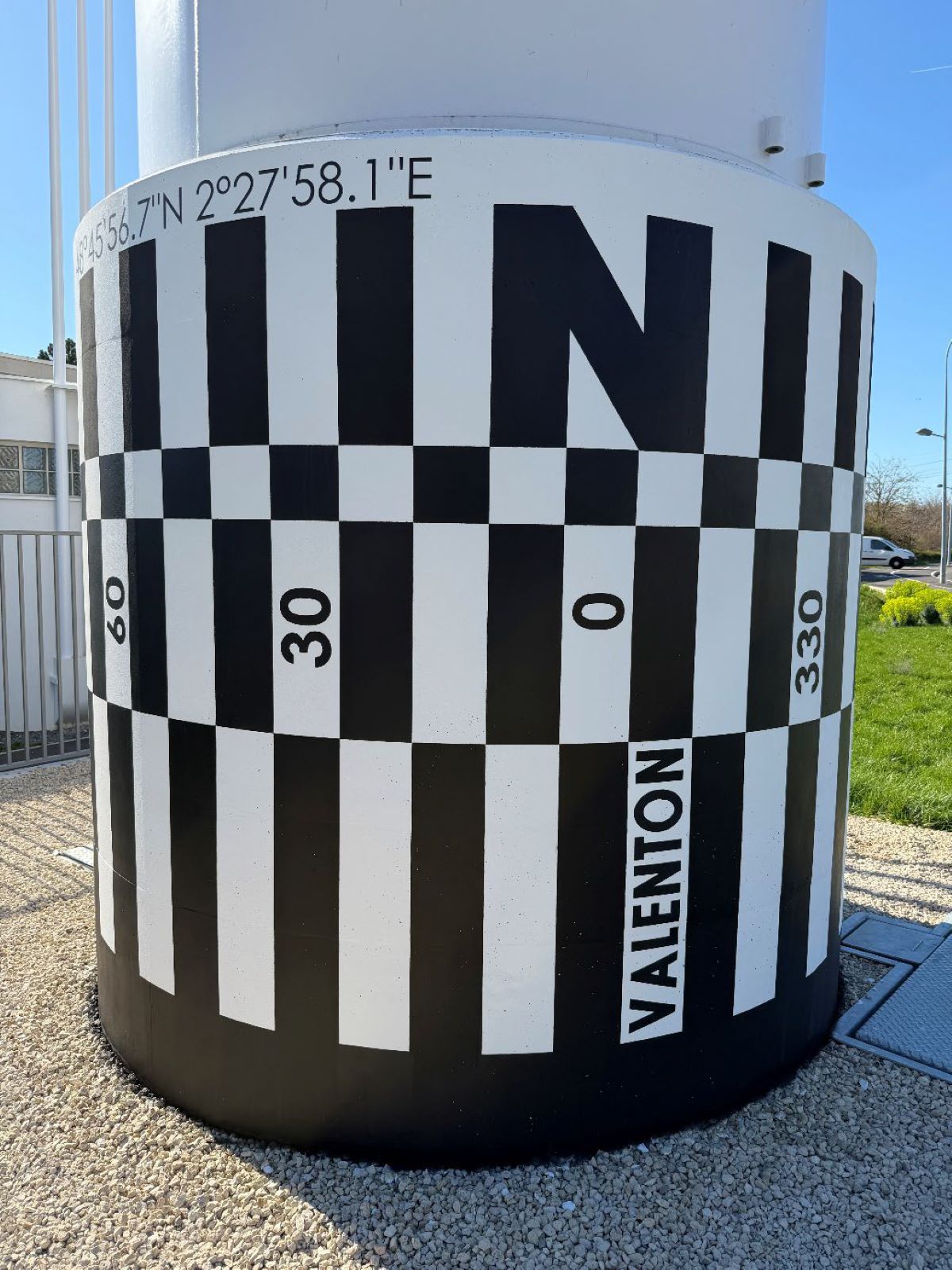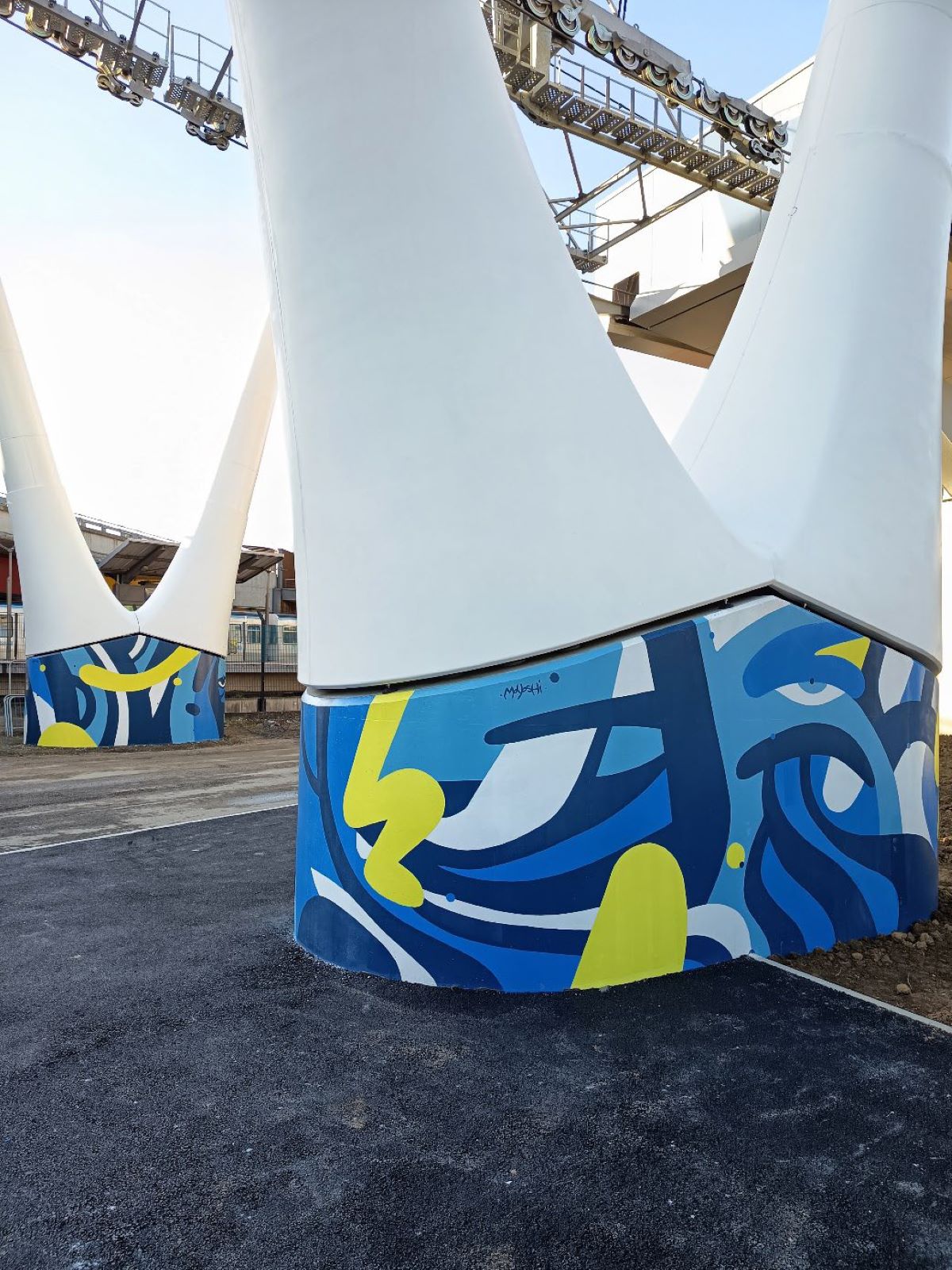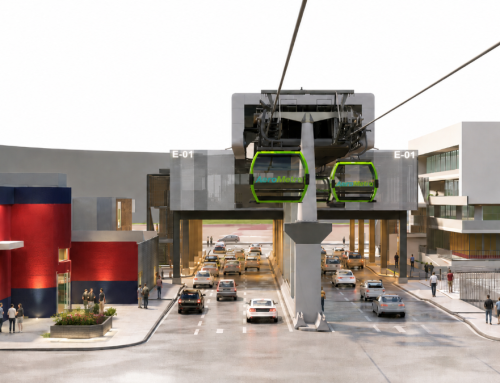

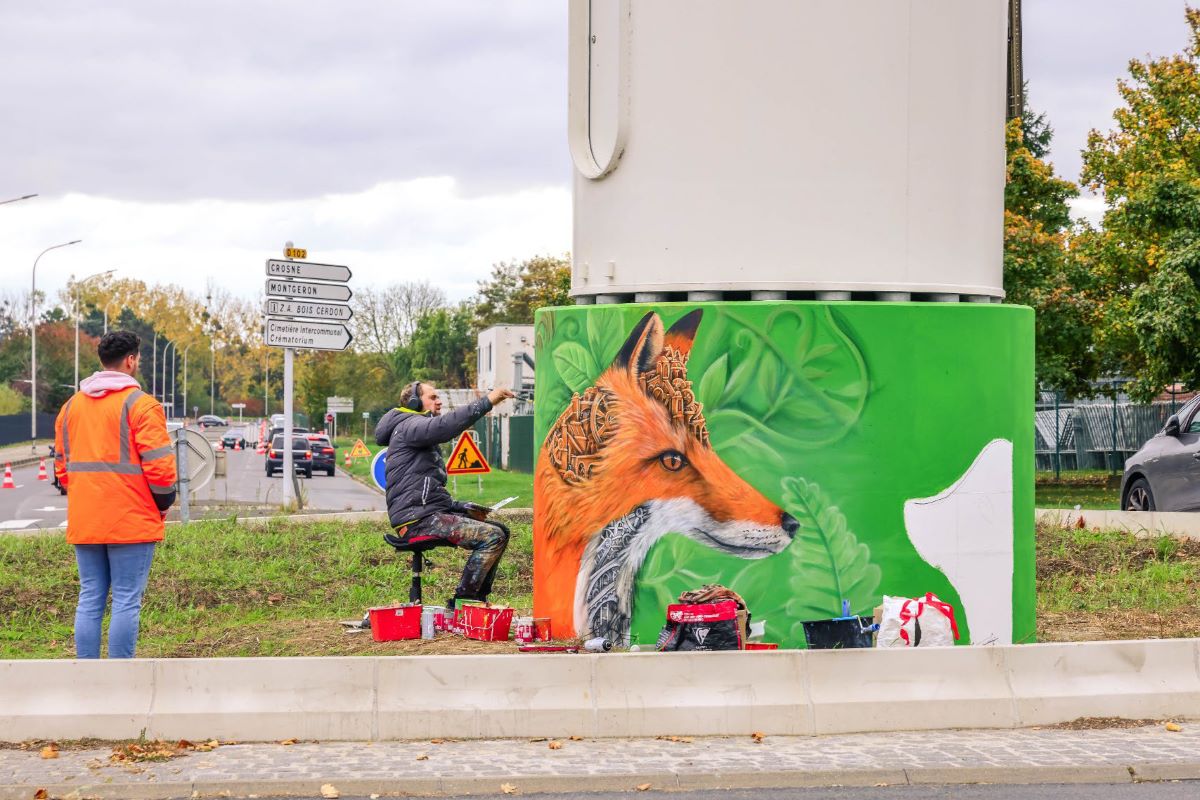
In Villeneuve-Saint-Georges (Val-de-Marne), artist Ardif used a pylon of the Câble C1 cable car as a canvas. © Île-de-France Mobilités
Cities
Pylons as Canvases
Art instead of vandalism for the Paris cable car: The support towers of urban cable cars naturally invite graffiti. To preempt this, project managers for the Câble C1 cable car near Paris launched an art competition. Even before the cable car's opening, five street artists designed the bases of five prominent pylons.
17. August 2026
Support towers carry the cable of a cable car system, connecting its stations. They are placed at strategic points along the route to prevent cables from overstretching or becoming unstable.
Yet cable car pylons serve more than just technical functions. When properly integrated into urban environments, they also unlock social and spatial potential. One key factor is preventing vandalism – specifically, unauthorized graffiti.
That is why Île-de-France Mobilités, responsible for the Câble C1 cable car near Paris, commissioned five street artists to design the concrete bases of five particularly accessible pylons. It is a fitting project for the Val-de-Marne department, which is well known for its street art culture.
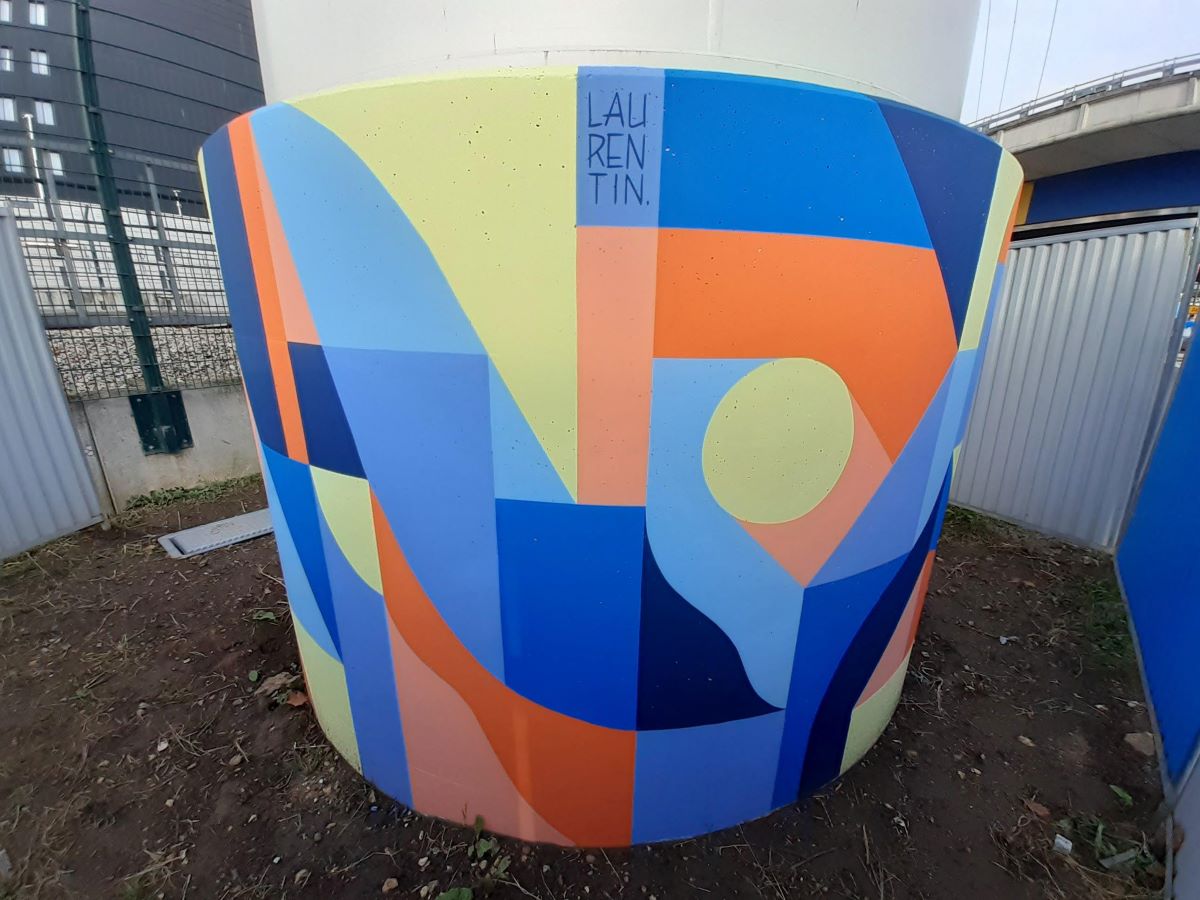
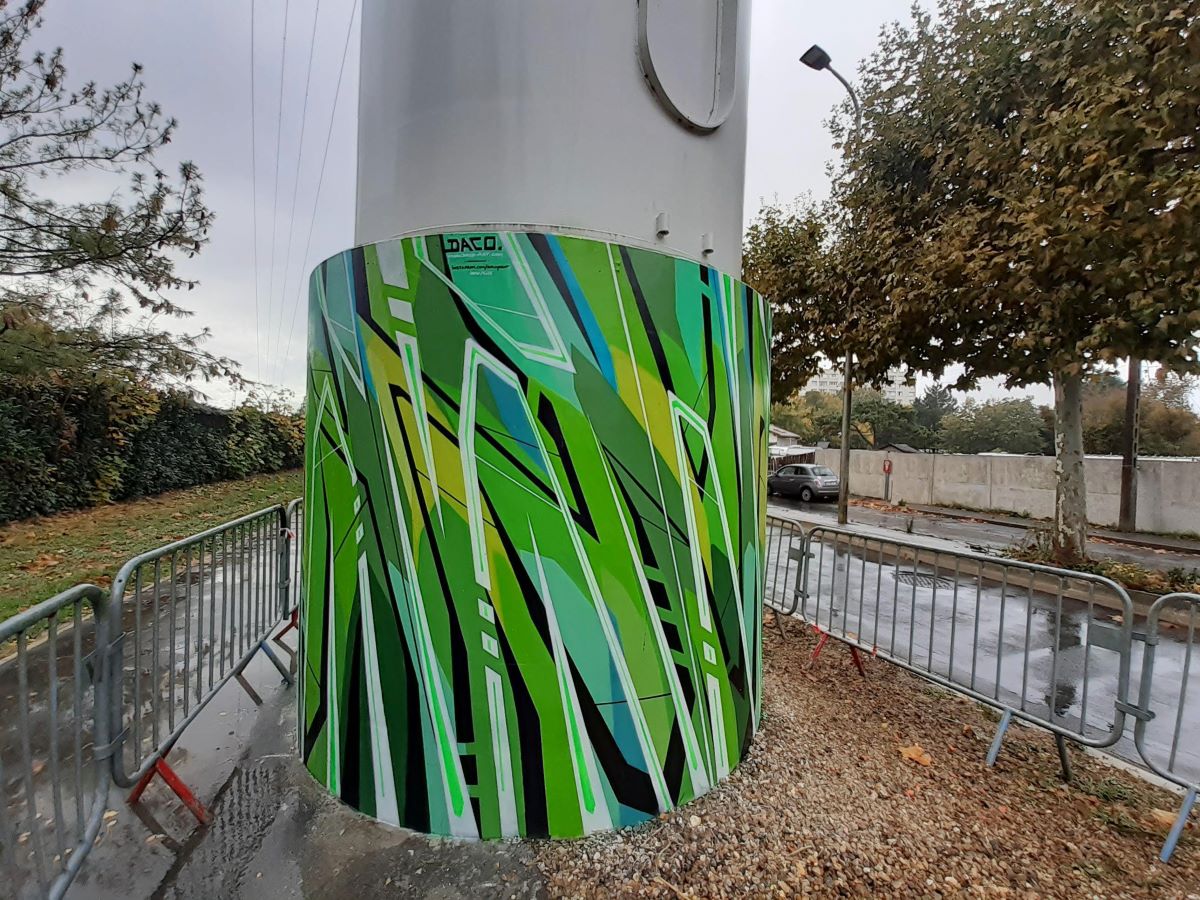
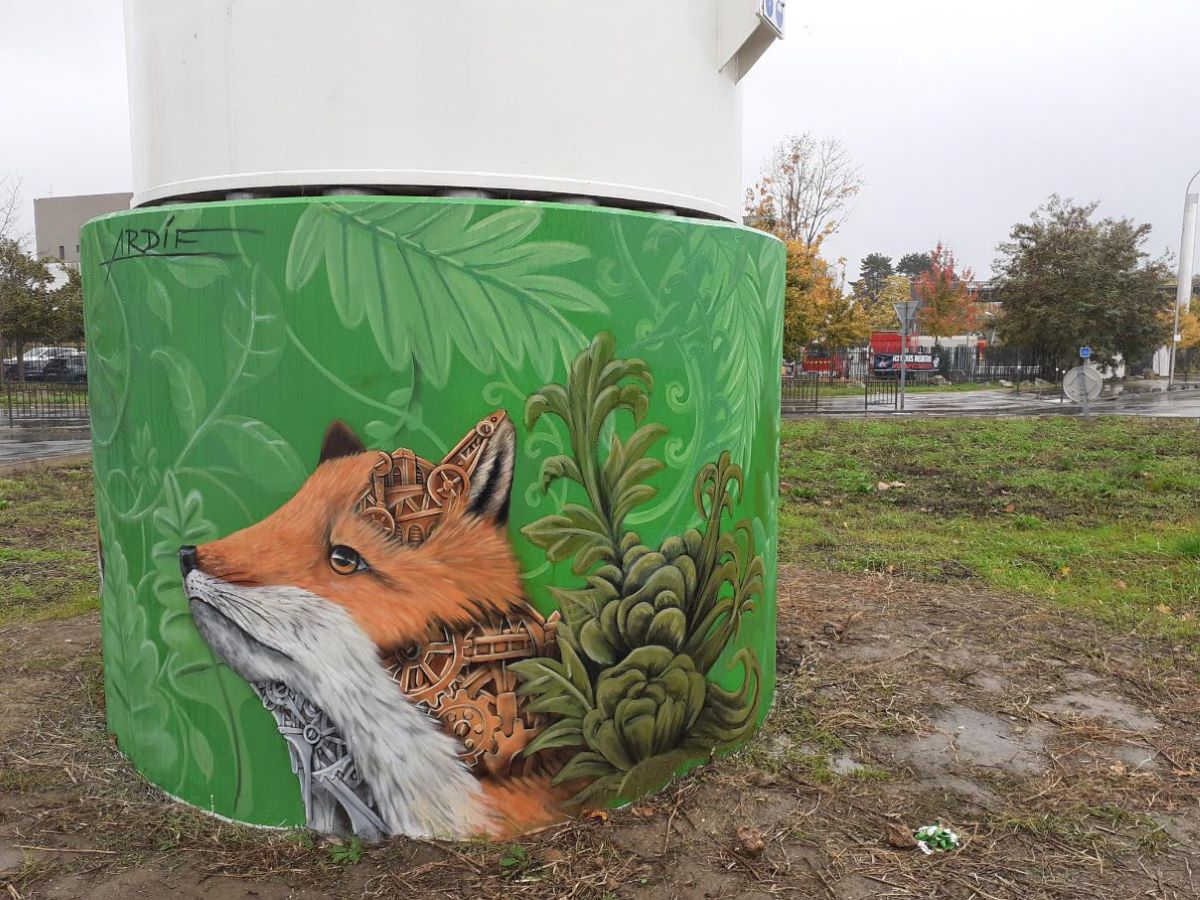
Selected from around thirty applicants, the artists were chosen by a jury comprising representatives from the state, the region, the department, the municipalities of Créteil and Villeneuve-Saint-Georges, and the Paris Fire Brigade.
They best aligned with the vision of local authorities and partners directly impacted by the project.
The artworks are located near departmental roads in high-traffic transit areas heavily used by residents – whether on foot, by bike, or by car.
Through this initiative, Île-de-France Mobilités aims to promote the vitality of the local artistic scene and forge connections between cable car passengers, local residents, and economic, cultural, and institutional stakeholders. The five painted pylons represent a successful first step toward this goal.